
How Long Does It Take to Get a CDL? Timeline Breakdown 2026 October
Prepare for the How Long Does It Take to Get a CDL? certification. Practice questions with answer explanations covering all exam domains. 🎓
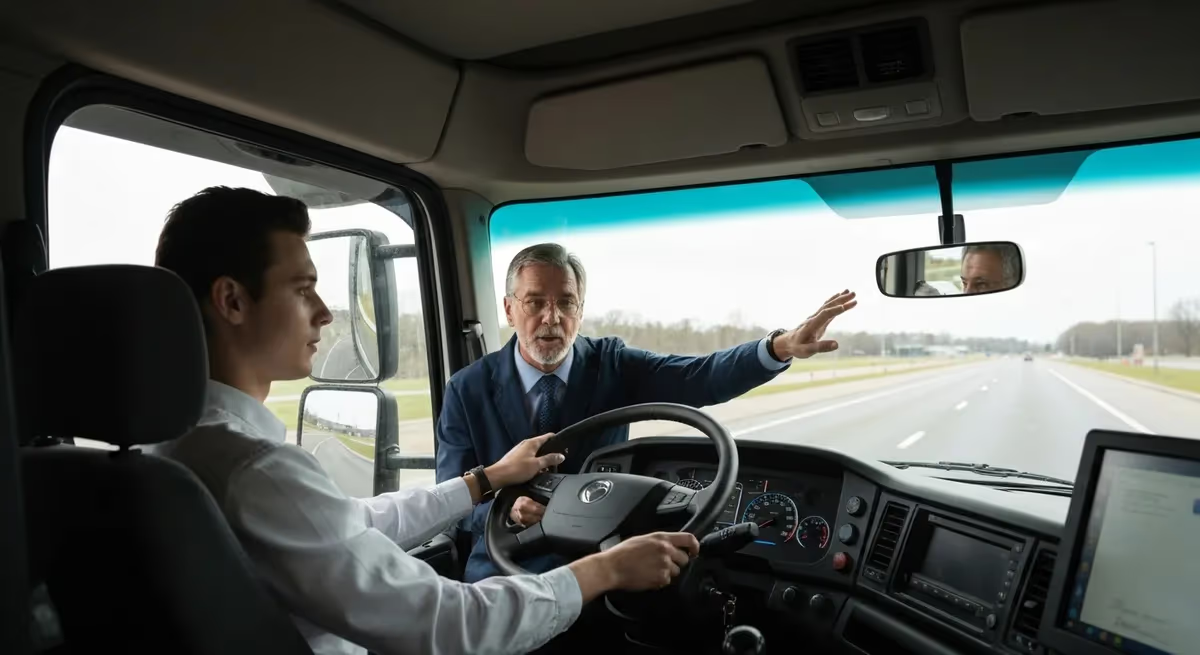
So you're wondering how long does it take to get a CDL. Short answer: most people finish in 3 to 7 weeks. That's the realistic window if you're going through a full-time CDL training program and don't hit any snags with paperwork or scheduling. Some folks wrap it up faster. Others take months, especially if they're studying part-time or self-prepping without a school backing them up.
The timeline breaks down into three chunks: getting your Commercial Learner's Permit (CLP), completing behind-the-wheel training, and passing the CDL skills test at the DMV. Each piece has its own clock. The permit exam is mostly book knowledge you can knock out in a week or two of studying. Training eats up the biggest slice -- anywhere from 3 to 10 weeks depending on the program you pick. Then there's the skills test itself, which can add days or weeks depending on your state's scheduling backlog.
If you're asking how long does it take to get a cdl licence, the honest answer depends on the CDL class you're after, your state's requirements, and whether you're training full-time or squeezing in hours around a day job. A Class A CDL takes longer than a Class B because you're learning to handle combination vehicles -- think tractor-trailers and doubles. Class B programs run shorter since you're dealing with single-unit trucks like dump trucks or buses.
Here's what most people don't realize: the calendar time and the actual training hours are two different things. A 160-hour program crammed into 4 weeks feels way different from the same hours spread across 8 weeks of evening classes. Both get you to the same endpoint -- a CDL in your wallet -- but the experience couldn't be more different. We'll break down every phase so you know exactly what you're signing up for.
For a fuller set of questions on this topic, see our printable cdl practice test resource.
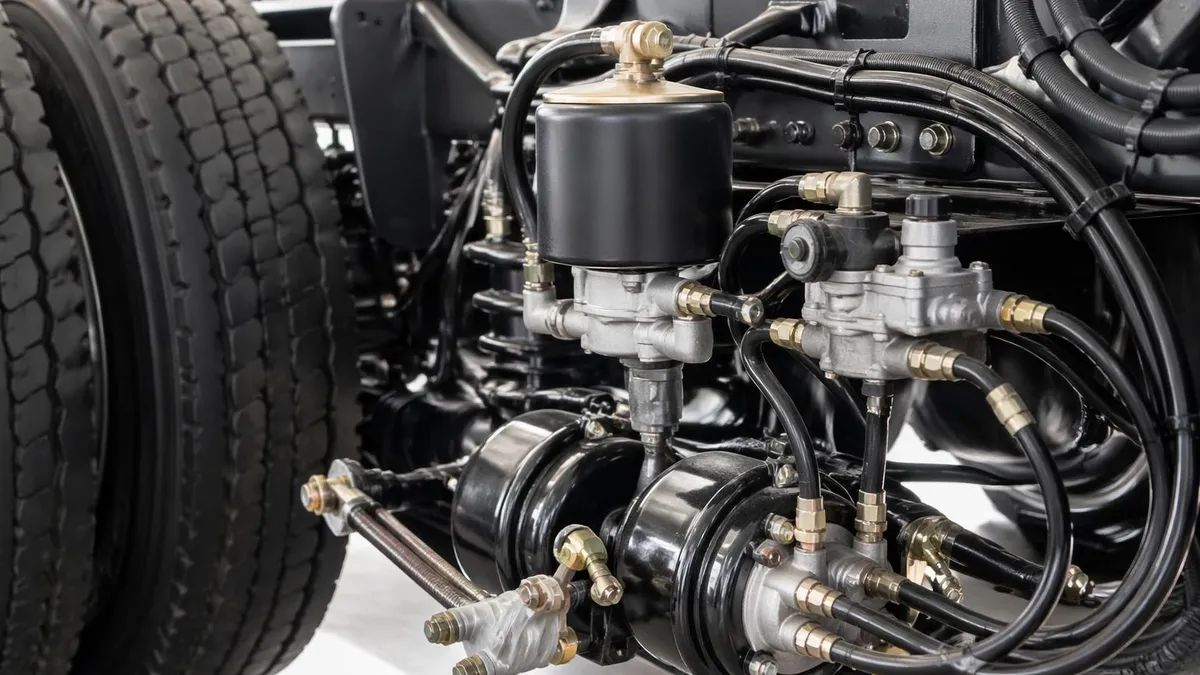
For a fuller set of questions on this topic, see our air brakes practice test resource.

The first real question most people ask is how long does it take to get a cdl when you're starting from zero experience. No trucking background, no commercial driving time, just a regular license and a plan. The answer starts with your Commercial Learner's Permit. You can't touch a commercial vehicle for training without it.
Getting the CLP means passing a written knowledge test at your state's DMV. The test covers general knowledge, air brakes, and whatever endorsements you're chasing -- hazmat, tanker, doubles/triples. Most people study for a week, maybe two. The material isn't brutal, but it's specific. You need to know stopping distances, pre-trip inspection sequences, and coupling procedures cold. If you fail, most states let you retake it the next business day.
Once you've got that permit in hand, training starts. This is where how long does it take to get your cdl really varies. Full-time programs at private CDL schools run 3 to 4 weeks of intensive training. Community college programs stretch to 8 or even 16 weeks because they only meet a few days per week. Company-sponsored training -- where a carrier like Werner or CRST pays for your schooling -- usually runs 4 to 6 weeks but comes with a contract locking you in for a year or more.
The training itself splits into classroom and range/road time. FMCSA requires a minimum of 160 hours of instruction, with specific minimums for behind-the-wheel driving on a range and on public roads. Your school can exceed these minimums, and good ones do. More seat time before the test means fewer surprises on test day. Don't rush this part.
Now let's talk specifics. How long does it take to get cdl if you're going the private school route versus self-study? Private schools are the fastest path -- 3 to 4 weeks, full stop. You show up Monday through Friday, put in 8-hour days, and graduate with enough skills to pass the test. The tradeoff is cost. Expect to pay $3,000 to $7,000 depending on your area and the school's reputation.
Self-study is cheaper but slower. Way slower. If you're asking how long does it take to get your cdl when you're teaching yourself, budget 2 to 4 months minimum. You'll need access to a commercial vehicle for practice, and finding supervised driving time without a school's trucks and instructors is genuinely hard. Some states require you to log a minimum number of training hours with a licensed CDL holder in the passenger seat before they'll let you test.
Company-sponsored programs split the difference. They're structured like schools but financed by the trucking company. You get trained in 4 to 6 weeks, start driving for that carrier immediately, and repay the training cost through payroll deductions or a service commitment. It's not free money -- you're locked in. But if you're asking how long does it take to get your cdl license and you don't have $5,000 sitting around, this path makes the timeline work without the upfront cash hit.
One thing worth flagging: endorsements add time. A basic CDL gets you on the road, but hazmat requires a TSA background check that takes 30 to 60 days. Tanker and doubles endorsements need extra written tests and sometimes additional training hours. Plan for these if your target job requires them -- don't assume they're included in the base timeline.
CDL Training Program Comparison
Duration: 3-4 weeks (160-200 hours)
Cost: $3,000-$7,000
Schedule: Monday-Friday, 8 hours/day
Full-time CDL schools are the fastest route. You'll spend mornings in class and afternoons on the range or driving public roads. Most programs include pre-trip inspection practice, backing maneuvers (offset, parallel, alley dock), and highway driving. Graduation rates hover around 85-90% for accredited programs.
Let's dig into the licensing steps. How long does it take to get a cdl license from application to card-in-hand? The process has more moving parts than most people expect. First, there's your DOT physical. You need a valid medical certificate before your state will even let you take the permit test. A DOT physical takes about 30 minutes and costs $75 to $150 at most urgent care clinics. If you've got health issues -- sleep apnea, diabetes, vision problems -- expect additional testing that can stretch this step by a week or more.
Then comes the permit test itself. Most DMV offices let you walk in or schedule an appointment. The test is computerized in most states and you get your results immediately. Pass all the sections and you walk out with a CLP that day. How long does it take to get cdl license once you have the permit? That's purely a function of training speed and test scheduling.
The skills test is the final boss. Three parts: pre-trip inspection, basic vehicle control (backing maneuvers), and the road test. Each section is pass/fail. Fail any one, and you retake just that section -- but you might wait a week or more for the next available slot. States with heavy CDL demand like Texas, California, and Florida often have the longest wait times for road test appointments. Some students wait 2 to 3 weeks just to get scheduled.
After you pass the skills test, most states issue your CDL on the spot or within a few business days. Total elapsed time from "I want a CDL" to "I have a CDL": 4 to 8 weeks for full-time students, 3 to 6 months for part-timers. That's the real answer.
How long does it take to get a cdl in texas? Texas is one of the most popular states for CDL training because of its massive freight industry and relatively straightforward licensing process. Full-time programs in Houston, Dallas, and San Antonio run 3 to 5 weeks. The state requires 120 hours of classroom instruction and 44 hours of behind-the-wheel time at minimum -- more than some states, which can stretch the timeline slightly.
Texas also has one of the longer wait times for road test appointments. In metro areas, you might wait 2 to 3 weeks after finishing training to get your test slot. Rural testing locations often have shorter waits. Pro tip: book your road test appointment before you start training. Most schools will help you time it so you graduate and test within the same week.
Now, how long does it take to get a class a cdl specifically? Class A is the big one -- it lets you drive combination vehicles over 26,001 pounds GCWR where the trailer exceeds 10,000 pounds. Think semi-trucks, flatbeds, tankers. Training runs longer than Class B because you're learning coupling/uncoupling, combination vehicle air brake systems, and managing a 53-foot trailer through city streets. Expect 4 to 7 weeks in a full-time program.
The written exam for Class A includes an extra section on combination vehicles that Class B students skip entirely. And the skills test backing maneuvers are significantly harder when you're working with 70 feet of truck-and-trailer instead of a single unit. That's not a knock -- it's just reality. More vehicle means more training time.
CDL Training: Pros and Cons of Fast vs Slow Paths
- +Full-time programs get you earning sooner -- every week in school is a week not driving for pay
- +Intensive training builds muscle memory faster through daily repetition
- +Shorter programs mean less total cost for housing and living expenses during training
- +Company-sponsored programs eliminate upfront costs entirely
- +Faster completion lets you lock in carrier jobs during peak hiring seasons
- +Concentrated study helps you retain material better for the skills test
- −Accelerated timelines leave less room for mistakes or failed test attempts
- −Part-time students can keep their current income while training
- −Full-time programs demand 40+ hours per week with no flexibility for emergencies
- −Rushing through training can mean less confidence when you start driving solo
- −Company-sponsored programs lock you into contracts with penalties for early exit
- −Fast programs in high-demand areas may have crowded classes and less instructor time
How long does it take to get cdl in texas if you're going part-time? Budget 8 to 12 weeks. Texas community colleges and some private schools offer evening and weekend programs designed for people who can't quit their day job. You'll cover the same material -- just spread thinner across the calendar. The FMCSA hour requirements don't change regardless of schedule format, so you're putting in the same seat time.
What about how long does it take to get cdl class a compared to other endorsements? The base Class A CDL is your foundation. Add-on endorsements like hazmat, tanker, or doubles/triples each require a separate written test at the DMV. The tests themselves take 30 to 60 minutes each. But hazmat is special -- it requires a TSA threat assessment that runs 30 to 60 days for the background check. If your target job needs a hazmat endorsement, start that TSA application the same day you begin CDL training.
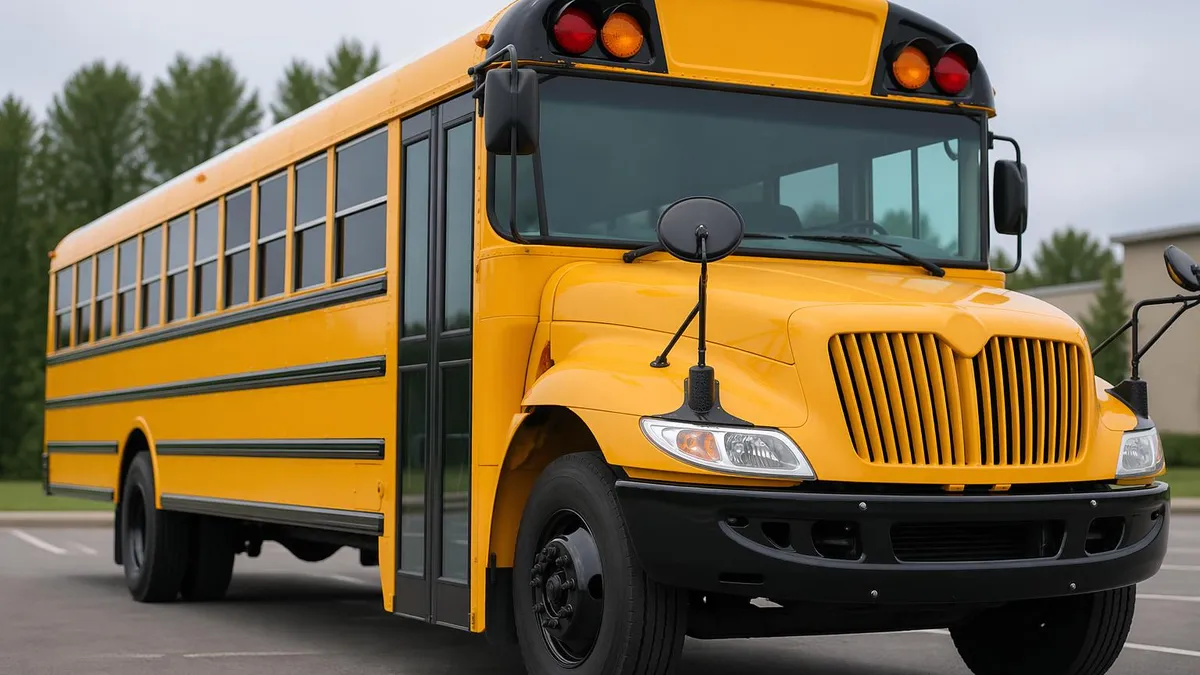
School endorsement (S endorsement for school buses) and passenger endorsement (P endorsement) both require additional skills testing beyond the written exam. You'll need access to the right type of vehicle -- a school bus or passenger bus -- which your training program may or may not provide. These endorsements can add 1 to 2 weeks of specialized training on top of your base CDL timeline.
Double-check your state's specific requirements. Some states mandate minimum age 21 for interstate CDL holders. Others allow 18-year-olds to drive commercially within state lines only. That age requirement doesn't change the training timeline but absolutely affects when you can start.
Your CDL Checklist: 10 Steps to Get Licensed
- ✓Verify you meet age requirements (21 for interstate, 18 for intrastate in most states)
- ✓Schedule and pass your DOT physical exam -- bring your medical certificate to the DMV
- ✓Study for the CLP written test using practice exams and your state's CDL manual
- ✓Pass the CLP knowledge test at the DMV (general knowledge + air brakes + endorsements)
- ✓Enroll in an FMCSA-registered CDL training program (private school, community college, or company-sponsored)
- ✓Complete minimum 160 hours of instruction including behind-the-wheel range and road time
- ✓Book your CDL skills test appointment early -- DMV slots fill up fast in busy states
- ✓Practice pre-trip inspection, basic vehicle control, and road driving until test-ready
- ✓Pass all three skills test sections (pre-trip, basic control, road test)
- ✓Pick up your CDL at the DMV and apply for any additional endorsements you need
How long does it take to get a class b cdl? Shorter than Class A. That's the quick version. Class B covers straight trucks, large buses, segmented buses, and box trucks over 26,001 pounds -- but without a heavy towed unit. Training programs for Class B typically run 1 to 3 weeks for full-time students. The vehicles are smaller, the maneuvers are simpler, and the written test skips the combination vehicles section entirely.
If you're looking at how long does it take to get class b cdl through a community college, plan for 4 to 8 weeks of part-time classes. The reduced training time reflects the lower complexity of single-unit vehicles. You won't need to learn coupling/uncoupling procedures, combination air brake systems, or how to back a 53-foot trailer into a dock. That cuts significant hours from the curriculum.
Class B jobs include city bus drivers, delivery truck operators, dump truck drivers, and concrete mixer operators. Many of these positions are local -- home every night. If long-haul trucking doesn't appeal to you, Class B gets you working faster and keeps you closer to home. The pay is generally lower than Class A long-haul, but the lifestyle tradeoff matters to a lot of drivers.
One more thing. Upgrading from Class B to Class A later is absolutely possible. You'll need additional training on combination vehicles and another skills test, but you won't repeat the full program. Many drivers start with Class B to get working quickly, then upgrade after a year of experience. Not a bad strategy if time or money is tight right now.
Let's address how long does it take to get a cdl a through company-sponsored programs specifically. Carriers like Schneider, Swift, CRST, and Werner run their own training academies. These are typically 3 to 6 weeks of intensive, full-time instruction. You live at the training facility, train all day, and graduate directly into a truck assigned to that carrier. No gap between school and your first paycheck.
The catch? Contracts. Most company programs require 12 to 24 months of service after graduation. Leave early and you owe the training cost back -- often $3,000 to $7,000. Read every word of that contract before signing. Some drivers don't realize they're on the hook until they want to switch carriers 6 months in.
How long does it take to get cdl class b through the same company route? Fewer carriers sponsor Class B training, but municipal transit agencies and waste management companies sometimes offer similar deals. Timeline is usually 2 to 4 weeks with a shorter service commitment. The demand for Class B drivers in local routes means these programs pop up more often in metro areas.
The quality of company training varies wildly. Some carriers run excellent programs with experienced instructors and modern equipment. Others pack too many students into too few trucks and rush people through to fill seats. Ask about instructor-to-student ratios, the age and condition of training vehicles, and the program's first-time pass rate before committing. A 95% pass rate tells you something very different from a 60% pass rate.
Since February 2022, all new CDL applicants must complete Entry-Level Driver Training (ELDT) through an FMCSA-registered training provider. Self-study alone no longer qualifies you to take the skills test. Your training provider must be listed on the FMCSA Training Provider Registry (TPR). Verify your school's registration at tpr.fmcsa.dot.gov before enrolling -- unregistered programs waste your time and money.
What about specific states beyond Texas? How long does it take to get a cdl class b in Michigan? Michigan's CDL process follows the federal ELDT framework, so training duration is similar to national averages -- 1 to 3 weeks for Class B full-time. The state does require a mandatory 14-day CLP holding period before you can take the skills test, which adds time that some other states don't require. Factor that waiting period into your total timeline.
Michigan also requires a self-certification of driving type (interstate, intrastate, or excepted) and a medical examiner's certificate on file with the Secretary of State office. These paperwork steps take a day or two but can delay your test if you forget them. Get your medical card squared away before you start training -- don't leave it for the end.
States with the fastest CDL timelines tend to be those with high trucking demand and well-staffed testing centers. Florida, Georgia, and Ohio typically have road test appointments available within 1 to 2 weeks of completion. California and New York? You might wait 3 to 4 weeks for a slot. If you're in a hurry, check your state's DMV scheduling before picking a school. Some students drive to neighboring states with shorter wait times to test sooner -- that's legal as long as you return to your home state for the license itself.
The military is a special case. Veterans with military driving experience can sometimes bypass portions of the skills test. The federal Military CDL Act lets states waive the skills test for service members who operated military vehicles equivalent to CMVs within the past year. This can cut your timeline to just the permit test and paperwork -- potentially under 2 weeks total. Check with your state's DMV veteran liaison.
CDL Practice Test Questions
Prepare for the CDL - Commercial Driver's License exam with our free practice test modules. Each quiz covers key topics to help you pass on your first try.
CDL Alabama CDL Combination Vehicles Pract...
CDL Exam Questions covering Alabama CDL Combination Vehicles Practice Test. Master CDL Test concepts for certification prep.
CDL Alabama CDL General Knowledge Practice...
Free CDL Practice Test featuring Alabama CDL General Knowledge Practice Test #. Improve your CDL Exam score with mock test prep.
CDL Alabama General Knowledge CDL Practice...
CDL Mock Exam on Alabama General Knowledge CDL Practice Test. CDL Study Guide questions to pass on your first try.
CDL Airbrakes Practice Test
CDL Test Prep for Airbrakes Practice Test. Practice CDL Quiz questions and boost your score.
CDL Air Brakes Practice Test
CDL Questions and Answers on Air Brakes Practice Test. Free CDL practice for exam readiness.
CDL CLASS A COMMERCIAL DRIVER'S LICENSE PR...
CDL Mock Test covering CLASS A COMMERCIAL DRIVER'S LICENSE PRACTICE TEST. Online CDL Test practice with instant feedback.
CDL Class B Commercial Driver's License Pr...
Free CDL Quiz on Class B Commercial Driver's License Practice Test. CDL Exam prep questions with detailed explanations.
CDL Combination Vehicles Practice Test
CDL Practice Questions for Combination Vehicles Practice Test. Build confidence for your CDL certification exam.
CDL Doubles and Triples Practice Test
CDL Test Online for Doubles and Triples Practice Test. Free practice with instant results and feedback.
CDL Doubles Triples Practice Test
CDL Study Material on Doubles Triples Practice Test. Prepare effectively with real exam-style questions.
CDL General Knowledge Practice Test
Free CDL Test covering General Knowledge Practice Test. Practice and track your CDL exam readiness.
CDL General Knowledge Practice Test1
CDL Exam Questions covering General Knowledge Practice Test1. Master CDL Test concepts for certification prep.
CDL Hazardous Materials (Hazmat) Practice ...
Free CDL Practice Test featuring Hazardous Materials (Hazmat) Practice Test. Improve your CDL Exam score with mock test prep.
CDL Hazardous Materials Hazmat Practice Test
CDL Mock Exam on Hazardous Materials Hazmat Practice Test. CDL Study Guide questions to pass on your first try.
CDL Hazmat Practice Test
CDL Test Prep for Hazmat Practice Test. Practice CDL Quiz questions and boost your score.
CDL Passenger Transport Practice Test
CDL Questions and Answers on Passenger Transport Practice Test. Free CDL practice for exam readiness.
CDL Road Signs and Signals Practice Test
CDL Mock Test covering Road Signs and Signals Practice Test. Online CDL Test practice with instant feedback.
CDL School Bus Endorsement Practice Test
Free CDL Quiz on School Bus Endorsement Practice Test. CDL Exam prep questions with detailed explanations.
CDL School Bus Endorsement S Practice Test
CDL Practice Questions for School Bus Endorsement S Practice Test. Build confidence for your CDL certification exam.
CDL Tanker Practice Test
CDL Test Online for Tanker Practice Test. Free practice with instant results and feedback.
CDL Class A Commercial Driver's License Pr...
CDL Study Material on Class A Commercial Driver's License Practice Test -1. Prepare effectively with real exam-style questions.
CDL Class A Driver's License Practice Test -2
Free CDL Test covering Class A Driver's License Practice Test -2. Practice and track your CDL exam readiness.
CDL Class A Driver's License Practice Test -3
CDL Exam Questions covering Class A Driver's License Practice Test -3. Master CDL Test concepts for certification prep.
CDL Class A Driver's License Practice Test -5
Free CDL Practice Test featuring Class A Driver's License Practice Test -5. Improve your CDL Exam score with mock test prep.
CDL Class B Commercial Driver's License Pr...
CDL Mock Exam on Class B Commercial Driver's License Practice Test -2. CDL Study Guide questions to pass on your first try.
CDL Class C CDL with Hazmat Endorsement Pr...
CDL Test Prep for Class C CDL with Hazmat Endorsement Practice Test. Practice CDL Quiz questions and boost your score.
CDL Class C CDL with Hazmat Endorsement Pr...
CDL Questions and Answers on Class C CDL with Hazmat Endorsement Practice Test -2. Free CDL practice for exam readiness.
CDL Class C CDL with Hazmat Endorsement Pr...
CDL Mock Test covering Class C CDL with Hazmat Endorsement Practice Test -3. Online CDL Test practice with instant feedback.
How long does it take to get cdl in illinois? Illinois runs a solid CDL program through its Secretary of State office. Full-time training in Chicago, Springfield, or Rockford takes 4 to 6 weeks. The state requires all ELDT hours through registered providers and has a 14-day CLP holding period similar to Michigan. Testing appointments in the Chicago metro area run 2 to 3 weeks out during peak season (spring and early summer).
For how long does it take to get class a cdl in Illinois specifically, you're looking at the longer end of that range -- 5 to 7 weeks full-time. Class A training in Illinois includes mandatory combination vehicle instruction that pushes the hour count higher. Many Illinois CDL schools include hazmat endorsement prep in their Class A program at no extra charge, which saves you a trip back to the DMV later.
Cost is a factor in Illinois too. Chicago-area CDL schools charge $4,000 to $8,000 for Class A training. Downstate programs run cheaper -- $2,500 to $5,000 on average. The Workforce Innovation and Opportunity Act (WIOA) funding is available through Illinois workNet centers if you qualify. That can cover your entire tuition. Apply early because funding runs out fast each fiscal year.
Bottom line: no matter which state you're in, the total time from decision to CDL falls between 3 weeks (absolute fastest, full-time Class B, quick test scheduling) and 6 months (part-time, multiple endorsements, slow DMV). Most people land in the 4 to 8 week range. Don't let the timeline scare you off -- those weeks go fast when you're behind the wheel every day learning something new. The hardest part isn't the training. It's making the decision to start.
CDL Questions and Answers
CDL Career Overview: Driving Jobs, Salaries, and How to Get Started
CDL Exam Eligibility: DOT Requirements, Medical Exams, and How to Qualify
CDL Hazardous Materials Study Guide and Essential Study Materials
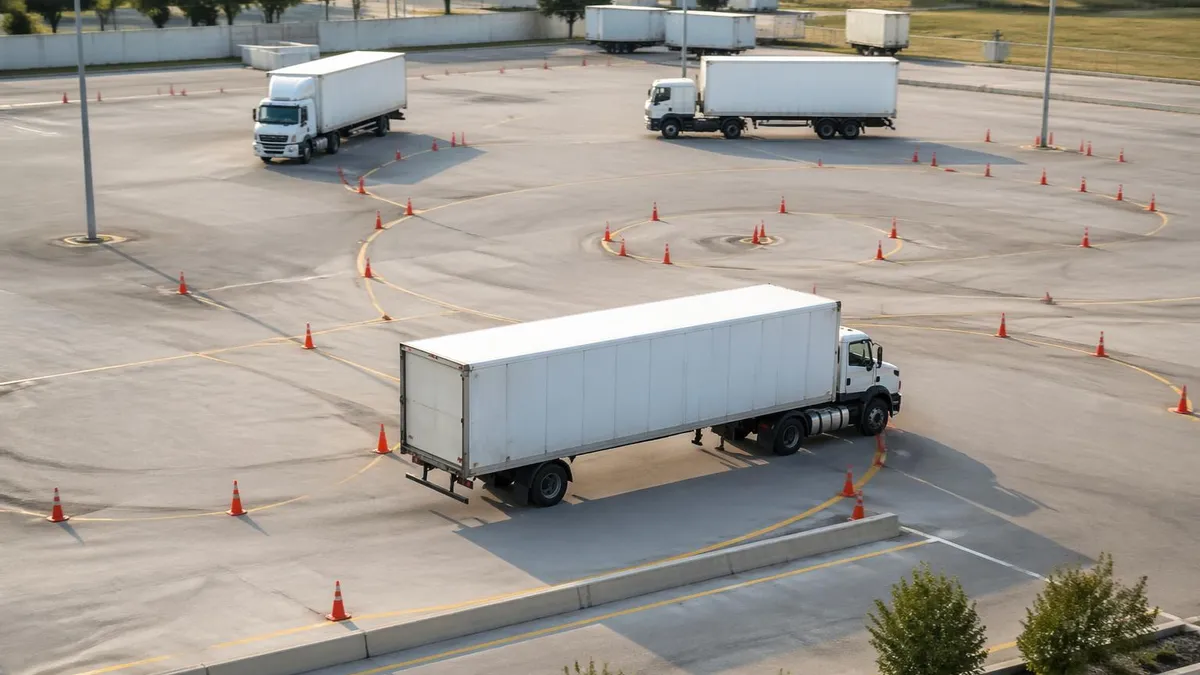
CDL General Knowledge Test: What You Need to Know About Subject Knowledge
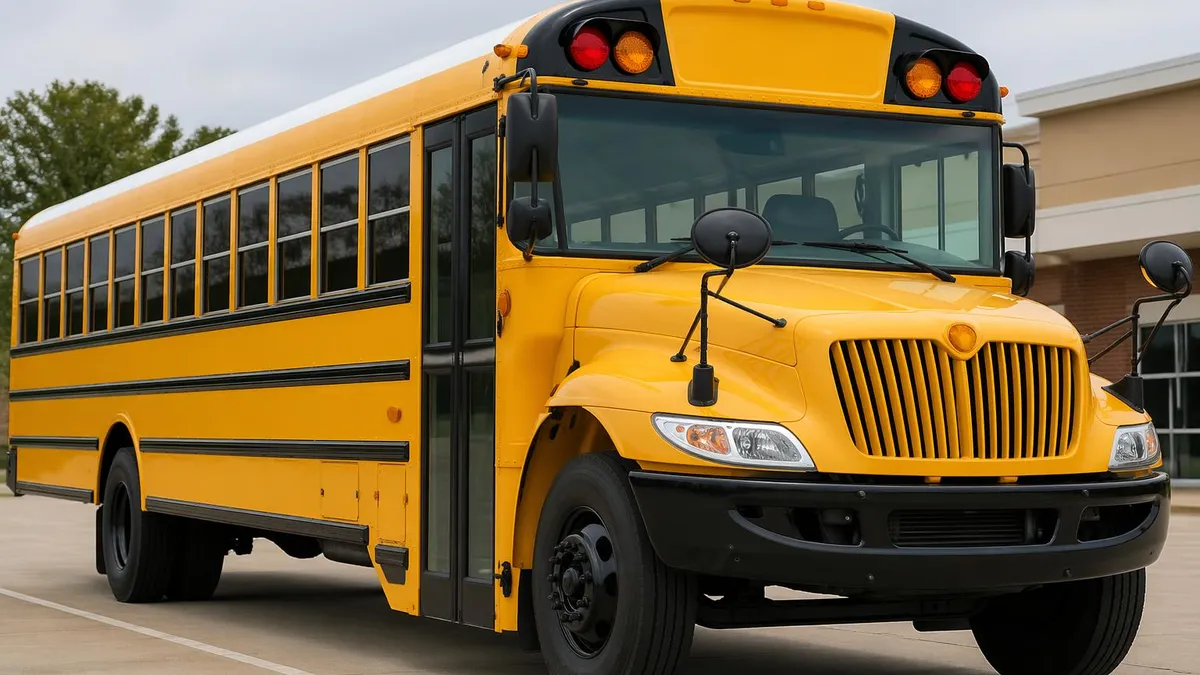
CDL Certification Guide: DOT Requirements, Study Tips & Endorsements
About the Author

Licensed Driving Instructor & DMV Test Specialist
Penn State UniversityRobert J. Williams graduated from Penn State University with a degree in Transportation Management and has spent 20 years as a certified driving instructor and DMV examiner consultant. He has personally coached thousands of applicants through written knowledge tests, skills assessments, and commercial driver licensing programs across more than 30 states.
Join the Discussion
Connect with other students preparing for this exam. Share tips, ask questions, and get advice from people who have been there.
View discussion (7 replies)