
CCTV Technician Certification Practice Test PDF (Free Printable 2026 October)
Free CCTV Technician Certification practice test with instant feedback and detailed answer explanations. Prepare for your exam. 🎯
Free CCTV Practice Test PDF Download
Preparing for a CCTV technician certification exam requires mastering a wide range of topics — from camera selection and lens calculations to IP networking and system integration. Our free CCTV practice test PDF gives you a printable set of exam-style questions you can study anywhere, whether you are at home, on-site, or in transit.
This PDF covers the full scope of CCTV technician certification exams, including video surveillance fundamentals, digital and network video recorder configuration, cabling standards, and integration with access control systems. Download it once and use it as often as you need — no login required.
CCTV Technician Certification Exam Topics Explained
Camera Types and Selection
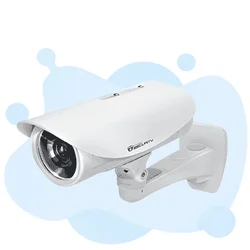
CCTV certification exams test your ability to select the right camera for a given environment. Fixed cameras suit defined fields of view, while PTZ (pan-tilt-zoom) cameras cover wide areas with remote control. Dome cameras resist vandalism and conceal the direction of view. Bullet cameras are easy to aim and install outdoors. Thermal cameras detect heat signatures in complete darkness. Understanding the trade-offs between resolution, form factor, and intended use case is essential for exam success.
Lens Specifications and Field of View Calculations
Lens focal length determines the angle of view and how much a scene is magnified. A shorter focal length (e.g., 2.8 mm) gives a wide-angle view, while a longer focal length (e.g., 16 mm) narrows the field and magnifies distant subjects. Certification exams frequently include calculations using the formula: Field of View = (Sensor Size / Focal Length) × Distance. Varifocal lenses allow on-site adjustment, while fixed lenses offer simplicity and lower cost.
Digital Video Recorders and Network Video Recorders
DVRs accept analog video signals and encode them internally; NVRs receive pre-encoded streams from IP cameras. Exam questions cover storage calculations: at 15 fps, H.264 compression, 1080p resolution, a single camera typically requires 15–40 GB per day depending on activity level. RAID configurations (RAID 1 for mirroring, RAID 5 for capacity with redundancy) are commonly tested. Remote access via RTSP streams and mobile apps is also covered.
IP Camera Networking Fundamentals
IP cameras connect over standard Ethernet and require IP address assignment (static or DHCP), subnet configuration, and port forwarding for remote access. Power over Ethernet (PoE — IEEE 802.3af delivers up to 15.4 W, 802.3at up to 30 W) eliminates separate power runs. VLANs isolate camera traffic from corporate networks. Bandwidth planning requires knowing the bit rate per camera and multiplying by camera count for switch and recorder sizing.
Cable Types and Installation Standards
Analog CCTV traditionally uses RG-59 coaxial cable (up to 300 m) or RG-6 (up to 450 m) with BNC connectors. IP systems use CAT5e or CAT6 UTP with a maximum PoE run of 100 m. Shielded cable (STP/FTP) is required in high-EMI environments such as industrial facilities. Proper termination, impedance matching, and grounding practices prevent noise and ground loops — common exam topics.
Video Analytics and Motion Detection
Modern CCTV systems incorporate analytics at the camera or server level. Motion detection zones can be drawn within the field of view to reduce false alarms. Advanced analytics include line crossing, perimeter intrusion, loitering detection, license plate recognition (LPR), and facial detection. Exams test configuration parameters such as sensitivity thresholds, dwell time, and alarm output integration.
Lighting Requirements for Camera Performance
Camera sensitivity is rated in lux — the minimum illumination required for usable images. Standard color cameras require 1–3 lux; day/night cameras switch to monochrome below 0.5 lux; true low-light cameras operate at 0.01 lux or lower. Infrared (IR) illuminators extend visibility in darkness and must be matched to camera IR sensitivity range (typically 850 nm or 940 nm). Backlight compensation (BLC) and wide dynamic range (WDR) address high-contrast scenes like entrances and exits.
System Integration with Access Control
Integrated security systems link CCTV with access control panels so that a door access event triggers a camera to record or display on a monitor. This requires understanding relay outputs, dry contact inputs, and software integration protocols (e.g., ONVIF Profile S for video, Profile A for access control). Certification exams may include questions on alarm verification workflows and the role of a video management system (VMS) in unified security platforms.
Certification Pathways: BICSI and ASIS
The BICSI Registered Communications Distribution Designer (RCDD) credential covers low-voltage cabling systems including CCTV infrastructure. The ASIS Physical Security Professional (PSP) certification covers electronic security systems including CCTV design and installation at a systems level. Both credentials require demonstrated work experience and passing a multiple-choice examination. The PSP exam covers physical security assessment, application, and implementation across all electronic security domains.
- ✓Memorize camera type use cases: PTZ, dome, bullet, thermal, fisheye
- ✓Practice field of view calculations with different focal lengths and sensor sizes
- ✓Know DVR vs. NVR differences and storage capacity formulas
- ✓Understand PoE standards: IEEE 802.3af (15.4 W) vs. 802.3at (30 W)
- ✓Study coaxial cable specs (RG-59, RG-6) and CAT5e/CAT6 max run lengths
- ✓Learn H.264 and H.265 compression trade-offs for storage and bandwidth
- ✓Review lux ratings and IR illuminator matching for low-light cameras
- ✓Know ONVIF profile types: Profile S (video), Profile G (recording), Profile A (access)
- ✓Understand RAID levels 0, 1, and 5 for NVR storage redundancy
- ✓Review BICSI RCDD and ASIS PSP certification eligibility requirements
Free CCTV Practice Tests Online
Want more questions beyond the PDF? Our CCTV practice test lets you test yourself interactively with instant scoring, detailed answer explanations, and topic-by-topic feedback — all free, no signup required.
- +Industry-recognized credential boosts your resume
- +Higher earning potential (10-20% salary increase on average)
- +Demonstrates commitment to professional development
- +Opens doors to advanced career opportunities
- −Exam preparation requires significant time investment (4-8 weeks)
- −Certification fees can be $100-$400+
- −May require continuing education to maintain
- −Some employers may not require certification
Sample CCTV - Closed Circuit Television Practice Questions
Try these questions from our free CCTV - Closed Circuit Television practice tests. The correct answer and an explanation follow each question.
Which industry standard body publishes the Physical Security Professional (PSP) certification relevant to CCTV practitioners?
- A. ASIS International
- B. National Electrical Contractors Association (NECA)
- C. Society of Cable Telecommunications Engineers (SCTE)
- D. American National Standards Institute (ANSI) directly
Answer: A. ASIS International
ASIS International offers the Physical Security Professional (PSP) certification, which covers electronic security systems including CCTV and is widely recognized in the US security industry.
How should a technician test whether a newly installed IP camera is reachable on the network?
- A. Reboot the NVR
- B. Ping the camera's IP address from a networked device
- C. Check the HDMI output on the camera
- D. Review the DVR's hard drive health
Answer: B. Ping the camera's IP address from a networked device
Pinging the camera's assigned IP address confirms basic network connectivity before configuring the NVR or VMS.
A CCTV operator on a normal camera sweep observes what looks to be an unsafe building. Which of these steps ought to be performed by the CCTV operator?
- A. Begin time lapse recording
- B. Update the fault log
- C. Inform the supervisor
- D. Review previous footage
Answer: C. Inform the supervisor
When a CCTV operator observes a potentially unsafe situation, such as an unsafe building, their immediate responsibility is to escalate the information to their supervisor. The supervisor is typically responsible for assessing the severity of the situation, determining the appropriate course of action, and coordinating with relevant authorities or personnel. This ensures that the incident is handled correctly and promptly according to established protocols.
A technician needs to run CCTV cable through a high-EMI industrial environment. Which cable type is most appropriate?
- A. RG-59 coaxial cable
- B. Cat5e UTP cable
- C. RG-6 coaxial cable with foil and braid shielding
- D. Single-mode fiber optic cable
Answer: D. Single-mode fiber optic cable
Single-mode fiber optic cable transmits light signals, making it completely immune to electromagnetic interference — the best choice for high-EMI environments like factories with large motors.
Take the full CCTV - Closed Circuit Television practice test
Join the Discussion
Connect with other students preparing for this exam. Share tips, ask questions, and get advice from people who have been there.
View discussion (7 replies)