
BSN University Programs: Complete Guide to UA Catalog, Admissions & Top Schools 2026 October
📗 BSN UA catalog explained: compare university nursing programs, admissions, costs, prerequisites, and accreditation for 2026 October BSN applicants.

The bsn ua catalog is the central reference document that prospective and current nursing students use to navigate university-based Bachelor of Science in Nursing programs across the United States. Whether you are exploring traditional four-year tracks at flagship state universities, accelerated second-degree options, or hybrid weekend formats, understanding how a university catalog organizes prerequisites, clinical sequences, and graduation requirements is the first practical step toward earning your degree and sitting for the NCLEX-RN licensure exam.
University catalogs differ from community-college handbooks in scope. A typical BSN catalog spans general-education core requirements, lower-division science prerequisites, upper-division nursing theory courses, simulation lab requirements, and a capstone preceptorship totaling between 120 and 130 credit hours. Most catalogs also publish program student-learning outcomes mapped to the American Association of Colleges of Nursing (AACN) Essentials, which accreditors expect to see embedded in every required course.
Reading a catalog the right way saves time and money. Students who skip the prerequisite footnotes often discover, midway through sophomore year, that a single missing chemistry lab or a C-minus in anatomy disqualifies them from progressing into clinical rotations. Catalogs also lock in the curriculum version that applies to your cohort, meaning students admitted in fall 2026 may follow different requirements than those admitted in fall 2027 even within the same university.
This guide walks through the architecture of modern BSN university programs, how to interpret a catalog page, what to look for in accreditation statements, the realistic cost of attendance, application deadlines, and the clinical placement structure you should expect. It also compares traditional, accelerated, and bridge pathways so you can match a program to your background, work schedule, and long-term career goals in critical care, public health, or advanced practice nursing.
For working registered nurses considering a degree completion route, the analysis here pairs with our deep dive on Online RN to BSN Programs: Accredited 12-Month Tracks in 2026, which covers the catalog conventions specific to post-licensure students transferring credit from associate-degree nursing programs into a baccalaureate institution.
By the end of this article you will know how to download a catalog PDF from a university registrar, how to decode credit-hour notation, how to verify CCNE or ACEN accreditation, and how to project a realistic timeline from application through pinning ceremony. You will also see how to compare two catalogs side by side without falling for marketing language that obscures real differences in clinical hours, NCLEX pass rates, or faculty-to-student ratios.
Use the table of contents on this page to jump to admissions, cost, curriculum structure, or frequently asked questions. Bookmark this guide and return when you start your application cycle in September or January, when most BSN programs open their portals and release updated catalog editions for the upcoming academic year.
BSN University Programs by the Numbers
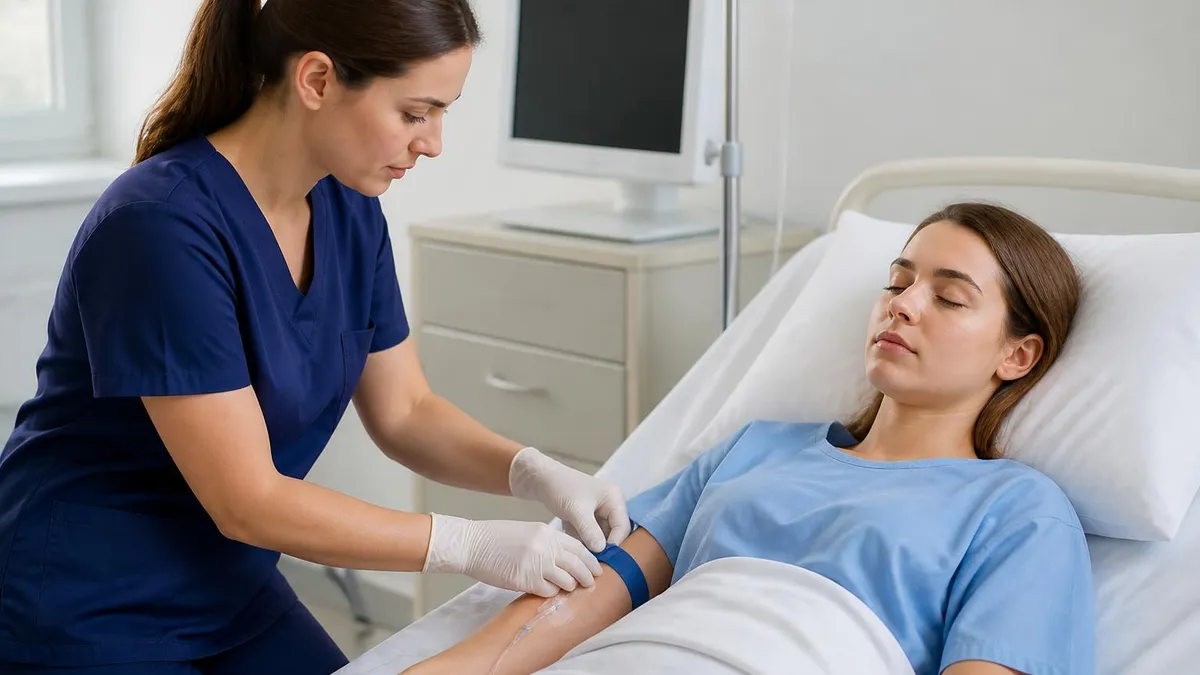
Four Main BSN Program Pathways
The standard pre-licensure pathway for first-time college students. Two years of prerequisites plus two years of upper-division nursing coursework, simulation, and clinical rotations across medical-surgical, pediatric, maternal, mental health, and community specialties.
Designed for adults who already hold a bachelor's degree in another field. Completes the nursing curriculum in 12 to 18 months of intensive, full-time study with no summer breaks and immediate immersion into clinical rotations after a brief prerequisite assessment.
For licensed registered nurses with an associate degree or diploma. Awards transfer credit for prior nursing courses and focuses on leadership, public health, evidence-based practice, and informatics. Most programs deliver entirely online over 12 to 24 months.
Allows licensed practical or vocational nurses to laddter directly into a baccalaureate program without first earning an ADN. Bridge coursework validates prior learning and adds the science, leadership, and clinical depth required at the RN level.
A university nursing catalog is not light reading, but it is the single most authoritative document for your degree. Every catalog opens with an institutional overview, accreditation statements, and a calendar of deadlines, followed by a program-specific section that lists admission requirements, progression policies, and the official degree plan. The degree plan, sometimes called a program of study, is what you will reference each registration period to choose the correct courses in the correct order.
The first thing to verify is the catalog year that governs your enrollment. Universities operate on a catalog-rights system: the requirements published in the catalog of the academic year you matriculate typically remain in force for six to eight years, even if the program changes later. This protects students from moving targets but also means you should download and save a PDF copy of your governing catalog the moment you accept admission.
Next, locate the prerequisite course table. Most BSN programs require two semesters of anatomy and physiology, one semester of microbiology, chemistry with lab, statistics, lifespan psychology, English composition, and a nutrition course. Catalogs often list minimum grades, usually a C or better, and may require that science prerequisites be completed within the past five to seven years. Older credits can sometimes be revalidated through a proficiency exam.
The upper-division nursing sequence is presented as a semester-by-semester grid. Pay attention to courses marked with a co-requisite designation, meaning they must be taken in the same term as another course. Clinical practicums are almost always co-requisites with their corresponding theory courses, and missing the sequence can delay your graduation by a full year because most nursing courses are offered only once annually.
Catalogs also document the standardized testing required for progression. Many programs require the ATI TEAS for admission and then use ATI proctored content exams at the end of each semester. Some catalogs specify minimum proficiency-level scores, and failure to meet the benchmark may trigger remediation, repeat coursework, or in strict programs, dismissal. Know these thresholds before you enroll, not after a poor midterm.
Reading carefully also helps you spot articulation agreements with other universities. If you are considering the LVN to BSN Programs: Bridge Schools & Online Options for 2026 route, the catalog will spell out which licensed practical nurse coursework transfers as direct credit versus elective credit, and how many years your LVN license must be active to qualify for the bridge pathway.
Finally, study the academic integrity, professional conduct, and clinical compliance sections. Nursing programs hold students to a higher standard than the general university because of patient-safety obligations. Background checks, drug screens, immunization documentation, CPR certification, and liability insurance are non-negotiable annual requirements, and catalogs detail the exact timeline and approved vendors for each.
BSN Practice Test Questions
Prepare for the BSN - Degree Bachelor of Science in Nursing exam with our free practice test modules. Each quiz covers key topics to help you pass on your first try.
BSN Community and Public Health Nursing
BSN Exam Questions covering Community and Public Health Nursing. Master BSN Test concepts for certification prep.
BSN Maternal-Newborn and Women's Health Nu...
Free BSN Practice Test featuring Maternal-Newborn and Women's Health Nursing. Improve your BSN Exam score with mock test prep.
BSN Medical-Surgical Nursing
BSN Mock Exam on Medical-Surgical Nursing. BSN Study Guide questions to pass on your first try.
BSN Mental Health and Psychiatric Nursing
BSN Test Prep for Mental Health and Psychiatric Nursing. Practice BSN Quiz questions and boost your score.
BSN Pharmacology and Medication Administra...
BSN Questions and Answers on Pharmacology and Medication Administration. Free BSN practice for exam readiness.
BSN BS-Nursing General
BSN Mock Test covering BS-Nursing General. Online BSN Test practice with instant feedback.
BSN UA Catalog Admissions Requirements
Most university BSN programs require a cumulative GPA of at least 3.0 on a 4.0 scale, with a science prerequisite GPA of 3.2 or higher. The most competitive flagship state programs admit cohorts averaging 3.7 or above. Catalogs list the formula used to calculate your application GPA, which may weigh science courses differently than electives. Always recalculate using the published method rather than relying on your transcript GPA.
In addition to GPA, programs require an entrance exam. The ATI TEAS is the dominant test, scored from 0 to 100 with most programs expecting at least a 65 composite and 70 in the reading and science subsections. A few catalogs accept the HESI A2 or the Kaplan Nursing Entrance Exam. Some universities require the SAT or ACT for first-time freshmen who plan direct entry into the nursing major.

University-Based BSN vs Community College ADN: Which Is Right?
- +Higher NCLEX-RN pass rates on average at university programs
- +Eligible immediately for graduate study without bridge coursework
- +Preferred or required by Magnet-designated hospitals and the VA system
- +Stronger preparation in research, leadership, and informatics
- +Broader clinical rotation networks including academic medical centers
- +Federal and state loan forgiveness programs prioritize BSN graduates
- +Faster career advancement into charge nurse and management roles
- −Significantly higher total tuition and fees than community college
- −Longer time to first paycheck as a licensed RN
- −More rigid full-time scheduling with fewer evening or weekend options
- −Required general-education courses unrelated to nursing practice
- −Competitive admission with limited cohort sizes per academic year
- −Living expenses on or near campus add substantial cost
- −Less flexibility for students with full-time work obligations
Pros and Cons at a Glance
| Pros | Cons |
|---|---|
| Higher NCLEX-RN pass rates on average at university programs | Significantly higher total tuition and fees than community college |
| Eligible immediately for graduate study without bridge coursework | Longer time to first paycheck as a licensed RN |
| Preferred or required by Magnet-designated hospitals and the VA system | More rigid full-time scheduling with fewer evening or weekend options |
| Stronger preparation in research, leadership, and informatics | Required general-education courses unrelated to nursing practice |
| Broader clinical rotation networks including academic medical centers | Competitive admission with limited cohort sizes per academic year |
| Federal and state loan forgiveness programs prioritize BSN graduates | Living expenses on or near campus add substantial cost |
BSN UA Catalog Application Checklist
- ✓Download the current academic-year catalog PDF and save a personal copy
- ✓Verify CCNE or ACEN accreditation status on the official accreditor website
- ✓Complete and document all prerequisite courses with grades of C or better
- ✓Recalculate your application GPA using the program's published formula
- ✓Schedule and pass the ATI TEAS with a score above the program threshold
- ✓Request official transcripts from every college you have ever attended
- ✓Secure two to three letters of recommendation from faculty or supervisors
- ✓Draft and revise a 500 to 750 word personal statement following the prompt
- ✓Submit the FAFSA by the state-specific priority deadline for maximum aid
- ✓Complete background check, drug screen, and immunization records upload
- ✓Confirm CPR certification through American Heart Association BLS course
- ✓Track application status weekly and respond to any portal requests within 48 hours
Lock in your catalog year and save the PDF
The catalog in effect when you matriculate governs your degree requirements for the next six to eight years at most universities. Download the official PDF the day you accept admission and store it in cloud backup. If the program later raises a prerequisite grade or adds a course, your saved catalog protects you from retroactive changes that could delay graduation.
Cost is one of the most consequential factors when comparing university BSN programs, and the catalog is the only authoritative source for tuition, fees, and ancillary expenses. Published tuition rates often look modest until you add nursing program differential fees, clinical course fees, simulation lab fees, ATI testing packages, scrubs, stethoscope, point-of-care ultrasound subscriptions, malpractice insurance, and the background-check renewal cycle. A realistic total cost of attendance for a four-year public in-state BSN runs between $60,000 and $95,000 including living expenses.
Out-of-state and private university programs can exceed $200,000 over four years. Catalogs publish per-credit-hour rates separately for resident and non-resident students, and the differential can exceed $1,000 per credit. Some flagship universities offer reduced regional rates through compacts like the Western Undergraduate Exchange or the Academic Common Market in the South. Verify your eligibility before you write off an out-of-state option as unaffordable.
Financial aid for BSN students comes from five main channels: federal grants and loans through the FAFSA, state grants administered by your home state, institutional scholarships listed in the catalog or financial aid office, private nursing scholarships from organizations like the American Association of Colleges of Nursing, and service-obligation programs such as the Nurse Corps Scholarship Program and the National Health Service Corps. Catalogs typically dedicate an entire chapter to internal scholarships with application instructions.
Work-study positions inside the nursing school, including simulation lab assistants, anatomy lab tutors, and research aides, provide both income and resume value. Hospital-based employer tuition assistance programs are increasingly generous, with many large health systems offering full tuition coverage for nurse-extern employees in exchange for a two-year post-graduation work commitment. Catalogs note approved external employers under the cooperative-education or experiential-learning sections.
Loan repayment after graduation is also catalog-relevant. The Public Service Loan Forgiveness program forgives federal direct loans after 120 qualifying payments while working for a 501(c)(3) hospital, a government health agency, or a qualifying nonprofit clinic. Catalogs do not administer PSLF, but the program structure makes university BSN graduates working in safety-net hospitals natural beneficiaries. Plan your loan strategy from year one rather than after graduation.
For working RNs evaluating costs, our analysis of adn to bsn online programs in texas compares total-cost figures for completion programs and shows where post-licensure pathways save tens of thousands of dollars compared to second-degree accelerated options. The catalog math is dramatically different when you already hold an RN license and can work clinically while studying.
Always read the refund schedule, withdrawal policy, and tuition-deposit terms. Nursing programs often have non-refundable seat deposits ranging from $200 to $1,000 due within weeks of acceptance. If you withdraw after a published drop date, you may owe full tuition even for courses you never attended. Catalogs publish these dates clearly, and ignoring them turns a manageable setback into a financial emergency.

Most university BSN programs use hard application deadlines published in the catalog calendar. Late applications are not reviewed, even by one day. Common cycles are October 1 for spring admission and February 1 for fall admission, though early-decision programs may close as early as September 15. Submit at least two weeks before the deadline to allow time for transcript and recommendation processing.
Choosing the right BSN university program means matching a school's strengths to your career goals, learning style, and life circumstances. Start with accreditation. The Commission on Collegiate Nursing Education (CCNE) and the Accreditation Commission for Education in Nursing (ACEN) are the two recognized accreditors for baccalaureate nursing programs. Any program that lacks one or both is not worth your application fee because graduates may be ineligible for federal loan forgiveness, military commissioning, or graduate study.
NCLEX-RN first-time pass rate is the next critical metric. State boards of nursing publish program-by-program pass rates annually. A program with a pass rate consistently above 90 percent demonstrates strong didactic teaching, effective remediation, and disciplined exit testing. Programs below 80 percent face accreditor scrutiny and may be placed on warning status. Catalogs sometimes publish pass rates in the back matter, but the state board website is more current and reliable.
Clinical placement quality often distinguishes top programs. Universities affiliated with academic medical centers offer rotations in Level I trauma, transplant, pediatric intensive care, and high-acuity oncology environments that smaller community-based programs cannot match. If your goal is critical care, anesthesia school, or a competitive residency, prioritize universities with broad and deep clinical contracts in your geographic region of interest.
Faculty credentials matter more than rankings suggest. Look for a high percentage of doctorally-prepared faculty, including both PhD researchers and DNP clinicians. Programs with mostly part-time or adjunct instructors may struggle to provide consistent mentorship and research opportunities. Catalogs publish faculty rosters with degrees, certifications, and areas of expertise. Cross-reference faculty publications and clinical practice sites to gauge depth.
Cohort size and student-faculty ratios shape your clinical experience. The most effective clinical groups have eight to ten students per instructor in hospital settings. Larger groups dilute supervision and limit hands-on time. Ask about typical lecture class sizes too. A 200-student pathophysiology course functions very differently from a 40-student section even when both award the same three credits in the catalog.
Job placement statistics complete the picture. Strong BSN programs publish six-month employment rates above 95 percent and partner closely with regional employers for nurse-residency programs. Universities embedded in active healthcare markets graduate students who receive multiple job offers before pinning. If you are still weighing pathway options, our comparison of RN vs BSN: Differences, Order & Path Comparison 2026 spells out how the BSN credential affects starting salary, mobility, and long-term career ceiling versus other entry-level nursing routes.
Finally, visit campus or attend a live virtual open house before depositing. Read the catalog, then ask faculty and current students the questions the catalog does not answer: how often clinical schedules change at the last minute, how the program handles a failed course, what the typical study-group culture looks like, and how alumni progress into the specialties you care about. The right program will answer transparently and the wrong one will deflect.
Practical preparation for your first semester of a university BSN program begins the summer before classes start. Order recommended textbooks early, especially the foundational fundamentals, pathophysiology, pharmacology, and health assessment titles that anchor multiple courses. Many programs use bundled digital subscriptions from publishers like Elsevier or Lippincott. Activate your access codes in the first week so you do not lose study time troubleshooting login issues during exam season.
Build a sustainable study schedule before clinicals begin. Successful BSN students block 25 to 35 focused study hours per week outside of class and clinical time, treating school as a full-time professional commitment. Use active recall with NCLEX-style practice questions, concept maps for complex disease processes, and spaced repetition flashcards for pharmacology. Passive rereading of lecture slides is the most common and least effective study habit among first-semester students.
Form a small study group of three to four classmates with complementary strengths and reliable attendance. Avoid groups larger than five, which devolve into social hours, and avoid working entirely solo, which deprives you of the verbal teaching that consolidates knowledge most efficiently. Rotate the role of group facilitator each week and bring specific objectives, such as mastering acid-base balance or differentiating preeclampsia from gestational hypertension, to every session.
Get comfortable with simulation early. Most BSN programs use high-fidelity manikins, standardized patients, and virtual reality scenarios before placing students in live patient care. Treat simulation seriously, dress in clinical attire, follow infection-control protocols, and debrief honestly. Faculty use simulation performance to identify students who need targeted clinical preparation, and willing engagement reflects positively on your professional development.
Establish clinical-day routines that protect your performance. Sleep at least seven hours before any clinical, prepare your medications and pathophysiology overnight, eat a real breakfast, and pack water plus a non-perishable snack. Arrive 20 minutes early to review the night-shift handoff, locate emergency equipment, and orient yourself to the unit layout. Punctuality, preparation, and presence are evaluated as professionalism, which appears in every clinical course rubric in the catalog.
Use feedback constructively. Clinical instructors document strengths and growth areas weekly. Read every comment, respond in writing with your reflection, and bring questions to the next conference. Students who treat clinical evaluation as a development tool consistently outperform those who treat it as a verdict. Catalogs reserve the right to dismiss students from clinical courses for safety concerns, but early acknowledgment of feedback prevents almost every disciplinary trajectory.
Finally, protect your mental health. BSN programs are demanding, and burnout, anxiety, and impostor syndrome are common. Use the university counseling center, peer mentor programs, and nursing-specific wellness initiatives published in the student services section of the catalog. Sustained well-being is not optional in nursing. The catalog tells you about resources because the profession requires nurses who can care for themselves before they care for others across a 40-year career.
Sample BSN - Degree Bachelor of Science in Nursing Practice Questions
Try these questions from our free BSN - Degree Bachelor of Science in Nursing practice tests. The correct answer and an explanation follow each question.
A school nurse discovers that a student has head lice (pediculosis capitis). According to current American Academy of Pediatrics guidelines, when should the student be allowed to return to school?
- A. After treatment is initiated—there is no need to exclude the student
- B. After all live lice and nits are completely absent
- C. After 48 hours of isolation at home
- D. Only after a physician clears the student for return
Answer: A. After treatment is initiated—there is no need to exclude the student
Current AAP guidelines recommend against 'no-nit' policies; students should return after treatment begins because head lice pose minimal health risk and exclusion causes missed school days.
A public health nurse is developing a program to reduce teenage smoking rates in a high school. Which intervention is most effective based on evidence-based practice?
- A. Peer-led education programs combined with school-wide policy changes
- B. A one-time assembly featuring a guest speaker about smoking dangers
- C. Distributing pamphlets on the health effects of tobacco to all students
- D. Requiring all students to write a report on tobacco-related diseases
Answer: A. Peer-led education programs combined with school-wide policy changes
Sustained peer-led programs combined with environmental policy changes (e.g., smoke-free campuses) have the strongest evidence for reducing adolescent smoking.
A patient is prescribed metformin and is scheduled for a contrast CT scan. Which nursing action is most appropriate?
- A. Administer metformin as scheduled on the morning of the scan
- B. Hold metformin 48 hours before and after the contrast procedure
- C. Double the metformin dose after the scan to compensate
- D. Switch the patient to insulin permanently before the scan
Answer: B. Hold metformin 48 hours before and after the contrast procedure
Contrast media can impair renal function, causing metformin accumulation and lactic acidosis; it must be withheld around the procedure.
A patient is ordered 0.9% sodium chloride IV at 125 mL/hour. The IV tubing has a drop factor of 15 gtt/mL. What is the correct drip rate in gtt/min?
- A. 15 gtt/min
- B. 31 gtt/min
- C. 42 gtt/min
- D. 63 gtt/min
Answer: B. 31 gtt/min
Drip rate = (125 mL/hr × 15 gtt/mL) ÷ 60 min = 1875 ÷ 60 ≈ 31 gtt/min.
Take the full BSN - Degree Bachelor of Science in Nursing practice test
BSN Questions and Answers




About the Author

Registered Nurse & Healthcare Educator
Johns Hopkins University School of NursingDr. Sarah Mitchell is a board-certified registered nurse with over 15 years of clinical and academic experience. She completed her PhD in Nursing Science at Johns Hopkins University and has taught NCLEX preparation and clinical skills courses for nursing students across the United States. Her research focuses on evidence-based exam preparation strategies for healthcare certification candidates.