
Did Frank Abagnale Pass the Bar Exam? The Truth Behind the Legend 2026 July
Did Frank Abagnale pass the bar exam? 🔎 Explore the real story, how the bar exam works, and what it takes to pass today.

The question of whether did Frank Abagnale pass the bar exam sits at the crossroads of American legal folklore and outright myth. Frank Abagnale Jr. famously claimed — and the 2002 Steven Spielberg film Catch Me If You Can dramatized — that he passed the Louisiana bar exam on his third attempt, practicing law for nearly a year before fleeing federal investigators. For decades this story fascinated aspiring lawyers on reddit bar exam threads and law school forums alike. The reality, however, is far more complicated and far less glamorous than Hollywood suggested.
The bar exam is one of the most rigorous professional licensing tests in the United States. It is a multi-day examination that tests candidates on a wide range of legal subjects, from constitutional law and contracts to criminal procedure and evidence. Each state administers its own version, and requirements vary considerably. Historically, passing rates have hovered around 50 percent on the Uniform Bar Examination, making it genuinely difficult even for well-prepared graduates of accredited law schools who spent years studying the material.
Frank Abagnale built a career — first as a con artist, then later as a fraud consultant — on the claim that he successfully impersonated a licensed attorney in Louisiana during the 1960s. He asserted that he obtained a law license, worked at the Louisiana Attorney General's office, and quit only when colleagues began asking questions about his law school credentials. Whether any of this actually happened is a separate and increasingly contested question, but it launched a decades-long public fascination with the idea that the bar exam could be passed by a clever impostor with no formal legal training.
The real bar exam is not simply a matter of cleverness or charm. Modern examinations like the Uniform Bar Examination include the Multistate Bar Examination (MBE), the Multistate Essay Examination (MEE), and the Multistate Performance Test (MPT). Each component tests deep doctrinal knowledge and the ability to apply legal reasoning under strict time pressure. Even first-year law students who ace their coursework frequently fail the bar on their first attempt, which speaks to the unique and demanding format of the test itself.
What makes the Abagnale story so enduring is what it reveals about public perceptions of professional gatekeeping. Many people harbor a suspicion that licensing exams are more about institutional gatekeeping than genuine competency testing. The idea that a charming, intelligent person with no formal training could simply walk in and pass — or bluff their way through — flatters a certain anti-establishment fantasy. But legal scholars, bar examiners, and practicing attorneys universally reject this characterization. The bar exam is hard precisely because it is designed to be hard.
Investigative journalists and researchers who have scrutinized Abagnale's claims in recent years have found little corroborating evidence for most of his famous exploits, including the bar exam story. Frank Abagnale has admitted to embellishing certain details over the years, and some researchers argue his entire biography was largely fabricated. Whether or not he ever sat for a bar exam at all remains unclear. What is clear is that the bar exam he described — a test passable by a self-taught impostor — bears little resemblance to the real examination that candidates face today.
This article examines the truth behind the Abagnale legend, explains what the bar exam actually involves, and draws lessons for anyone preparing to take this challenging test. Understanding what the bar exam really demands — and why it cannot simply be bluffed — is valuable context for every aspiring attorney who wants to approach their preparation with realistic expectations and the right strategy.
The Bar Exam by the Numbers

What Is the Bar Exam? Format and Structure
| Section | Questions | Time | Weight | Notes |
|---|---|---|---|---|
| Multistate Bar Examination (MBE) | 200 | 6 hours | 50% | Multiple choice, 2 sessions of 100 questions each |
| Multistate Essay Examination (MEE) | 6 | 3 hours | 30% | Six 30-minute essay questions |
| Multistate Performance Test (MPT) | 2 | 3 hours | 20% | Two 90-minute performance tasks |
| State-Specific Component | 1 | Varies | Varies | Some states add local law essays |
| Total | 209 | 12 hours | 100% |
To understand whether Frank Abagnale could have passed the bar exam, you first need to understand what the exam actually tests. The bar exam is not a general intelligence test or a current-events quiz. It is a comprehensive examination of substantive law across multiple disciplines — contracts, torts, real property, criminal law, constitutional law, civil procedure, evidence, and more. Candidates are expected not merely to recognize legal concepts but to apply them accurately under time pressure, constructing coherent legal arguments in essay responses and identifying the single best answer among deliberately tricky multiple-choice options.
According to the Abagnale narrative, he allegedly studied for the Louisiana bar exam using only law books he borrowed or purchased, passing on his third attempt after failing twice. He claimed this happened in the late 1960s, before the modern Uniform Bar Examination existed. Louisiana at the time administered its own state-specific bar examination. While the precise content of 1960s Louisiana bar exams is not publicly catalogued, the structure and difficulty were broadly comparable to other state bars of that era — demanding real doctrinal knowledge and written legal analysis.
Investigative journalist Alan Logan spent years researching Abagnale's claims and published extensive findings challenging virtually every major story in Abagnale's biography, including the bar exam tale. Logan found no record of Abagnale working at the Louisiana Attorney General's office, no bar application on file under his name, and no corroborating witnesses from the period. The Louisiana State Bar Association maintains records of licensed attorneys, and Abagnale's name does not appear in any historical roster. This does not conclusively prove he never tried, but it strongly suggests the story is embellished or invented.
What makes the Abagnale myth so interesting from a legal education standpoint is the implicit assumption it contains: that the bar exam is ultimately a formality that a smart enough person can crack without formal training. This assumption is demonstrably false. Law schools spend three years teaching students to think like lawyers, and bar preparation courses spend an additional two to three months drilling specific doctrines and exam techniques.
The failure rate among actual law school graduates — people who spent years immersed in legal study — hovers around 20 to 40 percent depending on the jurisdiction. Among non-law-school graduates, passage is extraordinarily rare even in the few states that still permit it.
California, for instance, allows a small number of candidates to sit for the new york bar exam equivalent without a JD through its "law reader" program, but success rates for those candidates are extremely low. The California bar exam is widely considered among the most difficult in the nation, with first-time pass rates that frequently fall below 40 percent. The notion that someone could read a few law books and pass on their third try — as Abagnale claimed — strains credibility even when applied to modern California examinees who are fully committed law students.
The broader lesson here is that bar examiners are extremely sophisticated about test design. The MBE, for example, is developed by the National Conference of Bar Examiners using extensive psychometric research. Questions are carefully calibrated to distinguish between candidates who truly understand legal doctrine and those who merely recognize surface-level legal language. Wrong answers are designed to be plausible and appealing — they reflect common misconceptions or misapplications of the law. A candidate who has not deeply internalized the doctrinal rules is likely to choose the attractive wrong answer every single time.
Even if Abagnale were genuinely brilliant and studied intensively, passing the bar exam without formal legal training would have required him to independently develop the same analytical frameworks, issue-spotting techniques, and doctrinal precision that law schools spend years cultivating. Most legal scholars and bar prep experts consider this scenario implausible. The bar exam is not designed to be conquered by raw intelligence alone — it requires a specific type of trained legal reasoning that takes years to develop properly and cannot be shortcut by charm or confidence.
Bar Exam Types: UBE, State-Specific, and California Bar Exam
The Uniform Bar Examination is administered in 41 jurisdictions and consists of the MBE, MEE, and MPT components. Scoring is standardized so that a passing score earned in one UBE jurisdiction can be transferred to another within a defined window, typically two to five years. This portability is a significant advantage for attorneys who plan to practice in multiple states or who are uncertain where they will ultimately settle after law school.
UBE passing scores vary by jurisdiction even though the test itself is identical. New York requires a scaled score of 266, while Alabama accepts 260 and Wyoming requires 270. This means that a candidate might pass in one state and fail in another with the exact same performance. Understanding your target jurisdiction's cut score is essential when planning your preparation strategy, because it determines how much margin for error you have on each component.

Self-Study vs. Formal Bar Prep Course: Pros and Cons
- +Self-paced study accommodates work and family schedules
- +Lower cost than full-service bar prep courses
- +Allows customization of study materials to personal weaknesses
- +Can supplement commercial courses with targeted practice
- +Builds stronger independent legal reasoning skills
- +Access to free MBE practice questions online via NCBE
- −No structured accountability or progress benchmarks
- −Risk of spending too much time on low-yield topics
- −Missing exam-technique training specific to MBE and MEE formats
- −No access to expert feedback on essay writing quality
- −Harder to identify blind spots without diagnostic tools
- −Lower pass rates historically for self-study-only candidates
Bar Exam Eligibility: Are You Ready to Apply?
- ✓Confirm you hold a JD from an ABA-accredited law school (or meet your state's alternative pathway requirements).
- ✓Review your target jurisdiction's character and fitness requirements before submitting applications.
- ✓Register for the exam at least 60-90 days before the deadline — late fees are significant.
- ✓Gather official law school transcripts and certification of good standing from your dean.
- ✓Disclose all prior criminal history, academic discipline, or bar failures honestly on your application.
- ✓Purchase an official NCBE practice MBE and score yourself to establish a realistic baseline.
- ✓Enroll in a structured bar prep course or build a detailed self-study calendar at least 10 weeks out.
- ✓Create a weekly schedule that allocates at least 40-50 hours per week during the final eight weeks.
- ✓Practice writing at least one full MEE essay per day in the final four weeks before the exam.
- ✓Complete at least two full MPT practice tasks under timed conditions before exam day.
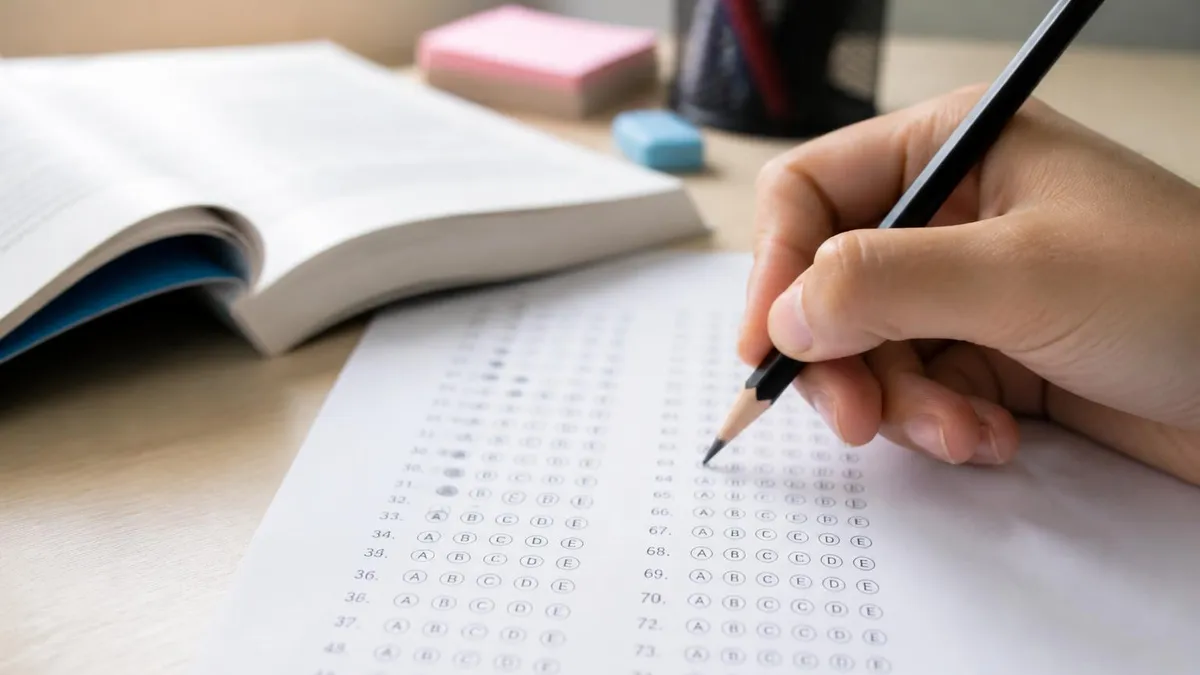
The Bar Exam Cannot Be Bluffed — But It Can Be Systematically Conquered
Unlike popular myths suggest, no amount of raw intelligence substitutes for disciplined, structured preparation. Candidates who follow a rigorous 10-week study plan, complete hundreds of official MBE practice questions, and write multiple timed essays consistently outperform those who rely on passive reading alone — regardless of their law school GPA or class rank.
Frank Abagnale is not the only high-profile figure whose relationship with the bar exam has captured public attention. Kim Kardashian's decision to pursue the California bar exam through an apprenticeship program sparked enormous media coverage and sparked genuine public interest in what the exam actually entails.
Kardashian publicly shared her struggles, noting that she failed the baby bar — the First-Year Law Students' Examination — multiple times before eventually passing. For anyone wondering did kim kardashian pass the bar exam, the answer is that she passed the baby bar but has not yet passed the full California Bar Examination as of recent reporting, illustrating just how demanding the process is.
The Kardashian story is instructive precisely because she had enormous resources — access to top tutors, flexible scheduling, and financial freedom — yet still found the examination genuinely difficult. This underscores what bar prep experts have long emphasized: the bar exam tests a specific cognitive skill set that must be actively developed through repetitive practice, not simply absorbed through passive study or purchased with money. The examination is deliberately designed to separate candidates who understand legal doctrine at a surface level from those who can apply it under pressure.
Historical bar exam failures among the famous are also instructive. John F. Kennedy Jr. famously failed the New York bar exam twice before passing on his third attempt in 1990, despite graduating from New York University School of Law. Franklin Roosevelt's distant relative, Hillary Clinton, failed the Washington D.C. bar exam before passing in Arkansas in 1973. These examples from accomplished, highly educated individuals demonstrate that bar exam failure is not a reflection of intelligence or professional potential — it reflects the unique demands of the exam format itself.
The supreme court bar exam results and outcomes for first-time takers vary significantly by law school attended, bar prep method, and jurisdiction. Data from the National Conference of Bar Examiners consistently shows that graduates of highly ranked law schools pass at higher rates than those from lower-ranked institutions, but even at elite schools, pass rates rarely reach 100 percent on the first attempt. This variability confirms that bar exam success requires preparation that goes beyond simply attending a prestigious law school.
State-by-state pass rate data reveals striking geographic variation. Nevada and California routinely post the lowest first-time pass rates in the nation, often below 45 percent for first-time takers. States like Missouri and South Dakota frequently report pass rates above 80 percent. These differences reflect variations in the cut score, the composition of the candidate pool, and the quality of local law school preparation programs. A candidate moving from a high-pass-rate state to California, for instance, should not assume their preparation approach will be sufficient without significant additional work.
The bar exam also tests practical lawyering skills through the Multistate Performance Test, which gives candidates a file of documents and asks them to complete a realistic legal task — drafting a client letter, writing a brief, or preparing a contract clause — within 90 minutes. This component rewards candidates who can quickly organize information, identify relevant legal standards, and communicate clearly under time pressure. It is the component least susceptible to pure memorization and most reflective of real legal practice, which is why many legal educators view it as the most intellectually honest part of the examination.
Bar exam questions are also carefully designed to test nuance and edge cases. On the MBE, the best answer is often the one that correctly identifies a subtle exception to a general rule — precisely the type of knowledge that comes from extensive practice with official questions, not from skimming outlines. Candidates who study primarily by reading commercial outlines without drilling questions consistently underperform compared to those who spend the majority of their time answering and reviewing practice questions. This is the single most consistent finding from bar prep research: active question practice beats passive reading by a wide margin.
Passing the bar exam is only one requirement for bar admission. Every jurisdiction also conducts a character and fitness investigation that can result in denial of licensure regardless of exam performance. Prior criminal convictions, academic dishonesty, financial irresponsibility, or misrepresentations on your application — the kind of conduct associated with figures like Abagnale — are among the most common grounds for disqualification. Begin this process early and disclose everything honestly.
Understanding the bar exam's history helps contextualize why the Abagnale story resonates so strongly and why it is almost certainly false. The bar examination as a formal gatekeeping mechanism has roots stretching back to the 19th century, but the modern standardized examination developed primarily after World War II.
The National Conference of Bar Examiners introduced the Multistate Bar Examination in 1972, and the examination format has grown progressively more rigorous and psychometrically sophisticated since then. The Louisiana exam that Abagnale allegedly passed in the late 1960s would have been somewhat less standardized than today's tests, but it was still a demanding written examination requiring substantial legal knowledge.
Louisiana's legal system presents a particular challenge because it is based on the Napoleonic Code rather than English common law. Civil law concepts like usufruct, predial servitudes, and forced heirship have no direct common-law equivalents. An aspiring attorney without formal legal training would need to master not only the general law subjects tested in other states but also an entirely distinct legal tradition. Louisiana bar examiners and attorneys familiar with the state's legal culture have consistently expressed skepticism about Abagnale's claim, noting that the unique complexity of Louisiana civil law makes self-taught passage particularly implausible.
The bar exam character and fitness review process would also have presented a significant obstacle to Abagnale's alleged legal career, even in the 1960s. State bars conduct background investigations on all applicants and can deny admission to anyone who has demonstrated a pattern of dishonesty, fraud, or criminal behavior.
Abagnale, who claims to have been a serial forger, impostor, and fraudster throughout this period, would presumably have had a very difficult time clearing this threshold. The fact that he supposedly practiced law for months without detection suggests either that no review was conducted, that records were falsified, or more likely, that the story is not accurate.
Looking at the results of new york bar exam and other state bar outcomes over recent decades reveals a consistent pattern: the examination consistently filters out candidates who lack deep doctrinal preparation, regardless of their intelligence, charm, or confidence. Bar examiners deliberately construct questions that reward careful legal analysis over intuition, and the scoring system is calibrated to create meaningful distinctions between passing and failing candidates. The exam is psychometrically sound in a way that makes it genuinely resistant to the kind of bluffing Abagnale described.
Perhaps the most lasting legacy of the Abagnale story, whether true or false, is the public conversation it sparked about what professional licensing actually measures and whether the bar exam is the right tool for ensuring attorney competency. Legal education reformers have long argued that the current bar exam format overemphasizes memorization of doctrinal rules at the expense of practical skills that actually matter in legal practice.
Some states have experimented with alternative paths to licensure, including supervised practice programs and portfolio-based assessments. These debates are genuinely important, but they are separate from the question of whether a clever impostor could have passed the existing exam.
Aspiring attorneys would do well to treat the Abagnale story as an entertaining myth rather than an inspiring blueprint. The lesson it offers is not that the bar exam can be beaten through cunning — it cannot. The real lesson is that the legal profession takes its gatekeeping responsibilities seriously, and that anyone who wants to practice law must invest the time, resources, and disciplined effort required to genuinely master the material. There are no shortcuts, and the bar exam is specifically designed to expose candidates who have relied on them.
For practical purposes, bar exam preparation should begin before you finish law school. Students who take practice MBE questions during their second and third years, who engage seriously with their bar-tested courses rather than just cramming for finals, and who develop strong written legal analysis skills through law review or moot court consistently outperform students who treat bar prep as something to be addressed only after graduation. The candidates who pass on the first attempt are almost uniformly those who treated preparation as a long-term project, not a last-minute sprint.
Practical bar exam preparation strategies have evolved considerably over the past two decades, driven by better data about what actually predicts exam success. The most important single predictor of bar passage is the volume of official MBE practice questions completed under timed conditions, with thorough review of every incorrect answer.
The NCBE publishes official practice materials that represent the gold standard, and most bar prep experts recommend completing at least 1,500 to 2,000 practice MBE questions before sitting for the real exam. Quality review — understanding not just why the right answer is right but why each wrong answer is wrong — matters as much as volume.
Essay preparation requires a different skill set. On the MEE, candidates have 30 minutes to read a fact pattern and write a well-organized legal analysis that identifies the relevant issues, states the applicable rules, applies them to the facts, and reaches a conclusion. The IRAC framework — Issue, Rule, Application, Conclusion — provides the structural scaffolding for effective bar essay writing, but candidates must practice it hundreds of times before it becomes automatic enough to execute reliably under exam pressure. Reading model answers and comparing them to your own work is essential for calibrating your performance.
The Multistate Performance Test rewards different skills again: efficient information processing, clear legal writing, and the ability to quickly identify what a supervising attorney would need from the task described. Many candidates neglect MPT preparation because they assume it tests "real world" skills that they already possess. This is a mistake. The MPT has specific conventions and expectations that must be learned, and candidates who practice it thoroughly can earn disproportionately strong scores on a component that their peers have underestimated.
Time management on exam day is a critical variable that many candidates underestimate during preparation. On the MBE, you have 1.8 minutes per question — enough time to read carefully and reason through the options, but not enough to second-guess yourself extensively or get stuck. Candidates who have never timed themselves doing MBE questions in real exam conditions frequently find that the time pressure alone degrades their performance significantly. Simulating the real testing environment, including sitting for full 100-question sessions without breaks, is essential preparation.
Mental and physical preparation also matter more than most bar candidates acknowledge. The bar exam is a two-day marathon that requires sustained cognitive performance under stress. Adequate sleep, exercise, and nutrition in the weeks leading up to the exam have measurable impacts on performance. Many bar prep experts specifically advise against staying up late to study in the final week — the marginal benefit of additional study time is far outweighed by the cognitive impairment caused by sleep deprivation on exam day itself. Treat the final week as a taper period, like the week before a marathon race.
One underappreciated preparation strategy is forming a study group with three to five other bar candidates for regular essay practice sessions. Talking through legal issues aloud with peers — explaining your reasoning, hearing challenges, and defending your analysis — builds the kind of active, flexible legal thinking that the bar exam demands. Study groups that meet weekly to review essays and debate difficult MBE questions consistently outperform isolated studiers, particularly on the essay components where nuanced application of doctrine matters most.
Finally, it is worth emphasizing that bar exam failure is not permanent failure. Many exceptional attorneys failed the bar exam on their first attempt — sometimes multiple attempts — before ultimately passing and going on to distinguished careers. The data consistently shows that first-time failure rates are substantial even among graduates of top law schools, and that most repeat takers who adjust their preparation strategy and retake the exam will ultimately pass. The bar exam is a high-stakes challenge, but it is a surmountable one for candidates who approach it with honesty about their weaknesses and commitment to systematic preparation.
Bar Questions and Answers

TN Bar Exam Results: Everything You Need to Know About Tennessee's Bar Exam

Ohio Bar Exam: Complete Guide to Requirements, Format, and How to Pass
Bar Exam Practice Test PDF (Free Printable 2026)

UBE Bar Exam: Structure, Scores, States, and How to Pass

Hardest Bar Exams in the US: Which States Are the Toughest to Pass?
About the Author
Attorney & Bar Exam Preparation Specialist
Yale Law SchoolJames R. Hargrove is a practicing attorney and legal educator with a Juris Doctor from Yale Law School and an LLM in Constitutional Law. With over a decade of experience coaching bar exam candidates across multiple jurisdictions, he specializes in MBE strategy, state-specific essay preparation, and multistate performance test techniques.