

ASO Practice Test
Updated for October 2026As threats to personal, corporate, and public safety evolve, the demand for trained and licensed Armed Security Officers (ASOs) has significantly increased. The Armed Security Officer Certification is a mandatory credential in most states for individuals who wish to carry a firearm while performing security duties. This certification ensures that officers are fully trained in firearms safety, legal responsibilities, and conflict de-escalation techniques. Whether guarding high-risk facilities or working in personal protection, obtaining this certification is essential for professionals seeking to enter or advance in armed security roles.
ASO Practice Test Questions
Prepare for the ASO - Armed Security Officer Certification exam with our free practice test modules. Each quiz covers key topics to help you pass on your first try.
ASO Access Control and Perimeter Security
ASO Exam Questions covering ASO Access Control and Perimeter Security. Master ASO Test concepts for certification prep.
ASO Weapons Retention and Tactical Positio...
Free ASO Practice Test featuring ASO Weapons Retention and Tactical Positioning. Improve your ASO Exam score with mock test prep.
ASO Conflict De-escalation and Reporting
ASO Mock Exam on Conflict De-escalation and Reporting. ASO Study Guide questions to pass on your first try.
ASO Contract Types & Administration
ASO Test Prep for Contract Types & Administration. Practice ASO Quiz questions and boost your score.
ASO Emergency Response Procedures
ASO Questions and Answers on Emergency Response Procedures. Free ASO practice for exam readiness.
ASO Ethics, Professional Conduct & Public ...
ASO Mock Test covering Ethics, Professional Conduct & Public Relations. Online ASO Test practice with instant feedback.
ASO Federal Acquisition Regulations
Free ASO Quiz on Federal Acquisition Regulations. ASO Exam prep questions with detailed explanations.
ASO Firearms Safety and Proficiency
ASO Practice Questions for Firearms Safety and Proficiency. Build confidence for your ASO certification exam.
ASO Firearms Training & Safety
ASO Test Online for Firearms Training & Safety. Free practice with instant results and feedback.
ASO Legal Authority and Jurisdiction
ASO Study Material on Legal Authority and Jurisdiction. Prepare effectively with real exam-style questions.
ASO Legal Use of Force & State Laws
Free ASO Test covering Legal Use of Force & State Laws. Practice and track your ASO exam readiness.
ASO Patrol and Observation Techniques
ASO Exam Questions covering Patrol and Observation Techniques. Master ASO Test concepts for certification prep.
ASO Report Writing and Documentation
Free ASO Practice Test featuring Report Writing and Documentation. Improve your ASO Exam score with mock test prep.
Important: The ASO exam covers multiple domains. Allocate more study time to unfamiliar topics while maintaining review of strong areas.
Key Takeaways
Free ASO Practice Test Online
ASO Certification is required by law in most states for any security officer carrying a firearm on duty.
The certification process includes background checks, firearms training, and knowledge of legal use-of-force.
Certified armed officers are eligible for higher-paying roles in both public and private sectors.
Continuing education and firearm requalification are often required for renewal.
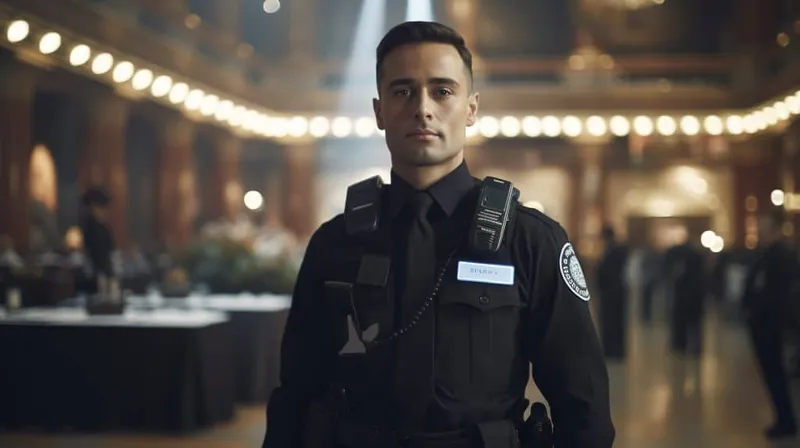
An Armed Security Officer is a licensed individual authorized to carry a firearm while performing security duties. These professionals often work in environments where the threat level is higher, such as banks, government buildings, critical infrastructure, corporate offices, and even schools or hospitals.

Why Is ASO Certification Important?
Due to the responsibility and potential risks involved in carrying a weapon, ASO certification is vital for the following reasons:
Public Safety: Certification ensures the officer can use a firearm responsibly and only when necessary.
Legal Compliance: Most states require licensure to carry a firearm while on duty.
Credibility: Certified officers are seen as more professional and trustworthy by employers.
Expanded Job Opportunities: Certification opens the door to advanced roles, such as executive protection and high-value transport security.
Requirements vary by state but generally include:
Minimum Age: Must be at least 18 or 21 depending on jurisdiction.
Background Check: Clean criminal record and sometimes mental health evaluations.
Firearms Training: Completion of state-approved firearm safety and marksmanship training.
Security Training: Completion of a basic security officer course (if not already licensed as an unarmed officer).
Drug Screening: Mandatory in many certification programs.
Certification Process
Complete an approved ASO training course that includes both classroom and range instruction.
Pass a written examination on firearm laws, safety protocols, and the ethical use of force.
Demonstrate proficiency in firearm handling through practical shooting exercises.
Submit an application with supporting documentation (e.g., training certificates, background check).
Receive state-issued credentials, often including a special license or badge for armed duties.
ASO licenses typically need to be renewed every 1–2 years depending on state regulations. Officers may be required to:
Complete firearms requalification at a shooting range.
Attend refresher courses on legal updates and use-of-force standards.
Maintain a record of continued employment in the security field.
ASO: Pros and Cons
- +ASO certification validates expertise recognized by employers nationwide
- +Certified professionals typically earn 15-20% higher salaries
- +Opens doors to advanced positions and leadership roles
- +Demonstrates commitment to professional standards and ethics
- +Builds a strong professional network through certification communities
- −Exam preparation typically requires 2-4 months of dedicated study
- −Certification and exam fees can range from $150-$500+
- −Must complete continuing education to maintain active certification
- −Pass rates vary — thorough preparation is essential for success
- −Some certifications require prerequisite experience or education
Pros and Cons at a Glance
| Pros | Cons |
|---|---|
| ASO certification validates expertise recognized by employers nationwide | Must complete continuing education to maintain active certification |
| Opens doors to advanced positions and leadership roles | Pass rates vary — thorough preparation is essential for success |
| Demonstrates commitment to professional standards and ethics | Some certifications require prerequisite experience or education |
Sample Armed Security Officer Certification Practice Questions
Try these questions from our free Armed Security Officer Certification practice tests. The correct answer and an explanation follow each question.
An armed security officer discovers a fire in a storage room during a patrol. What is the FIRST action the officer should take?
- A. Attempt to extinguish the fire using the nearest fire extinguisher
- B. Evacuate the building immediately without notifying anyone
- C. Activate the nearest fire alarm and call 911
- D. Secure the perimeter to prevent unauthorized access
Answer: C. Activate the nearest fire alarm and call 911
Activating the fire alarm and calling 911 ensures occupants are warned and professional firefighters are dispatched without delay.
An armed security officer should conduct a security check of their holster at the start of each shift to verify:
- A. The firearm is loaded with standard FMJ rounds
- B. The retention mechanism functions properly and the weapon is seated correctly
- C. The holster color matches the uniform
- D. The holster is positioned for cross-draw access
Answer: B. The retention mechanism functions properly and the weapon is seated correctly
Confirming the retention mechanism and proper seating ensures the weapon will be secure during patrol and available when needed.
An armed security officer witnesses a person collapse and become unresponsive. If the officer is trained in CPR, the priority sequence should be:
- A. Call for help, check for breathing, begin chest compressions
- B. Begin chest compressions immediately without calling for help
- C. Check for a pulse, administer AED shock, then call 911
- D. Position the victim, call family members, then call 911
Answer: A. Call for help, check for breathing, begin chest compressions
The correct sequence is to call for help to activate EMS, confirm unresponsiveness and absence of normal breathing, then begin CPR.
Which of the following is the primary legal difference between the arrest powers of a police officer and an Armed Security Officer making a citizen's arrest?
- A. An ASO can only arrest for felonies, while police can arrest for misdemeanors.
- B. Police can arrest based on probable cause, while an ASO must typically witness the crime.
- C. An ASO can detain a suspect indefinitely, while police have strict time limits.
- D. Police must read Miranda rights immediately, while an ASO is exempt.
Answer: B. Police can arrest based on probable cause, while an ASO must typically witness the crime.
A key distinction is the evidentiary standard. Police officers can make arrests based on probable cause, which is a reasonable belief that a crime has occurred. A private citizen, including most ASOs, must generally have directly witnessed the criminal act to legally perform a citizen's arrest.
Take the full Armed Security Officer Certification practice test

About the Author

Certified Protection Professional & Security Licensing Expert
John Jay College of Criminal JusticeMarcus Rivera is a Certified Protection Professional (CPP) and Physical Security Professional (PSP) with a Master of Science in Security Management from John Jay College of Criminal Justice. With 16 years of corporate security, loss prevention, and executive protection experience, he coaches security professionals through ASIS CPP, PSP, PCI, and state security guard licensing examinations.
Join the Discussion
Connect with other students preparing for this exam. Share tips, ask questions, and get advice from people who have been there.
View discussion (6 replies)