
Can You Do Anatomy and Physiology Online? The Complete Guide to Online A&P Courses
Can you do anatomy and physiology online? Yes — here's everything you need: best courses, lab options, tips, and how to succeed. 🎯

Can you do anatomy and physiology online? The short answer is yes — and millions of nursing, pre-med, and allied health students across the United States do exactly that every semester. Online anatomy and physiology courses have exploded in availability over the past decade, with accredited community colleges, universities, and professional platforms all offering full A&P sequences that satisfy prerequisites for nursing school, physical therapy programs, and medical school applications. Whether you are juggling a full-time job or simply prefer learning from home, the online format has become a fully legitimate pathway.
That said, not all online A&P courses are created equal, and the format does come with real trade-offs compared to sitting in a traditional classroom. Lab components, in particular, require careful evaluation. Some programs offer virtual dissection simulations, while others require students to attend in-person lab sessions on a hybrid schedule. Before you enroll, it is critical to confirm that the course you choose will be accepted by your target nursing or health-science program, because some schools still require face-to-face lab hours as a strict condition of admission.
Students who thrive in online A&P are typically self-motivated, organized, and comfortable studying large volumes of terminology and conceptual material without daily classroom structure. Anatomy and physiology is famously vocabulary-dense — you will encounter thousands of new terms across organ systems — so having a disciplined study schedule matters enormously. Many students underestimate the workload of an online A&P course and find themselves overwhelmed by midterm if they have not built consistent daily review habits from week one.
The good news is that the online environment offers tools and flexibility that traditional classrooms simply cannot match. You can replay lecture videos multiple times, pause to take detailed notes, access interactive 3D models of human anatomy at any hour of the day, and connect with study groups across the country. Many online platforms also integrate adaptive quizzing technology that identifies your weak areas and focuses your review accordingly, which can dramatically improve retention of complex material like cardiac physiology or the endocrine feedback loops.
Cost is another major advantage of the online format. Community college online A&P courses frequently cost a fraction of what four-year universities charge, and many of these courses carry the same accreditation and transferability as their expensive counterparts. For students who are budget-conscious and strategic, completing A&P I and A&P II at an accredited community college online and then transferring those credits to a nursing program can save thousands of dollars while still satisfying every prerequisite requirement.
Understanding exactly how hard the coursework will be before you commit is equally important. If you want an honest, data-driven preview of what online A&P involves in terms of exam difficulty, reading load, and time commitment, our guide on the online anatomy and physiology course difficulty level breaks down what students actually experience semester by semester. Reading that guide alongside this one will give you the clearest possible picture of whether online A&P is the right fit for your schedule, learning style, and academic goals.
This article covers everything you need to make a fully informed decision: how online A&P courses are structured, which platforms and institutions offer the best options, what the lab component looks like in an online setting, the pros and cons compared to in-person study, and the practical strategies that consistently separate students who earn A's from those who struggle to pass. By the end, you will have a concrete action plan for choosing, enrolling in, and succeeding in an online anatomy and physiology course.
Online Anatomy & Physiology by the Numbers

How Online A&P Courses Are Structured
Most online A&P courses deliver pre-recorded video lectures that students watch on their own schedule. Lecture segments typically run 15–30 minutes each and cover a single topic — such as membrane potentials or skeletal muscle contraction — allowing students to pause, rewind, and review at their own pace.
Online A&P courses usually follow a weekly module structure with reading assignments, auto-graded quizzes, and discussion board participation. These low-stakes weekly assessments help reinforce vocabulary and concepts before high-stakes exams, which often account for 60–70 percent of the final grade.
Laboratory work in online A&P can take several forms: virtual simulation platforms such as Visible Body or PhysioEx, at-home wet lab kits shipped to students, or hybrid in-person lab sessions held on campus. The format varies by institution, and some nursing programs specify which lab types they will accept.
Most accredited online A&P courses require proctored midterm and final exams to maintain academic integrity. Proctoring may be done through remote software like ProctorU or Respondus, or students may need to visit an approved testing center. Proctored exams typically cover 4–5 weeks of material at a time.
Quality online A&P courses provide regular instructor interaction through email, discussion boards, weekly office hours via video call, and detailed written feedback on lab reports. Strong instructor availability is one of the best predictors of student success in online A&P — check syllabi carefully before enrolling.
Choosing the right online A&P course requires more research than simply Googling the lowest tuition price. The single most important question to answer before enrolling is whether your target program — nursing school, dental hygiene, radiologic technology, or another allied health field — will accept the credits from that specific institution. Transfer credit policies vary widely, and some nursing programs have strict requirements about the accreditation type, the recency of the course (some require completion within five to seven years), and whether the lab component included real or virtual specimens.
Regional accreditation is the gold standard you should look for when evaluating any online A&P course. Schools accredited by bodies such as the Higher Learning Commission (HLC), the Southern Association of Colleges and Schools (SACS), or the Western Association of Schools and Colleges (WASC) carry credits that are almost universally transferable across the United States.
Nationally accredited schools and certificate-only platforms may offer cheaper or faster options, but their credits are frequently not accepted by community colleges or university nursing programs, which can create a costly mistake if you complete a full course only to discover it does not satisfy your prerequisite.
When evaluating specific online A&P courses, request or download the syllabus before enrolling. A strong syllabus will clearly list the textbook, the weekly topic schedule, the breakdown of graded components, the lab platform used, the proctoring policy, and the instructor's contact information and office hours. If a course does not publish its syllabus publicly or the instructor is listed as TBA, those are yellow flags worth investigating further before committing your time and money to that section.
Textbook choice also matters more in online A&P than in many other subjects, because the textbook often serves as your primary reference when you cannot immediately ask a question in a live classroom. The most widely used A&P textbooks in US colleges include Marieb and Hoehn's Human Anatomy and Physiology, Tortora and Derrickson's Principles of Anatomy and Physiology, and Saladin's Anatomy and Physiology: The Unity of Form and Function.
All three are excellent resources with detailed diagrams, practice questions, and companion digital tools. Many students find that renting or purchasing an older edition saves significant money while covering virtually identical material.
Platform-based courses from providers like Coursera, edX, or Khan Academy offer excellent supplementary content but should not be used as standalone A&P courses if you need transferable credit. These platforms are best used as study aids alongside a formally enrolled course, not as substitutes for accredited coursework. That said, Khan Academy's free biology and physiology videos are remarkably thorough and work extremely well as a preview before a semester begins or as a refresher when reviewing a particularly difficult system like the nervous system or kidney function.
Scheduling realistically is another decision point that many first-time online A&P students get wrong. A standard semester-length online A&P course runs 15–16 weeks, but accelerated summer or winter sessions may compress the same material into 8 or even 6 weeks. Accelerated formats can work well for disciplined students who have no competing obligations during that period, but they carry a significantly higher dropout and failure rate than standard semester formats. If you are taking online A&P for the first time while also working or caring for family, the full-semester format is almost always the safer and more effective choice.
Finally, look at student reviews and course completion rates when they are publicly available. Many community college websites publish completion and success rates for individual courses in their catalog, and these numbers can reveal a lot about the difficulty calibration and instructional quality of a specific online section. A course with a 40 percent completion rate may signal disorganized instruction, unrealistic exam difficulty, or poor student support — all of which are problems you want to identify before, not after, enrollment.
Lab Options for Online Anatomy and Physiology Courses
Virtual lab platforms such as Visible Body, PhysioEx, Human Anatomy Atlas, and Anatomy.TV allow online students to explore three-dimensional models of the human body, perform simulated dissections, and conduct physiological experiments on screen. These platforms have advanced dramatically in the past five years and now include photorealistic rendering of tissues, interactive labeling exercises, and data-recording tools that mirror the kind of observational work done in real dissection labs. For courses that use virtual labs exclusively, students typically complete weekly lab assignments and submit lab reports based on their digital observations.
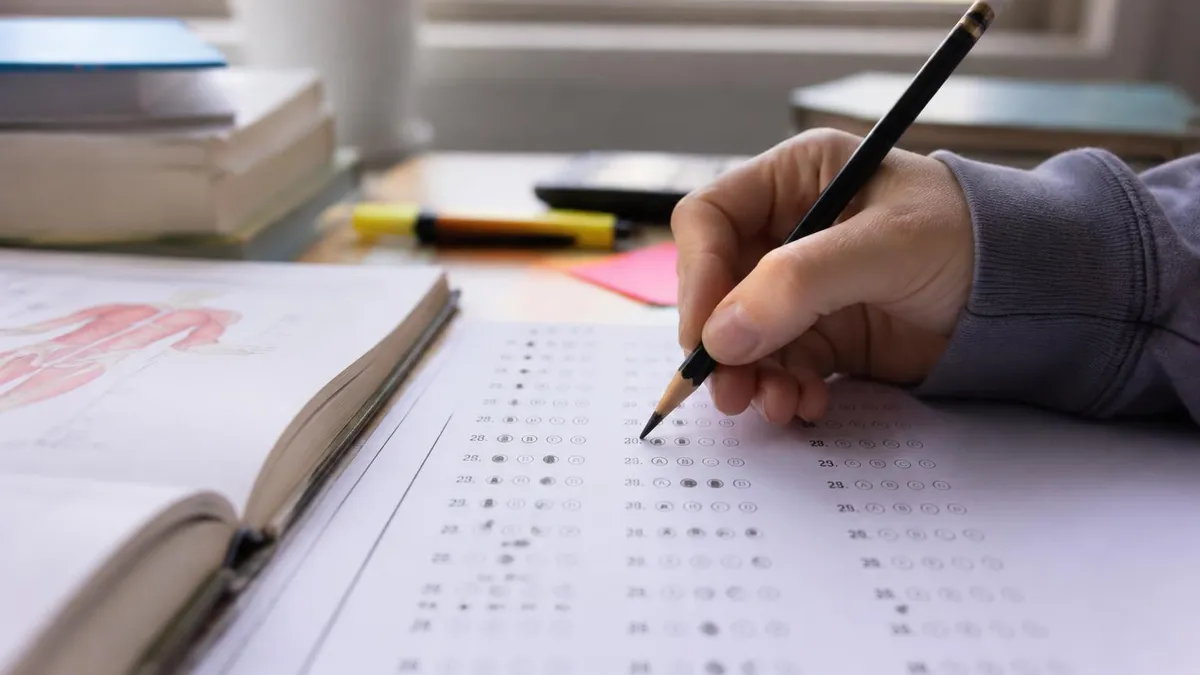
The primary limitation of virtual labs is the absence of tactile experience with actual specimens. Many anatomy educators and nursing program directors feel that handling real tissue — whether preserved cat specimens, sheep brains, or human cadavers — develops a spatial and textural understanding of anatomy that no screen can fully replicate. For this reason, some nursing programs explicitly require at least a partial in-person lab component as a condition of accepting online A&P credits. Always verify this with your target program's admissions office before choosing an entirely virtual lab course.
Online A&P vs. In-Person A&P: Honest Trade-Offs
- +Flexible scheduling allows students to study around work, family, and other commitments
- +Ability to rewatch lecture videos multiple times for complex topics like neurophysiology
- +Lower cost at community colleges compared to four-year university in-person sections
- +Access to interactive 3D anatomy tools and digital resources not available in all classrooms
- +Eliminates commute time, freeing up additional study hours each week
- +Wider selection of instructors and institutions without geographic restriction
- −Requires high self-discipline; no mandatory class attendance to enforce daily study habits
- −Lab component may be virtual only, which some nursing programs do not accept
- −Less spontaneous interaction with instructors; questions require email or scheduled office hours
- −Students miss peer-to-peer learning dynamics of group dissection and in-class discussion
- −Proctored exams add logistical complexity, especially in remote or rural areas
- −Accelerated online formats can be overwhelming without prior college-level science background
Online A&P Enrollment Checklist: 10 Steps Before You Register
- ✓Confirm the institution holds regional accreditation recognized by your target nursing or health program.
- ✓Contact your target program's admissions office and ask specifically whether online A&P credits from your chosen institution are accepted.
- ✓Download and review the full course syllabus, including the lab platform, proctoring policy, and grading breakdown.
- ✓Verify whether the lab component is virtual, hybrid in-person, or at-home kit — and confirm your target program accepts that format.
- ✓Check the course's completion and success rate in the college's course catalog if publicly available.
- ✓Confirm when the credits expire — many nursing programs require A&P completion within five to seven years of application.
- ✓Budget realistically for the course: tuition, textbook, lab kit or platform fee, and proctoring service fees.
- ✓Choose the full-semester format rather than an accelerated session if this is your first time taking A&P.
- ✓Set up your study environment and technology: reliable internet, a computer with webcam, and the required lab software installed before day one.
- ✓Block out 10–15 hours per week on your calendar specifically for this course before the semester begins.
The First Two Weeks Predict Your Final Grade
Research on online course completion consistently shows that students who fall behind in the first two weeks of an online science course rarely catch up by the end of the semester. Treat the first two weeks of online A&P as the most important of the entire course — establish your study routine, introduce yourself to your instructor, and complete every assignment early so you have buffer time when material gets harder around week six.
Succeeding in an online anatomy and physiology course demands study strategies that are fundamentally different from what works in a traditional classroom. The biggest mistake online A&P students make is passive re-reading — going through the textbook chapter multiple times under the assumption that repeated exposure creates retention. Research on how the brain encodes scientific vocabulary and conceptual models is unambiguous: active retrieval practice, not passive review, is the mechanism that builds durable long-term memory. This means you need to be testing yourself on material — not just reading it — from day one of the course.
Flashcard systems such as Anki are extraordinarily well-suited to anatomy terminology because they use spaced repetition algorithms to schedule review of each card at the optimal moment for long-term retention. Creating anatomy flashcards is itself a valuable study activity — the act of deciding how to describe a term in your own words forces you to process the material at a deeper level than simply reading a textbook definition. A good target is to build and actively review 20 to 30 new Anki cards per day throughout the semester, which will keep your vocabulary knowledge growing steadily without cramming.
Drawing anatomical structures by hand, without looking at your textbook or notes, is another highly effective study method for online A&P. The process of attempting to recall and reproduce a diagram — even imperfectly — forces your brain to consolidate spatial relationships between structures that pure reading cannot achieve. After drawing from memory, compare your diagram to the textbook illustration and annotate any structures you missed or mislabeled. Repeating this process across multiple organ systems builds the kind of three-dimensional mental model that anatomy exams test directly.
Online study groups are underutilized by the majority of online A&P students, yet the research on collaborative learning consistently shows that explaining concepts to peers deepens understanding more than solitary study does. Most online A&P courses have discussion boards where students interact, and many students form supplemental study groups on Discord or Zoom outside of the official course platform. Committing to one or two weekly virtual study sessions where members take turns explaining organ systems, quizzing each other on terminology, and working through practice exam questions creates accountability and exposes gaps in understanding that solo study often misses.
Practice exams and past test questions should be incorporated into your study routine from at least two weeks before each major exam. Many online A&P textbooks include end-of-chapter practice questions, and platforms like the ones offered here provide additional exam-style questions organized by topic.
Working through practice questions under timed conditions — giving yourself the same time per question that the real exam allocates — develops the exam stamina and pacing skills that determine performance on high-stakes tests. Do not just check whether your answer was correct; read the explanation for every question you get wrong and for every question you answered with uncertainty, even if you happened to pick the right option.
Managing cognitive load is especially important in online A&P because the material is dense and cumulative. Every organ system you study builds on earlier material — cardiovascular physiology cannot be understood without a solid foundation in cell biology and histology, and renal physiology builds on fluid balance concepts introduced in early chapters.
If you feel confused or behind on a topic, address it immediately rather than hoping clarity will come later. Schedule a video office hour with your instructor, post a specific question on the discussion board, or find a supplementary video on that exact topic before moving on to the next unit.
Sleep and physical rest are not optional in anatomy and physiology — they are neurologically essential to the memory consolidation process that transforms short-term recall into long-term knowledge. Students who study through the night before anatomy exams consistently underperform relative to those who study earlier in the day and get a full night of sleep before the exam. Build your study schedule so that your final review session ends at least two hours before your normal bedtime on the night before an exam, giving your brain time to consolidate what you reviewed during sleep.

Not all online A&P credits automatically satisfy nursing or allied health program prerequisites. A growing number of programs now require students to submit a course description, syllabus, and lab documentation for review before confirming credit acceptance. Never assume your credits will transfer — get written confirmation from your target program's admissions or prerequisite coordinator before you pay tuition and invest a full semester.
Getting your online A&P credits accepted by a nursing or health science program is the ultimate goal, and the steps you take before and after completing the course matter as much as passing the exams themselves. As mentioned earlier, confirming acceptance in writing before enrolling is the most important protective step you can take. But there are several additional actions that maximize the likelihood of a smooth credit transfer experience and position you as a well-prepared applicant when the time comes to apply to your program.
Keep all original course documentation: your official transcript, the course syllabus with lab component details, the textbook title and edition, the name of the institution's accrediting body, and any grade reports showing your performance. Some nursing programs request all of these documents during the application review process, particularly if the course was completed at a lesser-known institution or through an online-only format. Having a complete file ready to submit on demand demonstrates organizational competence and makes the admissions coordinator's job easier, which never hurts your application.
Aim for a grade of B or better in online A&P. Most competitive nursing programs specify a minimum grade of C for prerequisite completion, but the realistic competitive threshold at programs with limited seats is typically B or higher, especially for applicants whose overall GPA is in a competitive range. A strong A&P grade signals to admissions committees that you can handle the rigorous science content of nursing school and that you took the prerequisite seriously rather than simply checking a box. In highly competitive programs, even a single letter grade difference in prerequisite science courses can affect admissions decisions.
Consider taking A&P I before A&P II rather than attempting both simultaneously. While some students try to accelerate by enrolling in both courses in the same semester to save time, the vast majority find that the mental load is unsustainable — both courses are demanding on their own, and there is significant overlap and reinforcement between units that benefits from being taken sequentially.
A&P I typically covers foundational topics like cells, tissues, the integumentary system, the skeletal system, and the muscular system, while A&P II builds on that foundation to cover the nervous system, the special senses, the endocrine system, the cardiovascular system, and homeostatic mechanisms. Sequential enrollment allows knowledge from A&P I to solidify before A&P II introduces its more complex systems.
After completing both semesters, consider how you will maintain your anatomy and physiology knowledge during any gap between course completion and nursing school start. A&P knowledge is use-it-or-lose-it — students who completed their prerequisites two or three years before matriculating to nursing school often struggle in pharmacology and pathophysiology courses because the foundational A&P knowledge has faded. Creating a maintenance review schedule using your Anki decks, revisiting your lab notes periodically, or working through practice questions on a monthly basis keeps your knowledge active and reduces the re-learning burden when nursing coursework begins.
Networking with instructors during your online A&P course can also yield unexpected long-term benefits. Strong online instructors often have connections to local clinical sites, can write letters of recommendation for nursing school applications, and may know about scholarships or bridge programs specifically designed for students transitioning from prerequisite coursework into health science degrees. Building a genuine professional relationship with your A&P instructor — by participating actively in discussion boards, attending virtual office hours, and submitting high-quality work — creates opportunities that purely transactional students miss.
Finally, celebrate the completion of your online A&P sequence as the serious academic achievement it represents. Anatomy and physiology is one of the most academically demanding prerequisite courses in the American higher education system, and completing both semesters with strong grades — especially in the more challenging online format — demonstrates genuine scientific aptitude, discipline, and commitment to a healthcare career. These qualities are exactly what nursing schools and allied health programs are looking for in their applicants, and your A&P performance will be one of the strongest signals you send during the admissions process.
Practical preparation for online A&P exams requires a system built well in advance of test day, not assembled the night before. The most effective approach is to treat every week of the course as a mini preparation cycle: learn the new material, actively review it using retrieval practice, connect it to previously learned material, and complete any practice questions available for that week's topics before moving on. Students who follow this weekly compression cycle arrive at each major exam with material already well-encoded rather than attempting to learn four weeks of content in the 48 hours before the test.
Creating a master concept map of the human body systems and their interconnections is one of the highest-leverage study activities you can invest in during your online A&P course.
A concept map places each organ system as a node and draws connections to every other system it interacts with — showing, for example, how the nervous system regulates the cardiovascular system, how the endocrine system modulates the reproductive system, and how the lymphatic system supports the immune system. Building this map incrementally as you progress through the course produces a visual reference that makes holistic exam questions significantly easier to answer.
Time management on online A&P exams is a skill that must be developed deliberately. Most proctored online A&P exams allocate approximately one minute per question, which means a 75-question exam must be completed in 75 minutes. Under these conditions, you cannot afford to spend five minutes on a single anatomy identification question.
Practice timed quizzes regularly so that you develop an intuitive sense of when to commit to an answer and move on versus when a question warrants careful deliberation. If you encounter a question you genuinely cannot answer within 90 seconds, mark it and return to it after completing the rest of the exam.
Physiology questions — as opposed to pure anatomy identification questions — tend to require more analytical reasoning and take longer to answer. Physiology exam questions typically present a clinical scenario and ask you to predict what would happen if a specific variable changed: What happens to heart rate if stroke volume decreases? How does the kidney respond to decreased blood osmolarity?
What effect does sympathetic nervous system activation have on digestion? Preparing for these questions requires understanding the cause-and-effect logic of each physiological mechanism, not just memorizing isolated facts. Practice explaining each mechanism out loud in your own words until you can do it fluently without notes.
Managing test anxiety in the online proctored format is a practical concern that many students overlook until exam day. The presence of proctoring software — which may monitor your eye movements, flag off-screen glances, or require a room scan before the exam begins — adds a layer of stress that some students find disruptive.
Familiarize yourself thoroughly with your course's proctoring platform before your first exam by running any available practice sessions or tutorial walkthroughs. Ensure your testing environment is clean, quiet, well-lit, and free of prohibited materials at least 30 minutes before the exam window opens so that the setup process does not consume mental energy you need for the test itself.
Reviewing your graded exams in detail is non-negotiable for continuous improvement across the semester. When a graded exam is returned, go through every question you missed and every question you guessed correctly — because a lucky correct guess on a concept you do not actually understand will likely become a missed question on the final exam when that concept appears again.
Write down the specific knowledge gap each missed question reveals, add new flashcards covering that gap, and revisit that topic in your textbook the same week you receive the graded exam. This closing-the-loop process turns each exam from a mere grade into a targeted study guide for everything that comes next.
Entering your first clinical experience in nursing or allied health school with strong A&P knowledge is one of the most significant advantages you can give yourself. Nurses who deeply understand the cardiovascular, respiratory, and renal systems make faster, more confident clinical decisions. Physical therapists who genuinely know musculoskeletal anatomy produce better treatment plans.
Diagnostic imaging students who understand human anatomy in three dimensions interpret images more accurately. Every hour you invest in truly mastering your online anatomy and physiology course pays dividends across the entire span of your healthcare career, making it one of the highest-return academic investments you will ever make.
Anatomy Physiology Questions and Answers

How Hard Is Anatomy and Physiology? The Complete Honest Guide for Students

Eye Anatomy and Physiology: The Complete Guide to Understanding How Your Eyes Work
Anatomy and Physiology PDF: Complete Free Download Guide for 2026 Students
Human Anatomy and Physiology Book: The Complete Guide to Choosing, Using, and Mastering the Best Textbooks for 2026

Best Way to Learn Anatomy and Physiology: A Complete Student Guide
About the Author

Educational Psychologist & Academic Test Preparation Expert
Columbia University Teachers CollegeDr. Lisa Patel holds a Doctorate in Education from Columbia University Teachers College and has spent 17 years researching standardized test design and academic assessment. She has developed preparation programs for SAT, ACT, GRE, LSAT, UCAT, and numerous professional licensing exams, helping students of all backgrounds achieve their target scores.