
ACS Chemistry 2026 October: Complete Guide to the American Chemical Society's Standardized Exams, Membership, and Career Resources
🏆 ACS chemistry guide covering standardized exams, membership benefits, certifications, journals, and study strategies for students and professionals.

ACS chemistry is the umbrella term for everything connected to the American Chemical Society, the world's largest scientific organization devoted to a single discipline. Founded in 1876, the society now supports more than 173,000 members across 140 countries and shapes the way chemistry is taught, tested, published, and practiced. For students, ACS chemistry usually means standardized exams that determine course grades, placement, or graduation eligibility. For professionals, it means peer-reviewed journals, certifications, regional meetings, and a career network that spans academia, industry, and government laboratories.
The phrase carries different weight depending on who you ask. Undergraduate students hear ACS chemistry and picture the dreaded standardized final in general chemistry or organic chemistry, a 70-question multiple-choice test with a national percentile attached. Graduate students think of certified bachelor's degree programs, the Committee on Professional Training, and the ACS Style Guide for thesis formatting. Industrial chemists associate the term with conferences, divisions, and the Chemical Abstracts Service that indexes virtually every published compound and reaction in modern science.
This guide walks through every major dimension of ACS chemistry in 2026, from exam logistics and scoring conventions to membership tiers, awards, journals, and study tactics. Whether you are preparing for an upcoming standardized test, weighing the value of a student affiliate membership, or trying to understand how impact factors influence which journals to target, the sections below offer concrete data, practical timelines, and references to American Chemical Society resources you can use immediately to make better-informed decisions.
The standardized exam program deserves special attention because it touches the largest audience. Roughly half a million students take an ACS exam each year, ranging from high school general chemistry placement assessments to graduate-level diagnostic instruments in physical and inorganic chemistry. These tests are designed by the ACS Examinations Institute at Iowa State University, normed against national samples, and published with percentile tables that let any chemistry department compare its students against thousands of peers across the country.
Beyond exams, the society publishes more than 75 peer-reviewed journals, including the flagship Journal of the American Chemical Society, which has remained among the most cited chemistry titles for over a century. The publications arm overlaps with Chemical & Engineering News, the weekly trade magazine that reaches every member's inbox with policy updates, salary surveys, and reporting on emerging research. Together these resources form the practical infrastructure that working chemists rely on for current awareness.
Membership benefits extend well past publications. Members access employment services, salary calculators based on the annual ComphTools survey, mentoring matches through the network database, and discounted registration at the spring and fall national meetings that each draw 12,000 to 18,000 attendees. The society also runs scholarship programs, project SEED for high school students from economically disadvantaged backgrounds, and the ACS Bridge Project that supports underrepresented students entering chemistry graduate programs.
By the end of this article you will know which ACS chemistry exam matches your course, what scores typically translate to which letter grades, how to budget your preparation across weeks, and how to use membership resources whether you are still in college or already five years into industry. Use the table of contents to jump to the section most relevant to your situation, or read straight through for a complete picture of how the society operates and where you fit into its ecosystem in 2026.
ACS Chemistry by the Numbers

ACS Chemistry Exam Format and Structure
| Section | Questions | Time | Weight | Notes |
|---|---|---|---|---|
| General Chemistry First Term | 70 | 110 min | Standalone | covers stoichiometry, thermochemistry, atomic structure |
| General Chemistry Second Term | 70 | 110 min | Standalone | kinetics, equilibrium, electrochemistry, nuclear |
| Organic Chemistry Full Year | 70 | 110 min | Standalone | mechanisms, synthesis, spectroscopy |
| Physical Chemistry | 60 | 100 min | Standalone | thermodynamics, quantum, statistical mechanics |
| Analytical Chemistry | 60 | 115 min | Standalone | quantitative methods, instrumentation |
| Total | 70 | 110 minutes | 100% |
Membership in ACS chemistry organizations follows a tiered structure that scales with career stage and engagement. The undergraduate student member category costs $25 annually and unlocks the same digital journal access, career center, and meeting discounts that full members enjoy, minus voting rights in society elections. This tier exists because the society made a strategic decision in the 1990s to seed loyalty early, and the data suggests the bet worked: roughly 45 percent of student affiliates renew into full membership within three years of graduation.
Graduate student membership costs $50 per year and adds eligibility for travel grants to national meetings, dissertation completion fellowships in select divisions, and access to the ACS Bridge Project mentor network. Postdoctoral and early career members pay tiered dues that ramp from $87 to $174 over the first five years after a terminal degree. This sliding scale reflects the salary realities of postdoc positions, which the 2025 ComphTools survey pegged at a median $58,400 in chemistry compared to $112,000 for industry PhDs at the same career stage.
Full professional membership at $174 annually unlocks the complete benefits package: discounted print subscriptions to Chemical & Engineering News, eligibility to vote and run for office, division memberships, local section participation, and access to the salary calculator tool. The salary calculator deserves a brief mention because it draws on more than 6,000 anonymous member responses each year and lets you benchmark against peers by degree, location, function, and industry sector with a precision no third-party tool matches.
Beyond individual membership, the society sustains an extensive volunteer infrastructure. There are 184 local sections in the United States and 32 international chapters, each hosting monthly meetings, science fairs, National Chemistry Week outreach events, and award banquets. Most sections welcome non-members at events, which makes them an easy way to test the waters before paying dues. Division memberships, by contrast, require ACS membership and cost an additional $10 to $25 per division annually.
The 33 technical divisions cover everything from agricultural and food chemistry to nuclear chemistry and the chemistry of materials. Each division runs its own programming at the spring and fall national meetings, awards its own prizes, and publishes newsletters with hiring announcements and research highlights. For someone trying to break into a specific subfield, joining the relevant division is the single highest-use move available, often more valuable than the umbrella membership itself for networking purposes.
Members also gain free access to the SciFinder search interface during their student years through campus subscriptions, though SciFinder licenses for individuals run several thousand dollars annually and remain primarily an institutional purchase. Reaxys, the competing platform from Elsevier, operates similarly. For chemists in industry without institutional access, the workaround is often Google Scholar combined with an ACS member subscription to specific journals of interest, which the society offers at member rates well below the institutional list price.
Finally, the society maintains the Committee on Professional Training, which certifies chemistry bachelor's degree programs at U.S. institutions. As of 2026, 688 programs hold certification, meaning their curriculum, faculty credentials, instrumentation, and laboratory hours meet ACS standards. Graduating from a certified program puts the phrase "ACS-certified bachelor's degree in chemistry" on your resume, which carries weight in industry hiring and is occasionally required for federal laboratory positions. Check your institution's status through the ACS Exam directory before assuming certification.
ACS Practice Test Questions
Prepare for the ACS - American Chemical Society exam with our free practice test modules. Each quiz covers key topics to help you pass on your first try.
ACS Awards and Recognition
ACS Exam Questions covering ACS Awards and Recognition. Master ACS Test concepts for certification prep.
ACS History and Founding
Free ACS Practice Test featuring ACS History and Founding. Improve your ACS Exam score with mock test prep.
ACS Membership and Benefits
ACS Mock Exam on ACS Membership and Benefits. ACS Study Guide questions to pass on your first try.
ACS Policy and Advocacy
ACS Test Prep for ACS Policy and Advocacy. Practice ACS Quiz questions and boost your score.
ACS Publications and Journals
ACS Questions and Answers on ACS Publications and Journals. Free ACS practice for exam readiness.
ACS Conference and Events
ACS Mock Test covering Conference and Events. Online ACS Test practice with instant feedback.
ACS Divisions and Local Sections
Free ACS Quiz on Divisions and Local Sections. ACS Exam prep questions with detailed explanations.
ACS Chemistry Subject Areas and Specializations
General chemistry forms the foundation tested in nearly every introductory ACS exam. The standardized first-term exam covers stoichiometry, atomic and molecular structure, periodic trends, gas laws, thermochemistry through Hess's law, and an introduction to bonding. Roughly 65 percent of the questions are conceptual rather than purely computational, which surprises students conditioned by textbook problem sets that emphasize plug-and-chug arithmetic.
The second-term exam shifts to kinetics, equilibrium including acid-base and solubility, thermodynamics with entropy and free energy, electrochemistry, and nuclear chemistry. Questions often combine two concepts in a single item, asking for instance how a temperature change affects both the equilibrium constant and the cell potential. Students who master each topic in isolation but never practice cross-topic integration tend to underperform by 10 to 15 percentile points relative to their internal expectations.
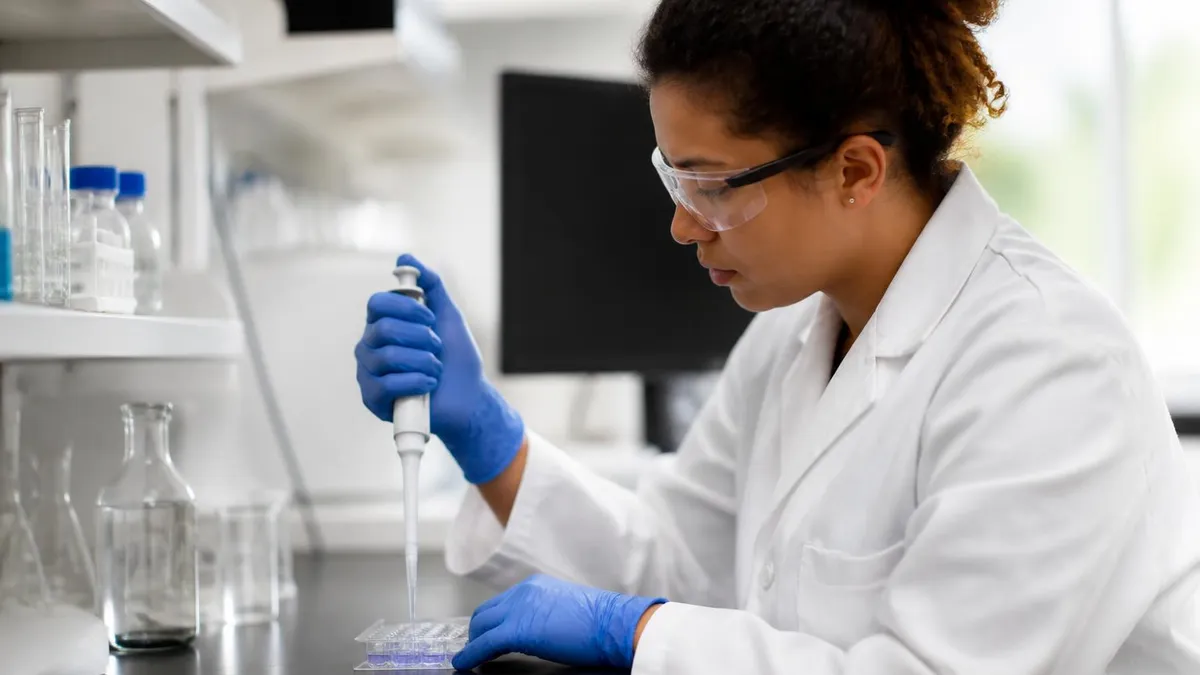
ACS Chemistry Standardized Exams: Advantages and Drawbacks
- +Nationally normed scores let departments compare students objectively against peers
- +Same exam content for years allows reliable longitudinal trend analysis
- +Detailed topic outlines and study guides published well in advance of testing
- +Multiple-choice format eliminates grading subjectivity and partial credit disputes
- +Affordable per-student cost compared to commercial testing alternatives
- +Strong alignment with mainstream textbooks used at most U.S. universities
- −Multiple-choice format cannot assess synthesis design or open-ended problem solving
- −Heavy emphasis on speed disadvantages students who think methodically
- −Norm tables based on traditional populations may understate value of newer pedagogies
- −Some questions reference older nomenclature or conventions phased out of textbooks
- −Limited accommodations for students with documented learning differences in some testing centers
- −Cannot reflect laboratory technique, scientific communication, or research skills
Pros and Cons at a Glance
| Pros | Cons |
|---|---|
| Nationally normed scores let departments compare students objectively against peers | Multiple-choice format cannot assess synthesis design or open-ended problem solving |
| Same exam content for years allows reliable longitudinal trend analysis | Heavy emphasis on speed disadvantages students who think methodically |
| Detailed topic outlines and study guides published well in advance of testing | Norm tables based on traditional populations may understate value of newer pedagogies |
| Multiple-choice format eliminates grading subjectivity and partial credit disputes | Some questions reference older nomenclature or conventions phased out of textbooks |
| Affordable per-student cost compared to commercial testing alternatives | Limited accommodations for students with documented learning differences in some testing centers |
| Strong alignment with mainstream textbooks used at most U.S. universities | Cannot reflect laboratory technique, scientific communication, or research skills |
ACS Chemistry Exam Preparation Checklist
- ✓Confirm with your instructor which specific ACS exam version you will take
- ✓Order the official ACS Examinations Institute study guide at least eight weeks before test day
- ✓Complete a full-length timed practice exam to establish a baseline percentile
- ✓Build a topic-by-topic weakness inventory based on practice test mistakes
- ✓Schedule three 90-minute study blocks per week with specific topic assignments
- ✓Practice answering 70 questions in 110 minutes, simulating exam pacing weekly
- ✓Review every incorrect answer until you can explain the correct reasoning aloud
- ✓Memorize key equations that are not provided on the exam reference sheet
- ✓Take the final practice exam within three days of the actual test date
- ✓Prepare exam-day logistics: ID, calculator, snacks, and arrival timing

The 60th percentile is closer than you think
National data show that students who complete two full-length ACS practice exams under timed conditions outperform those who only do topic-by-topic review by an average of 14 percentile points. The single highest-use prep activity is timed full-length practice, not flashcards or rereading textbook chapters.
Understanding ACS exam scoring requires separating raw scores from percentile rankings. A raw score is simply the number of questions answered correctly out of 70 (or 60 on shorter exams). The ACS Examinations Institute then publishes norm tables that translate each raw score into a national percentile based on the most recent norming sample, which typically draws from 12,000 to 25,000 students at dozens of institutions across the country. The percentile, not the raw score, is what most chemistry departments use for grade assignment.
For the general chemistry first-term exam, the 50th percentile typically lands at a raw score of 38 out of 70, or roughly 54 percent correct.
This seems low to students accustomed to grading scales where 70 percent equals a C and 90 percent equals an A. The reality is that ACS exams are designed to be difficult enough that the median student scores about half the questions correctly, which preserves discriminating power across the full range of ability. A score of 50 out of 70 corresponds to roughly the 80th percentile, and 55 out of 70 sits near the 92nd percentile.
Organic chemistry norm tables follow a similar pattern but with slightly higher raw scores at each percentile, reflecting the fact that students taking organic have already self-selected by surviving general chemistry. The 50th percentile in organic typically requires 35 out of 70 correct, and the 80th percentile demands roughly 48 out of 70. Physical chemistry runs in the opposite direction with even lower raw scores at each percentile due to the technical difficulty of the material and the smaller, more variable norming sample.
Departments translate percentiles into letter grades using internal policies that vary widely. Some institutions use a strict policy where the 80th percentile equals an A, 60th equals a B, 40th equals a C, and so on. Other departments adjust based on the local distribution, recognizing that their student body may be stronger or weaker than the national norm. A few institutions use the exam as a small fraction of the final grade rather than the dominant component, which reduces the stakes considerably for any single test administration.
The Examinations Institute releases new versions of each exam every three to six years, with the previous version then becoming available for instructor use as a midterm or final without affecting the official norm tables. This rolling release schedule means that the norm tables remain accurate for the currently active version, and instructors who suspect their students may have seen the active exam can request the previous version instead. Students cannot purchase or legally access live exam forms outside of officially proctored administrations.
For students aiming to improve their score, the most useful resource published by the institute is the official Study Guide, which contains roughly 250 retired questions across all topic areas with worked solutions. The guide retails for around $25 and is widely considered the single best preparation tool because the question style, distractor design, and difficulty calibration match the live exam more closely than any third-party material. The ACS Style Guide, by contrast, addresses scientific writing rather than exam preparation.
One scoring nuance often missed: there is no penalty for incorrect answers on ACS exams beyond simply not earning the point. This means guessing is strictly advantageous when you cannot eliminate any answer choice, and even more advantageous when you can eliminate one or two. Students who leave blanks at the end due to time pressure typically lose two to three percentile points compared to those who fill in random guesses for the remaining questions in the final minute.
The ACS publishes multiple active versions of each exam category, and study guides are version-specific. Studying from the wrong guide can produce a noticeable mismatch in question style and emphasized topics. Always confirm with your instructor which exam form code you will take before purchasing preparation materials.
Awards and recognition occupy a central place in ACS chemistry culture, both as career milestones for active researchers and as historical signposts that mark the field's evolution. The society administers more than 60 national awards each year, ranging from the Priestley Medal as the society's highest honor to specialized prizes in fields like polymer chemistry, computational chemistry, and chemistry education. Priestley Medal recipients receive a gold medal, a $30,000 honorarium, and the right to deliver the keynote address at a spring national meeting.
Below the Priestley Medal sit several tier-one awards: the Arthur C. Cope Award for outstanding achievement in organic chemistry, the James Flack Norris Award in physical organic chemistry, the Peter Debye Award in physical chemistry, and the ACS Award for Creative Work in Synthetic Organic Chemistry. Each carries a $5,000 honorarium and a symposium dedicated to the recipient's research. Winning any of these is a career-defining recognition that typically arrives after twenty or more years of sustained research output.
The ACS Fellows program, established in 2009, recognizes members for outstanding achievements in and contributions to science, the profession, and the society itself. Each year approximately 100 new Fellows are named, bringing the total active Fellows count to roughly 2,000. Fellow status is conferred for life and is increasingly valued in tenure cases, grant applications, and academic hiring decisions. Nominations require letters from existing Fellows and a documented record of both scientific contribution and service.
Journals published by ACS Publications form a second pillar of recognition. Publishing in the Journal of the American Chemical Society remains a milestone for any chemistry researcher, partly because JACS rejection rates hover near 70 percent and partly because impact factor calculations consistently place the journal among the top general chemistry titles globally. The 2025 impact factor for JACS was approximately 15.0, with citation half-lives indicating that papers continue accruing citations for more than a decade after publication.
The broader ACS Publications portfolio includes specialized journals at every tier of impact. Nano Letters, ACS Nano, Chemical Reviews, and Accounts of Chemical Research occupy the high-impact strata for nanoscience, reviews, and personal research summaries respectively. Mid-tier titles like the Journal of Organic Chemistry, Organic Letters, Inorganic Chemistry, and the Journal of Physical Chemistry A, B, and C handle the bulk of routine subfield publishing. Researchers planning submissions should consult the ACS Applied Materials & Interfaces Impact Factor page for current data on one of the fastest-growing journals in the portfolio.
Chemical & Engineering News, while not a peer-reviewed journal, holds significant influence over chemistry policy and culture. The weekly magazine reaches every member, covers federal funding decisions, reports on industry mergers and layoffs, and publishes the annual salary survey that thousands of chemists use to benchmark their compensation. Its editorial decisions about which stories to improve often shape professional society priorities for the following year.
Local section awards round out the recognition landscape. Each of the 184 U.S. local sections sponsors its own awards, often named for prominent regional chemists. These awards typically require less seniority than national prizes and provide a stepping stone for mid-career researchers building toward larger recognitions. They also generate networking value at the regional level that pure publication records cannot replicate, particularly for industry chemists whose work appears less often in academic journals but contributes substantially to the chemistry community within their geographic area.
Practical preparation for any ACS chemistry exam follows a predictable rhythm if you start eight weeks before test day. Week one is diagnostic: take a full-length practice exam under timed conditions without referring to notes, then score it against the published answer key and translate your raw score into a percentile using the norm table. This baseline becomes the reference point against which every subsequent practice session is measured, and the gap between your baseline and your target percentile defines the volume of work ahead.
Weeks two through four cover targeted topic review, with each week's plan derived from your diagnostic mistakes. If you missed 60 percent of equilibrium questions, equilibrium gets two full study sessions that week. If you nailed every stoichiometry question, stoichiometry gets a single 30-minute refresh and nothing more. Resist the temptation to study what feels comfortable. Comfort indicates competence, and competent topics do not move the score needle. Discomfort indicates the topics that will yield the largest gains per hour invested.
Weeks five and six shift toward integrated practice. Stop studying topics in isolation and start doing problem sets that mix concepts the way the actual exam mixes them. Mixed practice forces the kind of contextual retrieval the exam demands, where you must first recognize what type of problem you are looking at before you can apply the right approach. Students who skip the mixed-practice phase often score well on isolated topic tests but underperform on the actual exam because they spend their time identifying problem types under pressure.
Week seven is full-length practice exam number two. Score it, compare to your baseline, and identify topics that still trail your target percentile. Use the final week before the exam to drill those last weak spots intensively, take one final timed practice exam three days before test day, and then taper studying entirely in the 48 hours immediately before. Cramming in the final 48 hours produces marginal score gains but improves anxiety, which costs more points than the cramming saves.
Exam-day logistics deserve their own checklist. Arrive at the testing room 20 minutes early to claim a seat, set up your calculator and pencils, and let your nervous system settle before the start signal. Bring an approved scientific calculator, a backup calculator if allowed, two pencils with erasers, your student ID, and a watch if the room does not display a clock. Eat a moderate meal 90 minutes before the exam start, hydrate enough to stay alert but not so much that you need a bathroom break mid-test, and skip caffeine increases beyond your normal baseline.
During the exam itself, manage time aggressively. With 70 questions in 110 minutes, you have roughly 94 seconds per question on average, which means questions taking longer than two minutes should be flagged and skipped. Return to flagged questions only after answering every question you can solve quickly. Filling in every bubble is more valuable than perfecting any single difficult question, because the marginal point from a guessed answer exceeds the marginal point from spending three extra minutes on a problem you might still miss.
After the exam, document what worked and what did not while it is still fresh. If you ever take another ACS exam, this self-reflection becomes your starting point. Many chemistry students take three to five different ACS exams over their academic career, and the students who track their preparation methodology across exams consistently improve their percentile scores from one exam to the next. The first ACS exam is a learning experience as much as a graded assessment, and treating it that way produces compound returns over a four-year chemistry curriculum.
Sample ACS - American Chemical Society Practice Questions
Try these questions from our free ACS - American Chemical Society practice tests. The correct answer and an explanation follow each question.
What position does ACS take on federal funding for basic chemistry research?
- A. ACS believes industry should fund all chemistry research without government involvement
- B. ACS strongly advocates for robust federal investment in basic chemistry research as essential to innovation
- C. ACS takes no position on funding, focusing only on technical standards
- D. ACS supports only applied research funding, not basic science
Answer: B. ACS strongly advocates for robust federal investment in basic chemistry research as essential to innovation
ACS consistently advocates for strong federal funding of basic chemistry research at agencies like NSF, NIH, DOE, and NIST.
Which ACS program is designed to help early-career chemists develop leadership skills?
- A. ACS Leadership Development System
- B. ACS Certified Degree Program
- C. ACS National Chemistry Week
- D. ACS Scholars Program
Answer: A. ACS Leadership Development System
The ACS Leadership Development System is a comprehensive program designed to cultivate leadership skills among early-career chemists and those aspiring to leadership roles. It offers training, resources, and opportunities to develop essential competencies such as communication, team building, and strategic planning. This program helps members become effective leaders within the chemical community and beyond.
What is the significance of the ACS 'Heroes of Chemistry' award?
- A. It recognizes chemists who saved lives in chemical emergency response
- B. It honors industrial chemists whose work led to significant commercial products improving human life
- C. It is given to first responders with chemistry training
- D. It recognizes chemists who published research in life-saving medicines
Answer: B. It honors industrial chemists whose work led to significant commercial products improving human life
The ACS Heroes of Chemistry award recognizes industrial scientists whose innovations led to commercially successful products that significantly benefited humanity.
Who is eligible for ACS Regular (Full) Membership?
- A. Only PhD chemists employed in industry
- B. Anyone with a degree in chemistry or a related field, or significant professional experience in chemistry
- C. Only US citizens working in chemistry
- D. Graduates from ACS-approved chemistry programs only
Answer: B. Anyone with a degree in chemistry or a related field, or significant professional experience in chemistry
ACS Regular Membership is open to anyone with a chemistry degree at any level or demonstrated professional experience in chemistry.
ACS Questions and Answers
ACS Applied Materials & Interfaces Impact Factor: 2026 Guide to Citations, Ranking, and Submission Strategy
ACS Practice Test Video Answers
American Chemical Society 2026 — ACS Membership, Exams, and Certifications
ACS Exam 2026: American Chemical Society Chemistry Exam Guide
ACS Style Guide: Citations, References and Chemistry Writing
About the Author

Educational Psychologist & Academic Test Preparation Expert
Columbia University Teachers CollegeDr. Lisa Patel holds a Doctorate in Education from Columbia University Teachers College and has spent 17 years researching standardized test design and academic assessment. She has developed preparation programs for SAT, ACT, GRE, LSAT, UCAT, and numerous professional licensing exams, helping students of all backgrounds achieve their target scores.
Join the Discussion
Connect with other students preparing for this exam. Share tips, ask questions, and get advice from people who have been there.
View discussion (8 replies)