
ACLS Rhythm Strips: How to Read and Identify the Core Rhythms in 2026 October
ACLS rhythm strips explained: ✏️ the core rhythms you must recognize, shockable vs non-shockable, a systematic reading method, and how to practice for the exam.

Reading rhythm strips is the single most important skill in Advanced Cardiovascular Life Support, because every ACLS decision starts with one question: what rhythm is this? Identify the rhythm correctly and the right algorithm, the right drug, and the right intervention all follow. Misread it and everything downstream goes wrong. That's why rhythm-strip interpretation is drilled so heavily in ACLS courses and tested so consistently on the exam.
An ACLS rhythm strip is simply a printout or monitor display of the heart's electrical activity over time—the same waveform a basic electrocardiogram produces, used here to make split-second treatment decisions during a cardiac emergency. The good news is that ACLS doesn't require you to diagnose every obscure rhythm in cardiology. It focuses on a manageable set of rhythms that drive the algorithms, and once you know those cold, the strips stop being intimidating.
This guide covers the core rhythms you must recognize for ACLS, the all-important shockable-versus-non-shockable distinction, a systematic method for reading any strip, and how to practice until recognition is automatic. Rhythm recognition underpins the acls algorithms, so mastering it is foundational to acls certification and, far more importantly, to running a real resuscitation.
One framing point to set expectations: ACLS rhythm interpretation is a learnable, pattern-based skill, not innate talent. The rhythms have recognizable signatures, and a systematic approach—checking rate, regularity, and the key waves in order—turns a chaotic-looking strip into a readable one. With focused practice, the rhythms that matter most become instantly recognizable, which is exactly the goal for both the exam and the bedside.
It also helps to set aside a common fear: many learners assume ECG interpretation requires years of cardiology training. For ACLS purposes it does not. The course deliberately narrows the field to the handful of rhythms that change what you do in an emergency, and those rhythms have distinct, memorable appearances. You are learning to make a few high-stakes categorizations quickly, not to read every subtle finding a cardiologist would note on a twelve-lead.
ACLS Rhythm Strips at a Glance
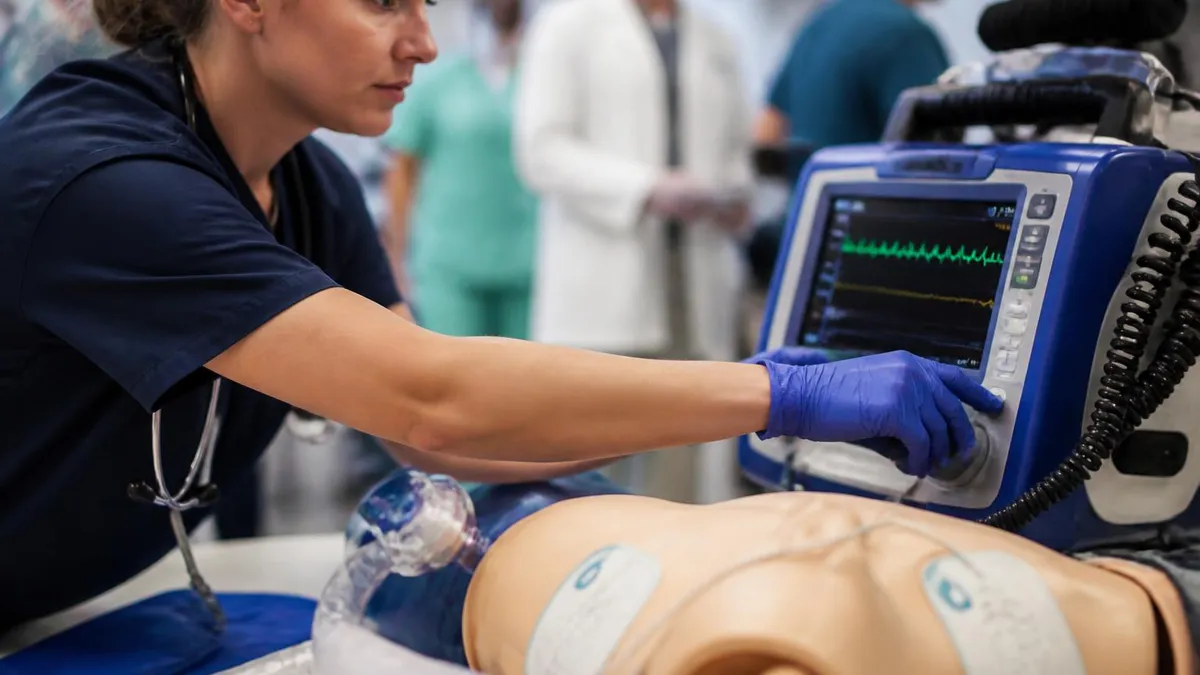
The Rhythms ACLS Cares About
Chaotic, disorganized electrical activity with no discernible waves—a quivering, irregular squiggle. The heart isn't pumping. Shockable: defibrillate immediately. One of the two arrest rhythms a shock can fix.
Ventricular tachycardia—wide, regular, fast QRS complexes—in a patient with no pulse. Like VF, it's shockable and treated with defibrillation. Recognizing the wide, fast, regular pattern is key.
A flat or nearly flat line—no electrical activity. Non-shockable: shocking it does nothing. Treated with high-quality CPR and epinephrine while searching for reversible causes.
Pulseless Electrical Activity—an organized-looking rhythm on the monitor but no pulse. Non-shockable; treated like asystole with CPR, epinephrine, and a hunt for the underlying cause.
Let's establish why rhythm recognition sits at the center of ACLS. The algorithms branch based on the rhythm: a shockable rhythm sends you down the defibrillation path; a non-shockable rhythm sends you down a different path without shocks; a bradycardia or tachycardia in a patient with a pulse follows its own algorithm entirely. The very first decision in any ACLS scenario is identifying the rhythm, and that decision determines everything that follows.
This is why a provider can know every drug dose and algorithm step but still fail if they can't read the strip. Knowing that amiodarone treats refractory VF/pVT is useless if you can't recognize VF in the first place. Rhythm interpretation is the gatekeeper skill—the foundation the rest of ACLS knowledge is built on—which is why courses spend so much time on it and why it's so heavily tested.
The reassuring part is the scope. ACLS doesn't demand the encyclopedic rhythm knowledge of a cardiologist. It focuses on a defined set of rhythms that actually drive resuscitation decisions: the two shockable arrest rhythms, the two non-shockable arrest rhythms, and the bradycardias and tachycardias. Master recognition of these, and you've covered what ACLS requires. The strip in front of you will almost always be one of these familiar patterns.
It helps to understand what a rhythm strip physically represents. It's a continuous recording of the heart's electrical activity—the same P-QRS-T waveform of any ECG—displayed over time on a monitor or printed strip. Each small box represents a tiny time interval, which lets you measure rate and regularity. In an emergency, this real-time window into the heart's electrical state is what guides every treatment decision.
The pace of ACLS makes rhythm reading high-pressure, which is why automaticity matters. In a real code, you don't have time to deliberate—you glance at the monitor and must know within seconds whether you're looking at a shockable rhythm. This is precisely why practice to the point of instant recognition is essential; deliberate analysis is fine for the exam, but the bedside demands the pattern be immediately obvious.
Rhythm interpretation also connects directly to the interventions. Recognizing VF means "shock now"; recognizing asystole means "don't shock—CPR and epinephrine"; recognizing a symptomatic bradycardia means the bradycardia algorithm. The whole point of reading the strip is to trigger the correct response, so rhythm recognition and the acls algorithms are learned together as two halves of the same skill.
Understanding this centrality reframes how to study. Rather than treating rhythm strips as one isolated topic, treat them as the entry point to every algorithm. When you see a rhythm, immediately ask: shockable or not? In arrest or with a pulse? Too fast or too slow? Those questions route you to the right algorithm, and answering them quickly and correctly is the essence of competent ACLS.
Rhythm Drives Every ACLS Decision
Look at the monitor
Check for a pulse
Shockable or not?
Enter the right algorithm
Reassess the rhythm

The most important single distinction in ACLS rhythm interpretation is shockable versus non-shockable, because it determines whether defibrillation is part of the treatment. Getting this right is literally life-or-death: shocking a non-shockable rhythm wastes time and does nothing, while failing to shock a shockable rhythm denies the patient the one intervention that could restart an organized heartbeat. Everything in cardiac-arrest ACLS pivots on this fork.
The two shockable rhythms are ventricular fibrillation (VF) and pulseless ventricular tachycardia (pVT). VF appears as chaotic, disorganized, irregular electrical activity with no identifiable waves—the heart is quivering, not pumping. Pulseless VT shows wide, regular, fast QRS complexes but, crucially, the patient has no pulse. Both mean the heart's electrical activity could potentially be reorganized by a shock, so defibrillation is the priority intervention.
The two non-shockable rhythms are asystole and pulseless electrical activity (PEA). Asystole is the classic flatline—no electrical activity at all, appearing as a flat or nearly flat line. PEA is trickier: the monitor shows an organized rhythm that looks like it should produce a pulse, but the patient has none. Neither responds to a shock, so both are treated with high-quality CPR, epinephrine, and a search for reversible causes.
The reason shocking only works for VF/pVT comes down to what defibrillation does. A shock momentarily stops all electrical activity, giving the heart's natural pacemaker a chance to resume an organized rhythm. That can reorganize the chaotic VF or the pulseless VT. But in asystole there's no activity to reset, and in PEA the electrical activity is already organized—the problem is mechanical, not electrical—so a shock can't help and isn't indicated.
For PEA specifically, the key is that organized-looking rhythm with no pulse. Because it can look almost normal on the monitor, the discipline is to always correlate the rhythm with a pulse check. An organized rhythm plus no pulse equals PEA, which is non-shockable. This is a common point of confusion and a frequent exam question, so internalizing "organized rhythm + no pulse = PEA = no shock" is important.
The practical takeaway is a rapid triage: when you see an arrest rhythm, immediately classify it as shockable (VF/pVT) or non-shockable (asystole/PEA). That single classification sends you down the correct cardiac-arrest pathway—shock-and-CPR for shockable, CPR-and-epinephrine for non-shockable—and it's the first and most consequential rhythm decision you'll make in a resuscitation.
Beyond the arrest rhythms, the bradycardias and tachycardias (in patients with a pulse) follow their own algorithms, which is why distinguishing "in arrest" from "has a pulse" matters alongside shockable-vs-not. A fast or slow rhythm with a pulse isn't treated with defibrillation as a first move; it follows the acls algorithms for brady/tachy. Keeping these categories distinct is central to choosing the right response.
The ACLS Rhythm Categories
Ventricular fibrillation (VF) — chaotic, irregular, no identifiable waves; and pulseless ventricular tachycardia (pVT) — wide, regular, fast QRS with no pulse. Both are treated with immediate defibrillation, since a shock can potentially reorganize the rhythm.
A Systematic Way to Read Any Strip
- ✓Is there electrical activity at all? (Flatline = asystole.)
- ✓What is the rate — too fast, too slow, or normal?
- ✓Is the rhythm regular or irregular?
- ✓Are there identifiable QRS complexes — narrow or wide?
- ✓Are there P waves, and do they relate to the QRS?
- ✓Correlate with the patient: is there a pulse? (Organized + no pulse = PEA.)
- ✓Classify: shockable, non-shockable, brady, or tachy → pick the algorithm.
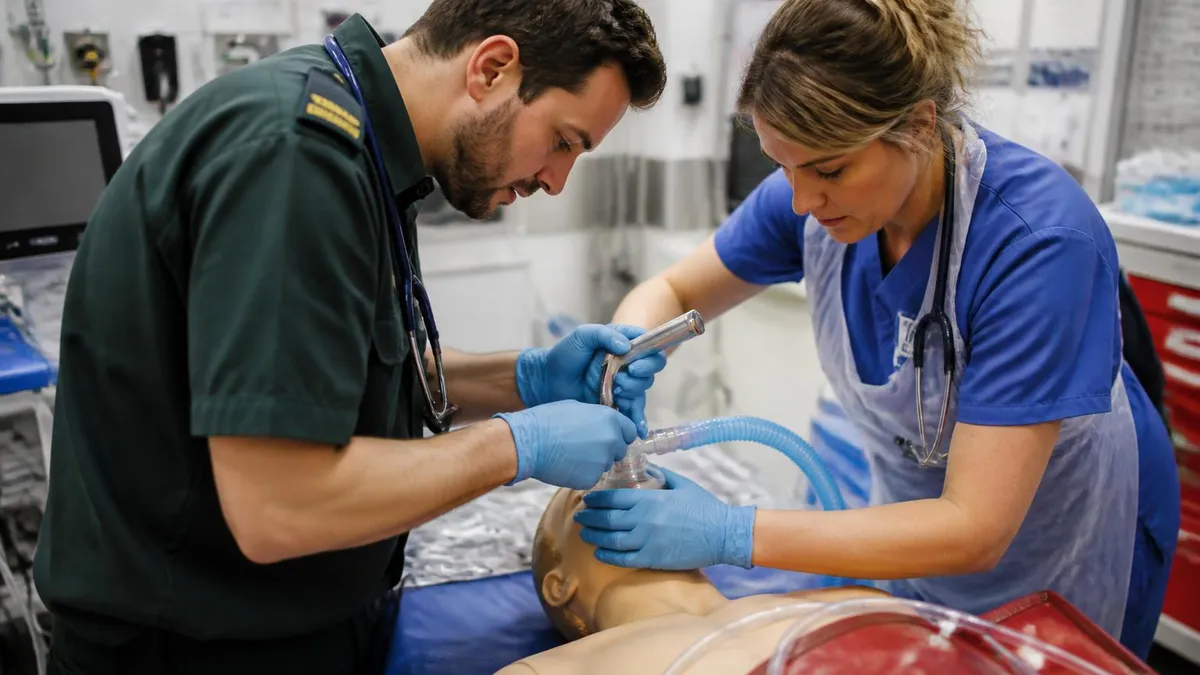
A systematic method is what lets you read any strip calmly instead of guessing. The power of a consistent approach is that it works under pressure and prevents the panic of staring at an unfamiliar squiggle. Rather than trying to instantly name the rhythm, you ask a fixed series of questions in order, and the answers narrow it down to the right category every time. Here's a reliable sequence.
First, ask whether there's any electrical activity at all. A flat or nearly flat line is asystole—the simplest determination. If there's activity, you move on. This first check immediately separates the flatline case from everything else and takes a fraction of a second once it's habitual.
Second, assess the rate: is it too fast, too slow, or roughly normal? Rate is fundamental because it routes you toward tachycardia (too fast), bradycardia (too slow), or a normal-rate rhythm. You can estimate rate quickly from the spacing between complexes. This single measurement does a lot of the categorization work on its own.
Third, evaluate regularity and the QRS complexes. Is the rhythm regular or irregular? Are the QRS complexes present, and are they narrow or wide? Wide, fast, regular complexes suggest ventricular tachycardia; chaotic activity with no clear complexes suggests VF; narrow regular complexes point elsewhere. The width and regularity of the QRS are major clues to the rhythm's origin and danger.
Fourth, look for P waves and their relationship to the QRS. P waves before each QRS in a consistent pattern indicate the rhythm is originating normally from the atria; absent, irregular, or dissociated P waves point toward other rhythms. While ACLS doesn't require deep P-wave analysis for the arrest rhythms, this step matters for the fuller picture, especially with brady and tachy rhythms.
Fifth—and this is the step that ties it to the patient—correlate the rhythm with a pulse. The monitor shows electrical activity, but ACLS treats the patient, not the monitor. An organized rhythm with no pulse is PEA. This is why you never treat a strip in isolation: the same organized-looking rhythm means completely different things depending on whether the patient has a pulse.
Finally, classify and act. Having checked activity, rate, regularity, QRS, P waves, and pulse, you place the rhythm into one of the ACLS categories—shockable, non-shockable, bradycardia, or tachycardia—and that classification sends you to the correct algorithm. With practice, this entire sequence collapses into an instant recognition, but the systematic version is your reliable fallback whenever a strip isn't immediately obvious.
Shockable or not — decide that first
For cardiac-arrest rhythms, the very first thing to determine from the strip is shockable (VF or pulseless VT) versus non-shockable (asystole or PEA). That single classification routes you to the correct pathway — shock-and-CPR versus CPR-and-epinephrine — and getting it right is genuinely life-or-death. Train yourself to make this call within seconds of seeing the monitor.
Mastering Rhythm Strips: Why It Pays Off
- +It's the gatekeeper skill — every algorithm starts with the rhythm
- +ACLS focuses on a manageable, defined set of rhythms
- +A systematic method makes any strip readable under pressure
- +Recognition becomes automatic with focused practice
- +Directly improves both exam performance and real resuscitations
- −Requires real practice — you can't fake instant recognition
- −PEA is easy to misjudge without checking the pulse
- −Pressure of a real code makes hesitation costly
- −Must distinguish arrest rhythms from brady/tachy with a pulse
- −Knowing drugs/algorithms is useless without reading the strip first
A rhythm strip shows electrical activity, not whether the heart is pumping. The same organized-looking rhythm can mean a stable patient or pulseless electrical activity (PEA) depending entirely on whether there's a pulse. Always correlate the strip with the patient — organized rhythm plus no pulse equals PEA, which is non-shockable. Never make an ACLS decision from the monitor alone.
So how do you actually get good at reading ACLS rhythm strips? The answer is unglamorous but reliable: practice with many strips until recognition becomes automatic. Rhythm interpretation is pattern recognition, and pattern recognition is built through volume and repetition. The more strips you work through—naming the rhythm, classifying it, stating the response—the faster and more accurate you become, until the common rhythms are instantly obvious.
Start by learning the signatures of the core rhythms cold. Know exactly what VF, pulseless VT, asystole, PEA, and the brady and tachy rhythms look like, and what makes each distinct. Building a clear mental image of each rhythm's appearance is the foundation—you can't recognize what you haven't first studied. Flashcards pairing a strip image with its name and ACLS response work well for this initial learning.
Then drill with practice strips, ideally lots of them, mixing the rhythms randomly. Working through realistic acls rhythm questions—where you must identify the strip and choose the intervention—reinforces both recognition and the linked algorithm response. Randomized practice (rather than studying one rhythm at a time) better simulates the real challenge of identifying whatever rhythm appears, which is what builds genuine recognition.
Use the systematic method as your training wheels, then let it become automatic. Early on, consciously walk through the rate-rhythm-QRS-P-wave-pulse sequence for every strip. As you practice, that deliberate process speeds up until you're recognizing rhythms at a glance, falling back on the systematic approach only for the tricky or ambiguous strips. Both modes are valuable: instant recognition for speed, the method for certainty.
Practice the link between rhythm and action, not just the rhythm name. The goal isn't to identify VF as an academic exercise—it's to see VF and immediately think "shock." Always pair each rhythm with its ACLS response in your practice: VF/pVT → defibrillate; asystole/PEA → CPR and epinephrine; symptomatic bradycardia → bradycardia algorithm. This rhythm-to-response wiring is what makes the knowledge usable in a real code.
Rehearse under simulated pressure when you can. The megacode portion of ACLS testing requires reading rhythms and responding in real time, so practicing aloud—calling out the rhythm and the intervention as you would in a code—builds the fluency to perform under stress. Many candidates find that verbal, scenario-based rehearsal is what finally cements rhythm recognition into reliable, pressure-proof skill.
To sum up: ACLS rhythm strips are the foundation of the entire course because every decision begins with identifying the rhythm. Focus on the defined set of rhythms ACLS cares about, master the shockable-versus-non-shockable distinction, use a systematic rate-rhythm-QRS-pulse method, and practice with many strips until recognition is instant and wired to the correct response. Do that, and you'll handle both the exam and the real resuscitation with confidence.
Above all, remember that this skill exists to serve a patient in the worst moment of their life. The seconds you save by recognizing a shockable rhythm instantly, or the error you avoid by checking a pulse before trusting the monitor, translate directly into someone's chance of survival. That stake is what makes rhythm-strip fluency worth drilling until it's second nature, long after the certification card is in your wallet and the exam is a distant memory.
Master the strip, and you master the moment a real resuscitation turns on a single, split-second read of the monitor in front of you — which is, ultimately, what all of this training is for.
ACLS Rhythm Strips Questions and Answers




About the Author

Registered Nurse & Healthcare Educator
Johns Hopkins University School of NursingDr. Sarah Mitchell is a board-certified registered nurse with over 15 years of clinical and academic experience. She completed her PhD in Nursing Science at Johns Hopkins University and has taught NCLEX preparation and clinical skills courses for nursing students across the United States. Her research focuses on evidence-based exam preparation strategies for healthcare certification candidates.