
Amiodarone Dose in ACLS: When and How It's Used in Cardiac Arrest (2026 October)
📝 The amiodarone dose in ACLS: when it's given in cardiac arrest, the 300 mg and 150 mg doses, its place in the algorithm, and how it compares to lidocaine.
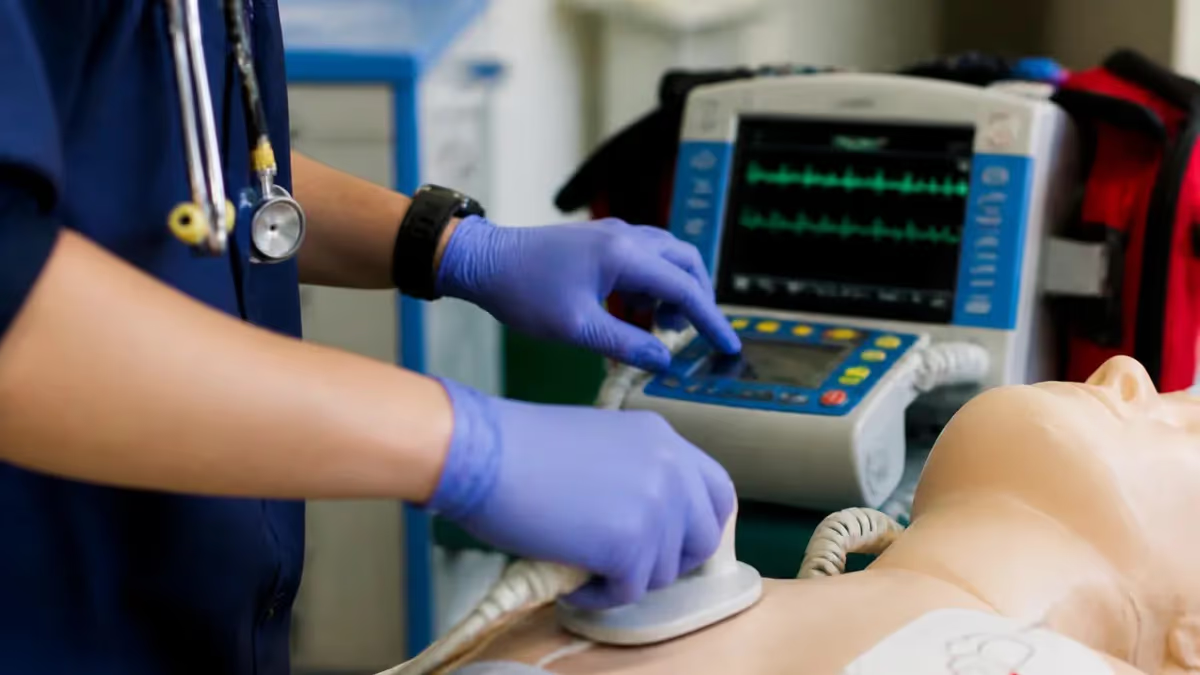
Amiodarone is one of the most important medications in Advanced Cardiovascular Life Support, and knowing its dose cold is essential for anyone studying for or working in ACLS. It's a frequent exam question and, far more importantly, a drug you may need to administer correctly under the extreme pressure of a real cardiac arrest. Getting the dose and timing right is part of running a competent resuscitation.
Amiodarone is an antiarrhythmic—a medication that helps restore a normal heart rhythm—and in ACLS it has a specific, well-defined role in treating certain life-threatening rhythms during cardiac arrest. Unlike some ACLS drugs given in many situations, amiodarone's use is targeted, which actually makes it easier to learn: know the specific scenario, the dose, and the timing, and you've mastered its place in the algorithm.
This guide explains exactly when amiodarone is used in ACLS, the precise doses, where it fits in the cardiac arrest algorithm, how it's administered, and how it compares to its main alternative. Mastering the acls algorithms means knowing drugs like amiodarone precisely, and this is core material for anyone pursuing acls certification.
One framing point: this article explains the standard ACLS approach to amiodarone for educational and exam-preparation purposes. In real clinical practice, medication administration always follows current protocols, medical direction, and the specific patient situation. The doses here reflect the standard ACLS teaching, but actual practice is governed by current guidelines and clinical judgment, which is exactly what ACLS training instills.
Amiodarone in ACLS at a Glance

The Key Facts About ACLS Amiodarone
Amiodarone is an antiarrhythmic medication used in ACLS to help treat life-threatening ventricular arrhythmias. It works on the heart's electrical activity to help restore an organized rhythm.
In cardiac arrest, amiodarone is used for ventricular fibrillation (VF) or pulseless ventricular tachycardia (pVT) that persists despite defibrillation—so-called shock-refractory rhythms.
The first dose in cardiac arrest is 300 mg given as an IV or IO bolus. This is the headline number most often tested and used after shocks and epinephrine have not resolved the rhythm.
If VF/pVT persists, a second dose of 150 mg IV/IO may be given. The 300-then-150 sequence is the standard ACLS cardiac arrest dosing to memorize.
Let's start with when amiodarone is actually used in ACLS, because its role is specific. In the cardiac arrest setting, amiodarone is indicated for ventricular fibrillation (VF) or pulseless ventricular tachycardia (pVT) that does not respond to defibrillation. These are the "shockable" rhythms, and when they persist despite shocks, amiodarone enters the picture as the antiarrhythmic of choice in the standard algorithm.
The key word is refractory—meaning the rhythm hasn't responded to the initial treatments. In a VF/pVT arrest, the priority interventions are high-quality CPR and defibrillation, with epinephrine given as well. Amiodarone is added when shocks and those initial steps haven't restored a viable rhythm. It's not the first thing you reach for; it's an additional measure for an arrest that's proving stubborn to the foundational treatments.
This targeted indication is important for both exams and practice. Amiodarone isn't used for every cardiac arrest—notably, it isn't indicated for the non-shockable rhythms, asystole and pulseless electrical activity (PEA), which follow a different algorithm pathway without an antiarrhythmic. Knowing that amiodarone belongs specifically to the shock-refractory VF/pVT scenario is a frequently tested distinction and a core piece of understanding the algorithm.
Amiodarone is an antiarrhythmic, meaning it acts on the heart's electrical activity to help convert or stabilize a dangerous rhythm. In the chaos of VF, where the heart's electrical activity is disorganized and the heart can't pump, the goal of treatment is to enable defibrillation to succeed in restoring an organized rhythm. Amiodarone supports this effort in refractory cases, which is why it's reserved for arrests not responding to shocks alone.
Beyond cardiac arrest, amiodarone also appears in ACLS for certain stable and unstable tachycardias outside the arrest setting, where it's used to manage abnormal fast rhythms. However, the dosing and approach differ from the cardiac arrest scenario, and the cardiac arrest dose is the one most emphasized in ACLS learning and testing. This guide focuses primarily on the cardiac arrest use, which is the highest-yield knowledge.
Understanding the indication first makes the dose meaningful. You're not just memorizing a number in isolation—you're learning that in a specific, high-stakes scenario (shock-refractory VF/pVT), amiodarone is the drug, given at a specific dose, at a specific point in the resuscitation. This contextual understanding is what ACLS aims to build, so that in a real arrest the knowledge is automatic and correctly applied.
This is also why amiodarone is a staple of ACLS education and a common exam topic. It tests whether you understand not just a fact but the algorithm logic—recognizing the rhythm, knowing the foundational treatments, and knowing when and what to add. Mastering amiodarone's role is a small but representative example of the algorithmic thinking that acls training and testing are designed to develop.
Where Amiodarone Fits in a VF/pVT Arrest
Recognize VF/pVT
CPR and defibrillation
Epinephrine
Amiodarone 300 mg
Amiodarone 150 mg
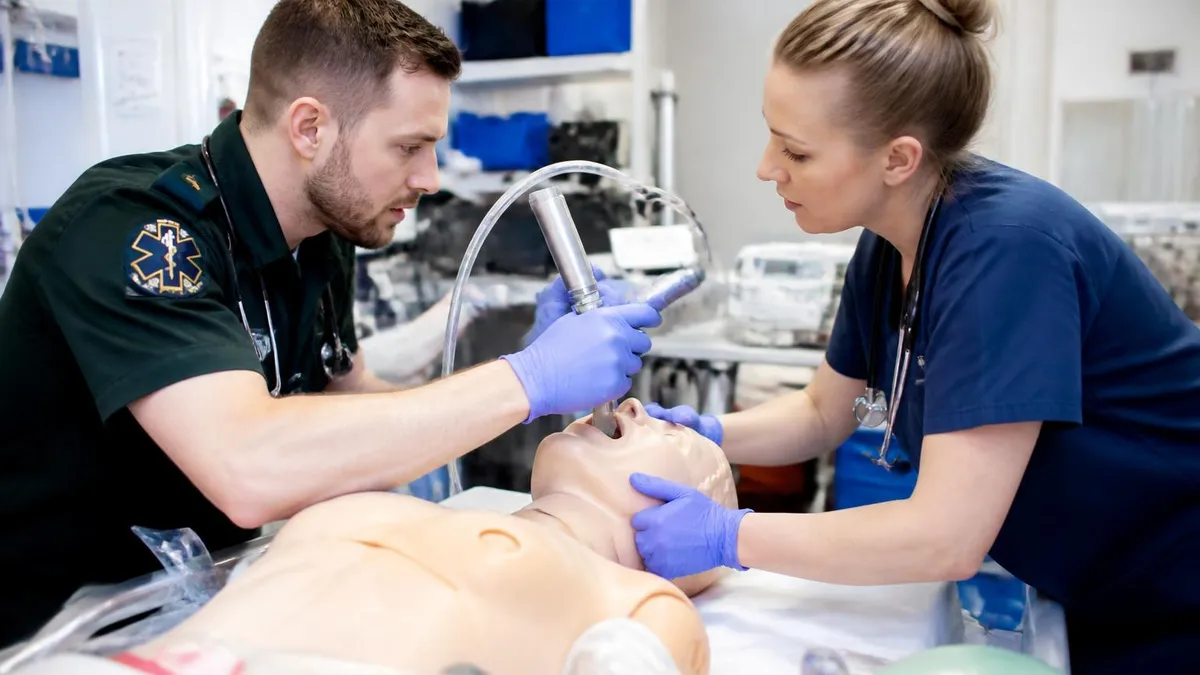
Now the doses themselves, which are the most concrete thing to commit to memory. In cardiac arrest for shock-refractory VF or pVT, the first dose of amiodarone is 300 mg, given as an intravenous or intraosseous (IV/IO) bolus. This 300 mg first dose is the single most important number to know—it's the headline figure on exams and the dose given in the resuscitation when the rhythm persists after shocks.
If the VF/pVT continues despite the first dose and ongoing resuscitation, a second dose of amiodarone 150 mg IV/IO may be administered. This 300-then-150 sequence—300 mg first, 150 mg second—is the standard ACLS cardiac arrest dosing pattern. Memorizing this pair as a unit is the cleanest way to lock in the dosing, since they go together as the first and second doses in the same scenario.
The route matters and is part of the knowledge. Amiodarone in cardiac arrest is given IV (intravenous) or IO (intraosseous)—the IO route, into the bone marrow, is used when IV access can't be quickly obtained, which is common in arrest situations. Both deliver the medication into circulation effectively. Knowing it's an IV/IO bolus, not some other route, is part of the complete dosing knowledge ACLS expects.
It's worth being precise that these doses apply to the cardiac arrest (pulseless VF/pVT) scenario. Amiodarone's use in tachycardias where the patient has a pulse involves different dosing—typically a slower administration rather than a rapid bolus, and different amounts. Confusing the arrest bolus dose with the dosing for a patient with a pulse is a potential error, so it's important to anchor the 300/150 figures specifically to the pulseless arrest setting.
The timing within the algorithm is as important as the numbers. Amiodarone is given after defibrillation attempts and in the context of ongoing CPR and epinephrine—it's added for the refractory rhythm, not given first. In the choreography of a resuscitation, it comes at a specific point, and ACLS teaches the sequence so that the drug is administered at the right moment relative to shocks and other interventions, not out of order.
For exam purposes, the 300 mg first / 150 mg second cardiac arrest dosing is among the most reliably tested medication facts in ACLS, so it's worth knowing precisely and confidently. Drug dosing questions are common on the ACLS written exam, and amiodarone is a prime example. Committing the doses, route, and indication to memory ensures you handle these questions easily and, more importantly, would administer the drug correctly in practice.
Precision here genuinely matters because in a real arrest there's no time to look it up. The value of memorizing the 300/150 IV/IO dosing for refractory VF/pVT is that it becomes automatic, freeing your attention for the many other simultaneous demands of running a code. This is the entire point of drilling drug doses in ACLS preparation—so the knowledge is instant and reliable when a life depends on it.
ACLS Amiodarone Essentials
In cardiac arrest, amiodarone is used for shock-refractory ventricular fibrillation (VF) or pulseless ventricular tachycardia (pVT)—shockable rhythms that persist despite defibrillation. It is not used for the non-shockable rhythms asystole and PEA.
ACLS Amiodarone: What to Know Cold
- ✓Indication: shock-refractory VF or pulseless VT in cardiac arrest.
- ✓First dose: 300 mg IV/IO bolus.
- ✓Second dose: 150 mg IV/IO if VF/pVT persists.
- ✓Route: intravenous or intraosseous.
- ✓Timing: after defibrillation, with ongoing CPR and epinephrine.
- ✓Not used for asystole or PEA (non-shockable rhythms).
- ✓Lidocaine is the main alternative antiarrhythmic for the same scenario.
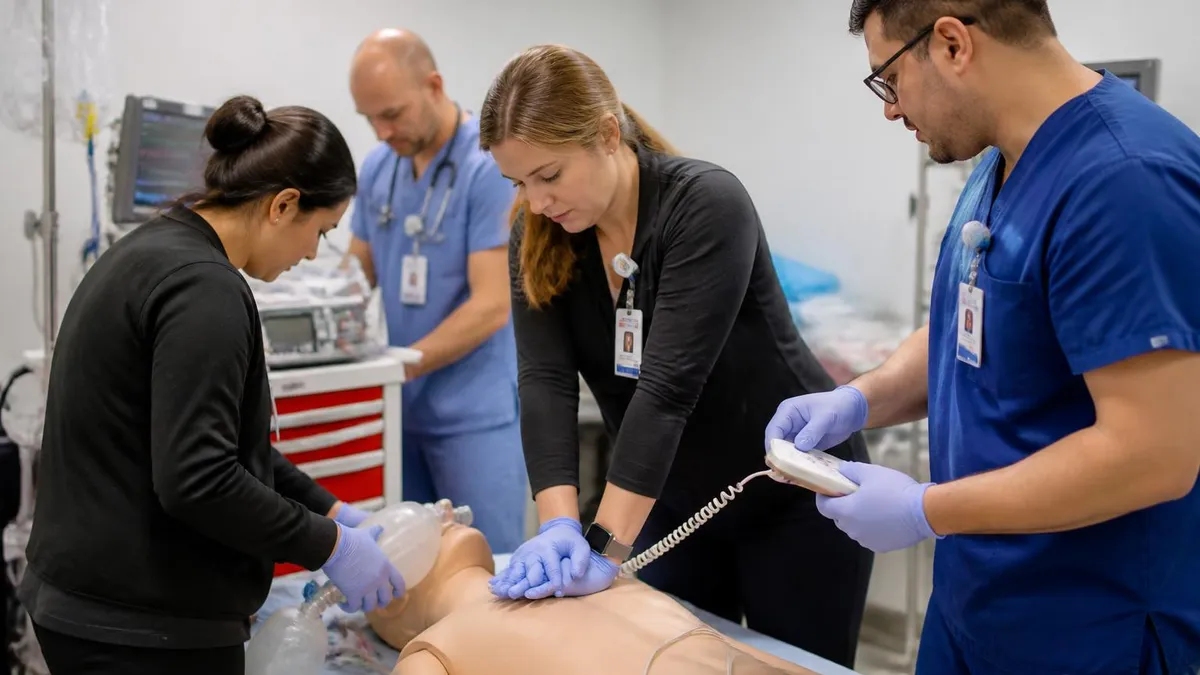
How does amiodarone compare to its main alternative, lidocaine? Both are antiarrhythmic medications used in ACLS for shock-refractory VF/pVT, and understanding their relationship clarifies amiodarone's place. Lidocaine is the principal alternative—it can be used for the same indication, shock-refractory ventricular arrhythmias in cardiac arrest, particularly when amiodarone isn't available or when local protocol favors it.
In ACLS teaching, amiodarone is commonly presented as the antiarrhythmic of choice for refractory VF/pVT, with lidocaine as the alternative. This means amiodarone is the one most emphasized and most likely to be the "correct" answer in a straightforward exam question about the refractory shockable rhythm scenario, while lidocaine is recognized as an acceptable alternative agent for the same situation.
The two drugs have different dosing, so they shouldn't be confused. Lidocaine has its own dose for the cardiac arrest scenario, distinct from amiodarone's 300/150 pattern. When learning ACLS, it's worth knowing both exist as options for refractory VF/pVT, but keeping their doses separate in your memory, since mixing them up is a potential error both on exams and, more seriously, in practice.
Importantly, you use one or the other, not both routinely—they're alternatives for the same role rather than drugs given together. In a given resuscitation, the team uses the antiarrhythmic available and consistent with their protocol. Understanding that amiodarone and lidocaine occupy the same slot in the algorithm—the antiarrhythmic for refractory shockable rhythm—clarifies why you choose between them rather than using both.
The choice between them in real practice depends on availability, protocol, and clinical factors, which is the domain of medical direction and current guidelines. For ACLS learning, the practical takeaway is to know amiodarone as the emphasized choice with its 300/150 dosing, and to recognize lidocaine as the alternative antiarrhythmic for the same scenario. This captures what exams test and what practitioners need to understand about the relationship.
Beyond lidocaine, it's worth situating amiodarone among the broader set of ACLS medications to keep its role clear. Epinephrine is given in all cardiac arrests (both shockable and non-shockable rhythms) as the cornerstone vasopressor, while amiodarone is the targeted antiarrhythmic specifically for refractory shockable rhythms. Distinguishing these roles—epinephrine for every arrest, amiodarone for refractory VF/pVT—prevents the common confusion between the different ACLS drugs and their indications.
This comparative understanding rounds out mastery of amiodarone. Knowing not just its own dose but how it relates to lidocaine and epinephrine demonstrates the algorithmic, big-picture thinking ACLS aims to build. It's the difference between memorizing isolated facts and genuinely understanding how the medications work together within the resuscitation algorithm—the deeper competence that acls algorithms training is designed to instill.
300 mg first, 150 mg second
The essential fact to memorize is the cardiac arrest dosing for shock-refractory VF/pVT: amiodarone 300 mg IV/IO as the first dose, then 150 mg IV/IO as the second dose if the rhythm persists. Anchor this 300-then-150 sequence to the specific scenario—shockable rhythm not responding to defibrillation—and you've captured the single most-tested and most-used amiodarone fact in ACLS.
Why Amiodarone Matters in ACLS
- +Clear, targeted role for shock-refractory VF/pVT
- +Simple, memorable 300-then-150 dosing sequence
- +Commonly emphasized antiarrhythmic in ACLS teaching
- +Frequently tested, so mastering it pays off on exams
- +Understanding it builds broader algorithm comprehension
- −Easy to confuse arrest dosing with pulse-present tachycardia dosing
- −Must not be confused with lidocaine's different dosing
- −Not indicated for non-shockable rhythms (asystole, PEA)
- −Real administration requires correct timing within the algorithm
- −Knowing the drug isn't enough—rhythm recognition must come first
Pros and Cons at a Glance
| Pros | Cons |
|---|---|
| Clear, targeted role for shock-refractory VF/pVT | Easy to confuse arrest dosing with pulse-present tachycardia dosing |
| Commonly emphasized antiarrhythmic in ACLS teaching | Must not be confused with lidocaine's different dosing |
| Frequently tested, so mastering it pays off on exams | Not indicated for non-shockable rhythms (asystole, PEA) |
| Understanding it builds broader algorithm comprehension | Real administration requires correct timing within the algorithm |
This guide presents the standard ACLS teaching on amiodarone for educational and exam-preparation purposes. Actual medication administration in clinical practice is always governed by current published guidelines, your facility's protocols, medical direction, and the specific patient situation. Use this to learn and prepare, but rely on current official ACLS guidelines and your training for real clinical decision-making.
Finally, some practical advice for remembering amiodarone for the ACLS exam and beyond. The cleanest memory hook is the pairing: 300 then 150. Memorize the two doses together as a unit tied to the one scenario—shock-refractory VF/pVT in cardiac arrest. Because the second dose is exactly half the first, the relationship is easy to recall, and anchoring both to a single indication keeps them from drifting in your memory.
Context-based learning beats rote memorization for ACLS drugs. Rather than memorizing amiodarone's dose as a floating fact, learn it within the cardiac arrest algorithm: recognize VF/pVT, deliver CPR and shocks, give epinephrine, and add amiodarone 300 mg for the refractory rhythm. Embedding the dose in the algorithm's flow makes it far stickier and ensures you'll apply it at the right moment, which is the whole point.
Practice questions are invaluable for cementing this knowledge. Working through ACLS practice scenarios that involve amiodarone—where you must identify the rhythm, choose the drug, and state the dose—reinforces both the number and its context. Repeated exposure through realistic questions turns the 300/150 dosing from something you have to think about into something you simply know, which is exactly the automaticity you want for both the exam and real practice.
Distinguishing amiodarone from the other ACLS drugs in your study prevents confusion. Make clear mental categories: epinephrine for every arrest, amiodarone for refractory shockable rhythms (300/150), lidocaine as the amiodarone alternative, and so on. When the drugs are clearly differentiated by indication in your mind, you avoid the common error of mixing up which drug and dose goes with which scenario, a frequent source of mistakes for ACLS learners.
The megacode skills test is where this knowledge gets applied under pressure, so practicing it verbally helps. Rehearsing leading a VF/pVT arrest aloud—calling for CPR, shocks, epinephrine, and amiodarone 300 mg at the right points—builds the fluency to perform calmly during the actual test. The amiodarone dose is exactly the kind of detail you'll need to produce smoothly while managing the simulated resuscitation, so rehearsal pays off directly.
To summarize the essentials: in ACLS cardiac arrest, amiodarone is given for shock-refractory VF or pulseless VT at a first dose of 300 mg IV/IO, followed by 150 mg IV/IO if needed, after defibrillation and alongside CPR and epinephrine. It's the emphasized antiarrhythmic, with lidocaine as the alternative, and it's not used for asystole or PEA. Know the 300/150 sequence, its indication, and its place in the algorithm, and you've mastered one of ACLS's highest-yield medication facts.
Whether you're preparing for certification or refreshing your knowledge, amiodarone is a small but essential piece of ACLS competence. Lock in the doses, understand the context, practice applying it in scenarios, and it becomes automatic—which is exactly what you need when the knowledge serves not just an exam answer but a real patient in cardiac arrest whose outcome depends on a well-run resuscitation.
Keep the broader perspective in mind as you study: amiodarone is one well-defined piece of a larger choreography, and its value is realized only when the whole sequence—recognition, CPR, defibrillation, epinephrine, and then the antiarrhythmic—comes together smoothly. Learn the dose, yes, but learn it as part of that flow, and you'll carry knowledge that holds up under the real pressure of a code rather than a fact that evaporates the moment the scenario gets stressful.
That durability—knowledge that performs when it counts—is the real goal of every hour you spend preparing for ACLS. Treat amiodarone as a small but vital thread in that larger fabric of competence, and the certification stops being a hurdle and becomes genuine readiness to act.
ACLS Amiodarone Questions and Answers




About the Author

Registered Nurse & Healthcare Educator
Johns Hopkins University School of NursingDr. Sarah Mitchell is a board-certified registered nurse with over 15 years of clinical and academic experience. She completed her PhD in Nursing Science at Johns Hopkins University and has taught NCLEX preparation and clinical skills courses for nursing students across the United States. Her research focuses on evidence-based exam preparation strategies for healthcare certification candidates.