
CNA Certification: Requirements, Steps, and How to Get Certified 2026 October
Pass the CNA Certification: Requirements, Steps, exam with confidence. Practice questions with detailed explanations and instant feedback on every answer. 🆕
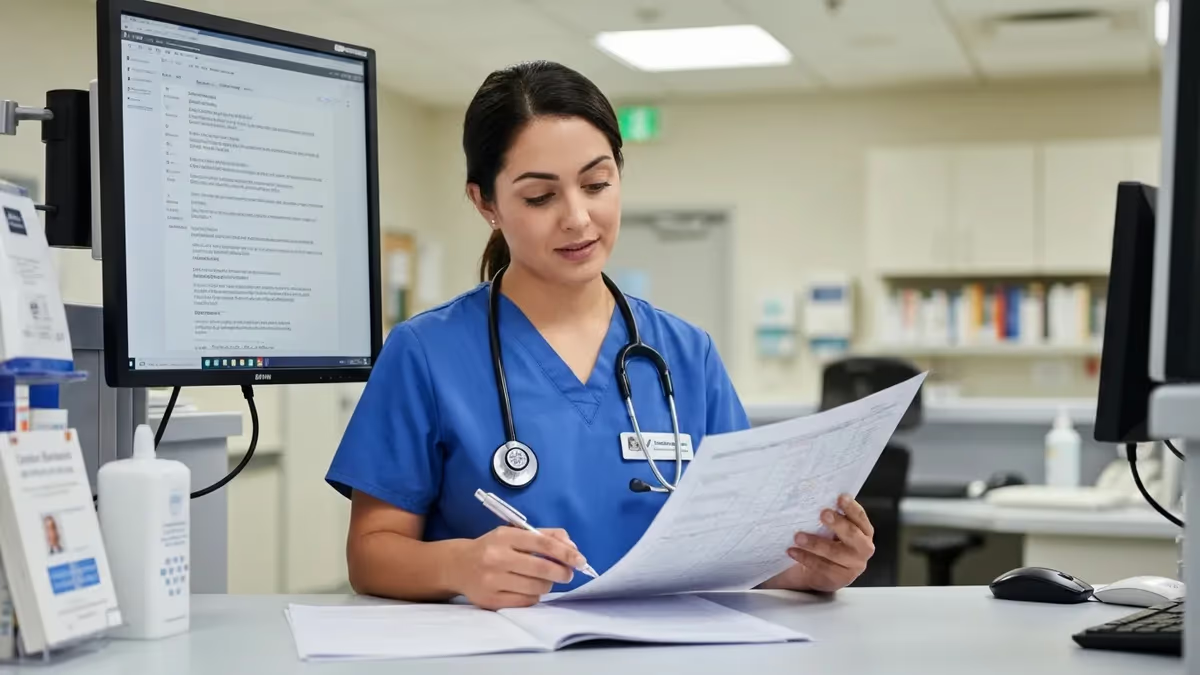
Earning your CNA certification is one of the fastest ways to break into healthcare. This guide walks you through everything you need — from choosing a training program to passing the state competency exam and landing your first job. Whether you're a career changer or a high school graduate exploring options, certification for nursing assistants opens doors that few other credentials can match at this price point.
The demand for certified nursing assistants isn't slowing down. Hospitals, long-term care facilities, and home health agencies all need qualified CNAs. You'll find that most states require between 75 and 180 hours of approved training before you can sit for the certification exam. Some programs wrap up in just four weeks; others stretch across a full semester. Either way, the endpoint is the same — a state-recognized credential that proves you can deliver safe, competent patient care. If you need to verify your status, you can use a cna certification lookup tool through your state's nurse aide registry.
What makes CNA certification particularly appealing is the low barrier to entry. You don't need a college degree. You don't need years of experience. You need a clean background check, a high school diploma or GED in most states, and the drive to complete an approved training program. From there, you'll take a written knowledge test and a clinical skills evaluation. Pass both, and you're on the registry. It's that straightforward — and it can change your career trajectory in a matter of weeks.

The path to certification for nursing assistants starts with selecting the right training program. You've got options — community colleges, vocational schools, Red Cross chapters, and even some hospitals offer state-approved CNA courses. If you're working full-time or raising a family, CNA certification online programs provide flexibility that traditional classroom settings can't. These hybrid programs let you complete didactic coursework from home, though you'll still need in-person clinical hours at a partnered facility. If you're exploring positions, check out opportunities for cna certification near me to see what's available in your area.
Cost varies wildly. Some community colleges charge under $500 for the full program. Private vocational schools might run $1,500 or more. Here's something most people don't know — many nursing homes will pay for your training in exchange for a work commitment after certification. Goodwill and workforce development boards in several states also offer free or subsidized programs. Don't assume you need to pay out of pocket before exploring every option.
Clinical rotations are where the real learning happens. You'll practice vital signs, patient transfers, infection control, and personal care under the supervision of a licensed nurse. Most programs require 16 to 40 hours of hands-on clinical time. This isn't busywork. These are the exact skills you'll demonstrate during your competency exam — and the same ones you'll use every single shift as a working CNA.
Online CNA certification has exploded in popularity since 2020. Programs that once required 100% in-person attendance now offer blended formats where lectures, quizzes, and study materials live on a learning management system. You complete modules at your own pace — sometimes finishing the classroom portion in two or three weeks. The catch? Every state still mandates hands-on clinical training. No fully online path exists for the clinical component, and any program claiming otherwise isn't legitimate.
If you need to verify CNA certification California requires, the process is relatively simple. The state maintains the Nurse Aide Registry through the California Department of Public Health. You can search by name or certification number to confirm active status. This matters when you're applying for jobs — employers verify your credentials before your first shift. Keeping your registry listing current protects you from gaps in employment eligibility.
Several reputable platforms offer the didactic portion of CNA training online. Look for programs accredited by your state's board of nursing or health department. Red flags include programs that promise certification without clinical hours, charge unusually low fees, or lack state approval. A legitimate online CNA certification program will clearly state its clinical partner sites and the total hours required for completion. Do your homework before enrolling — your career depends on choosing a program that employers actually recognize.
CNA Certification Requirements by Type
Each state sets its own minimum training hours — ranging from 75 hours in some states to 180 hours in others. Most require a criminal background check, current immunizations (including TB testing), and proof of a high school diploma or GED. Some states accept equivalency exams instead. Check your state's board of nursing website for exact requirements, as they change periodically.
CNA certification verification is something you'll deal with regularly throughout your career. Employers check your status before hiring. Staffing agencies confirm it before each assignment. Even some volunteer organizations verify credentials. The good news is that most states maintain free online registries where anyone can confirm a CNA's active certification status, expiration date, and whether any disciplinary actions exist on file.
For CNA certification lookup, the process depends on your state. Some states — like Florida and Texas — have simple online search tools where you enter a name and instantly see results. Others require you to contact the registry by phone or submit a written request. California's registry, managed by the CDPH, allows searches by name or certification number. If you're an employer running checks on multiple candidates, many registries offer batch verification services for a small fee.
Keep your own records updated. When you renew, move states, or change your name, the registry needs to reflect those changes. Gaps or errors in your registry listing can delay job offers. Some CNAs discover — usually at the worst possible time — that their certification lapsed because they didn't complete continuing education or work the required minimum hours. Set calendar reminders for renewal deadlines. It takes five minutes to check your status and could save you weeks of headaches.
Finding CNA certification near me is easier than most people think. Start with your state's board of nursing website — they maintain lists of every approved training program, organized by county or region. Community colleges are the most common option, but don't overlook hospital-sponsored programs. Many healthcare systems train their own CNAs and guarantee employment upon certification. It's a win-win — free training and a guaranteed first job.
For those pursuing certified nursing assistant certification in rural areas, options might seem limited. But telehealth expansion and workforce shortages have pushed many programs to offer satellite clinical sites in underserved communities. You might complete your classroom hours at a community college in a larger city and your clinicals at a rural nursing facility closer to home. Some states even allow mobile training units that travel to remote areas on a rotating schedule.
Job placement rates for CNA programs hover around 85–95% within three months of certification. That's not a typo. Healthcare's staffing crisis means qualified CNAs rarely struggle to find work. The real question isn't whether you'll get hired — it's choosing the right setting. Hospitals pay more but demand faster-paced work. Long-term care facilities offer more predictable schedules. Home health provides autonomy but requires strong independent judgment. Think about what fits your personality and lifestyle before accepting the first offer that comes along.
Pros and Cons of CNA Certification
- +Fast entry into healthcare — most programs finish in 4 to 12 weeks
- +Low cost compared to other medical certifications and degrees
- +High demand nationwide with strong job placement rates above 85%
- +Stepping stone to LPN, RN, or other advanced nursing careers
- +Flexible work settings — hospitals, nursing homes, home health, clinics
- +Many employers offer tuition reimbursement for further education
- −Physically demanding work involving lifting, bending, and long shifts
- −Median salary is modest compared to other healthcare professions
- −Emotional toll from caring for seriously ill or end-of-life patients
- −Renewal requirements vary by state and can cause lapses if missed
- −Limited advancement without pursuing additional education and credentials
- −Understaffing in many facilities increases workload and burnout risk
CNA online certification pathways have matured significantly over the past few years. Early programs were clunky — think static PDFs and basic quizzes with zero interaction. Today's platforms feature video demonstrations, interactive case studies, virtual patient simulations, and live instructor Q&A sessions. You're not just reading about catheter care — you're watching high-definition demonstrations and answering scenario-based questions that mirror the actual competency exam.
If you need CNA certification verification CA specifically, the California Department of Public Health maintains the Aide and Technician Certification Section (ATCS). You can verify status online, by phone at (916) 327-2445, or by mail. California also requires CNAs to complete 48 hours of in-service training every two years for renewal. Missing this deadline means your certification goes inactive — and reactivation involves retaking the competency exam. Don't let that happen.
The hybrid model works particularly well for people balancing work and school. You might log into your learning platform at 10 PM after the kids are asleep, knock out a module on infection control, and then attend Saturday morning clinicals at a partner facility. It's not easy — nothing about healthcare training is — but it's doable. Thousands of CNAs earned their credentials this way last year alone. The flexibility of CNA online certification makes healthcare careers accessible to people who couldn't manage a traditional Monday-through-Friday classroom schedule.
CNA Certification Preparation Checklist
- ✓Confirm your state's minimum training hour requirement (75–180 hours)
- ✓Verify the program is approved by your state's board of nursing
- ✓Complete all required immunizations including TB test and flu shot
- ✓Pass the criminal background check — address any issues early
- ✓Finish classroom instruction covering all 22 federal skill categories
- ✓Complete required clinical rotation hours at an approved facility
- ✓Register for the state competency exam through Pearson VUE or Prometric
- ✓Practice the five most commonly tested clinical skills with a partner
- ✓Review medical terminology, vital sign ranges, and abbreviations
- ✓Prepare your photo ID and exam confirmation for test day
There are several certifications for CNA professionals beyond the basic credential. Medication aide certification lets you administer certain medications under nurse supervision — a role that commands higher pay in many states. Phlebotomy certification adds blood-drawing skills to your resume. EKG technician training prepares you for cardiac monitoring roles. Each of these add-on credentials takes a few weeks to a few months and can boost your hourly rate by $2 to $5.
If cost is a concern, know that CNA certification online free options do exist — though "free" comes with caveats. Some workforce development programs funded by state or federal grants cover 100% of tuition for qualifying applicants. Nursing homes participating in the federal NATCEP program must offer free CNA training to their employees. Goodwill, Job Corps, and certain community organizations also sponsor no-cost programs. You won't find a fully free online-only program that's legitimate, but you can find funded programs that include online components.
Specialty certifications signal to employers that you're serious about professional growth. A CNA with medication aide and phlebotomy credentials earns more, gets better shifts, and has stronger use when negotiating. Think of your base CNA credential as the foundation — these add-ons are the upgrades that separate you from the crowd. Many hospitals won't even consider CNAs for specialty units without at least one additional certification beyond the baseline.
Online CNA certification classes come in several formats, and picking the right one matters. Synchronous programs require you to attend live virtual lectures at scheduled times — great if you thrive on real-time interaction with instructors. Asynchronous programs let you work through recorded content at your own pace, with deadlines for module completion. Some programs blend both approaches. The best online classes include practice exams that mirror the actual certification test format.
CNA certification renewal sneaks up on people. Most states require renewal every two years, though the exact timeline varies. You'll typically need to prove that you've worked a minimum number of paid hours as a CNA (often 8 hours within the renewal period) and completed required in-service training or continuing education. Some states have moved renewal processes fully online, while others still require mailed applications. Know your state's process and deadlines — don't learn them the hard way.
Continuing education requirements serve a real purpose beyond bureaucratic box-checking. Healthcare practices evolve. Infection control protocols change. New equipment enters the field. The 12 to 48 hours of continuing education most states require during each renewal cycle keep your skills current and your patients safe. Many employers provide in-service training that counts toward these hours, so you might already be meeting the requirement through normal workplace education without realizing it.
Training hour requirements, exam formats, and renewal rules differ significantly between states. A program approved in Texas may not satisfy California's requirements. Always confirm that your chosen program meets your specific state's board of nursing standards before paying tuition. Moving between states? Check reciprocity agreements — most states honor out-of-state certifications, but some require additional training or testing.
Choosing the right CNA certification course can feel overwhelming, but the decision comes down to a few key factors. Accreditation is non-negotiable — your program must be approved by your state's board of nursing or health department. Beyond that, compare clinical site locations, instructor-to-student ratios, and pass rates. A program boasting a 95% first-attempt pass rate tells you more than any glossy brochure. Ask for those numbers directly. Good programs share them willingly.
CNA certification Texas requirements serve as a useful benchmark since Texas is one of the largest employers of nursing assistants in the country. The state mandates 100 hours of training (60 classroom, 40 clinical) through a DADS-approved program. The competency exam includes a written test and a skills demonstration. Texas uses Pearson VUE for exam administration. Once certified, renewal happens every two years with proof of employment and completion of in-service training hours.
Program format also matters. Accelerated four-week programs work if you can commit full-time. Evening and weekend programs stretch longer but accommodate work schedules. Hospital-based programs often include job placement upon completion. Community college programs sometimes cost less but may have waitlists. Consider your timeline, budget, and learning style before committing. There's no single best path — just the one that fits your situation.
CNA Practice Test Questions
Prepare for the CNA - Certified Nursing Assistant exam with our free practice test modules. Each quiz covers key topics to help you pass on your first try.
CNA Activities of Daily Living
CNA Exam Questions covering Activities of Daily Living. Master CNA Test concepts for certification prep.
CNA Aging Process
Free CNA Practice Test featuring Aging Process. Improve your CNA Exam score with mock test prep.
CNA Anatomy and Physiology Basics
CNA Mock Exam on Anatomy and Physiology Basics. CNA Study Guide questions to pass on your first try.
CNA Assisting with Daily Living
CNA Test Prep for Assisting with Daily Living. Practice CNA Quiz questions and boost your score.
CNA Assisting with Range of Motion Exercises
CNA Questions and Answers on Assisting with Range of Motion Exercises. Free CNA practice for exam readiness.
CNA Basic Human Anatomy and Age-Related Ch...
CNA Mock Test covering Basic Human Anatomy and Age-Related Changes. Online CNA Test practice with instant feedback.
CNA Basic Nursing Skills
Free CNA Quiz on Basic Nursing Skills. CNA Exam prep questions with detailed explanations.
CNA Basic Nursing Skills 10
CNA Practice Questions for Basic Nursing Skills 10. Build confidence for your CNA certification exam.
CNA Basic Nursing Skills 11
CNA Test Online for Basic Nursing Skills 11. Free practice with instant results and feedback.
CNA Basic Nursing Skills 1
CNA Study Material on Basic Nursing Skills 1. Prepare effectively with real exam-style questions.
CNA Basic Nursing Skills 12
Free CNA Test covering Basic Nursing Skills 12. Practice and track your CNA exam readiness.
CNA Basic Nursing Skills 13
CNA Exam Questions covering Basic Nursing Skills 13. Master CNA Test concepts for certification prep.
CNA Basic Nursing Skills 14
Free CNA Practice Test featuring Basic Nursing Skills 14. Improve your CNA Exam score with mock test prep.
CNA Basic Nursing Skills 15
CNA Mock Exam on Basic Nursing Skills 15. CNA Study Guide questions to pass on your first try.
CNA Basic Nursing Skills 16
CNA Test Prep for Basic Nursing Skills 16. Practice CNA Quiz questions and boost your score.
CNA Basic Nursing Skills 17
CNA Questions and Answers on Basic Nursing Skills 17. Free CNA practice for exam readiness.
CNA Basic Nursing Skills 18
CNA Mock Test covering Basic Nursing Skills 18. Online CNA Test practice with instant feedback.
CNA Basic Nursing Skills 19
Free CNA Quiz on Basic Nursing Skills 19. CNA Exam prep questions with detailed explanations.
CNA Basic Nursing Skills 20
CNA Practice Questions for Basic Nursing Skills 20. Build confidence for your CNA certification exam.
CNA Basic Nursing Skills 21
CNA Test Online for Basic Nursing Skills 21. Free practice with instant results and feedback.
CNA Basic Nursing Skills 2
CNA Study Material on Basic Nursing Skills 2. Prepare effectively with real exam-style questions.
CNA Basic Nursing Skills 3
Free CNA Test covering Basic Nursing Skills 3. Practice and track your CNA exam readiness.
CNA Basic Nursing Skills 4
CNA Exam Questions covering Basic Nursing Skills 4. Master CNA Test concepts for certification prep.
CNA Basic Nursing Skills 5
Free CNA Practice Test featuring Basic Nursing Skills 5. Improve your CNA Exam score with mock test prep.
CNA Basic Nursing Skills 6
CNA Mock Exam on Basic Nursing Skills 6. CNA Study Guide questions to pass on your first try.
CNA Basic Nursing Skills 7
CNA Test Prep for Basic Nursing Skills 7. Practice CNA Quiz questions and boost your score.
CNA Basic Nursing Skills 8
CNA Questions and Answers on Basic Nursing Skills 8. Free CNA practice for exam readiness.
CNA Basic Nursing Skills 9
CNA Mock Test covering Basic Nursing Skills 9. Online CNA Test practice with instant feedback.
CNA Basic Restorative Services
Free CNA Quiz on Basic Restorative Services. CNA Exam prep questions with detailed explanations.
CNA Basic Restorative Services 1
CNA Practice Questions for Basic Restorative Services 1. Build confidence for your CNA certification exam.
CNA Bathing and Dressing
CNA Test Online for Bathing and Dressing. Free practice with instant results and feedback.
CNA Body Mechanics
CNA Study Material on Body Mechanics. Prepare effectively with real exam-style questions.
CNA Career Advancement and Opportunities
Free CNA Test covering Career Advancement and Opportunities. Practice and track your CNA exam readiness.
CNA Career Opportunities and Benefits
CNA Exam Questions covering Career Opportunities and Benefits. Master CNA Test concepts for certification prep.
CNA Care for Residents with Cognitive Impa...
Free CNA Practice Test featuring Care for Residents with Cognitive Impairment. Improve your CNA Exam score with mock test prep.
CNA Care of Cognitively Impaired Residents
CNA Mock Exam on Care of Cognitively Impaired Residents. CNA Study Guide questions to pass on your first try.
CNA Care of Cognitively Impaired Residents 1
CNA Test Prep for Care of Cognitively Impaired Residents 1. Practice CNA Quiz questions and boost your score.
CNA Care Of Cognitively Impaired Residents 4
CNA Questions and Answers on Care Of Cognitively Impaired Residents 4. Free CNA practice for exam readiness.
CNA Common Medical Terms and Abbreviations
CNA Mock Test covering Common Medical Terms and Abbreviations. Online CNA Test practice with instant feedback.
CNA Communication and Interpersonal Skills
Free CNA Quiz on Communication and Interpersonal Skills. CNA Exam prep questions with detailed explanations.
CNA Communication and Interpersonal Skills 1
CNA Practice Questions for Communication and Interpersonal Skills 1. Build confidence for your CNA certification exam.
CNA Communication And Interpersonal Skills 4
CNA Test Online for Communication And Interpersonal Skills 4. Free practice with instant results and feedback.
CNA Eligibility and Qualifications
CNA Study Material on Eligibility and Qualifications. Prepare effectively with real exam-style questions.
CNA Emergency Procedure
Free CNA Test covering Emergency Procedure. Practice and track your CNA exam readiness.
CNA Ethics and Professionalism
CNA Exam Questions covering Ethics and Professionalism. Master CNA Test concepts for certification prep.
CNA Exam Structure and Content
Free CNA Practice Test featuring Exam Structure and Content. Improve your CNA Exam score with mock test prep.
CNA Feeding and Hydration
CNA Mock Exam on Feeding and Hydration. CNA Study Guide questions to pass on your first try.
CNA Infection Control
CNA Test Prep for Infection Control. Practice CNA Quiz questions and boost your score.
CNA Infection Control and Safety
CNA Questions and Answers on Infection Control and Safety. Free CNA practice for exam readiness.
CNA Isolation Precautions
CNA Mock Test covering Isolation Precautions. Online CNA Test practice with instant feedback.
CNA Legal & Ethical Behaviours
Free CNA Quiz on Legal & Ethical Behaviours. CNA Exam prep questions with detailed explanations.
CNA Legal & Ethical Behaviours 1
CNA Practice Questions for Legal & Ethical Behaviours 1. Build confidence for your CNA certification exam.
CNA Legal & Ethical Behaviours 4
CNA Test Online for Legal & Ethical Behaviours 4. Free practice with instant results and feedback.
CNA Mental Health and Social Services Needs
CNA Study Material on Mental Health and Social Services Needs. Prepare effectively with real exam-style questions.
CNA Mental Health and Social Services Needs 1
Free CNA Test covering Mental Health and Social Services Needs 1. Practice and track your CNA exam readiness.
CNA Mental Health And Social Services Needs 4
CNA Exam Questions covering Mental Health And Social Services Needs 4. Master CNA Test concepts for certification prep.
CNA Nutrition and Hydration Management
Free CNA Practice Test featuring Nutrition and Hydration Management. Improve your CNA Exam score with mock test prep.
CNA Patient Care Procedure
CNA Mock Exam on Patient Care Procedure. CNA Study Guide questions to pass on your first try.
CNA Personal Care Skills
CNA Test Prep for Personal Care Skills. Practice CNA Quiz questions and boost your score.
CNA Personal Care Skills 1
CNA Questions and Answers on Personal Care Skills 1. Free CNA practice for exam readiness.
CNA Personal Care Skills 4
CNA Mock Test covering Personal Care Skills 4. Online CNA Test practice with instant feedback.
CNA Personal Care Skills 5
Free CNA Quiz on Personal Care Skills 5. CNA Exam prep questions with detailed explanations.
CNA Personal Hygiene and Grooming
CNA Practice Questions for Personal Hygiene and Grooming. Build confidence for your CNA certification exam.
CNA Practice Test - Basic Nursing Skills #2
CNA Test Online for Practice Test - Basic Nursing Skills #2. Free practice with instant results and feedback.
CNA Practice Test - Basic Nursing Skills #2 1
CNA Study Material on Practice Test - Basic Nursing Skills #2 1. Prepare effectively with real exam-style questions.
CNA Preventing Patient Falls and Injuries
Free CNA Test covering Preventing Patient Falls and Injuries. Practice and track your CNA exam readiness.
CNA Promoting Resident Independence and Ch...
CNA Exam Questions covering Promoting Resident Independence and Choice. Master CNA Test concepts for certification prep.
CNA Proper Hand Hygiene and PPE Usage
Free CNA Practice Test featuring Proper Hand Hygiene and PPE Usage. Improve your CNA Exam score with mock test prep.
CNA Resident Rights and Communication
CNA Mock Exam on Resident Rights and Communication. CNA Study Guide questions to pass on your first try.
CNA Resident’s Rights
CNA Test Prep for Resident’s Rights. Practice CNA Quiz questions and boost your score.
CNA Resident's Rights 1
CNA Questions and Answers on Resident's Rights 1. Free CNA practice for exam readiness.
CNA Resident's Rights 4
CNA Mock Test covering Resident's Rights 4. Online CNA Test practice with instant feedback.
CNA Roles and Responsibilities
Free CNA Quiz on Roles and Responsibilities. CNA Exam prep questions with detailed explanations.
CNA Safety and Emergency Procedures
CNA Practice Questions for Safety and Emergency Procedures. Build confidence for your CNA certification exam.
CNA Safety and Emergency Procedures 1
CNA Test Online for Safety and Emergency Procedures 1. Free practice with instant results and feedback.
CNA Safety And Emergency Procedures 4
CNA Study Material on Safety And Emergency Procedures 4. Prepare effectively with real exam-style questions.
CNA Safety and Infection Control
Free CNA Test covering Safety and Infection Control. Practice and track your CNA exam readiness.
CNA Scope of Practice
CNA Exam Questions covering Scope of Practice. Master CNA Test concepts for certification prep.
CNA Skills and Competencies
Free CNA Practice Test featuring Skills and Competencies. Improve your CNA Exam score with mock test prep.
CNA Supporting Rehabilitation Activities
CNA Mock Exam on Supporting Rehabilitation Activities. CNA Study Guide questions to pass on your first try.
CNA The Nurse Aide's Role and Responsibili...
CNA Test Prep for The Nurse Aide's Role and Responsibilities. Practice CNA Quiz questions and boost your score.
CNA Time Management and Prioritization
CNA Questions and Answers on Time Management and Prioritization. Free CNA practice for exam readiness.
CNA Toileting and Elimination
CNA Mock Test covering Toileting and Elimination. Online CNA Test practice with instant feedback.
CNA Using Adaptive Devices
CNA Practice Questions for Using Adaptive Devices. Build confidence for your CNA certification exam.
A solid CNA study guide makes the difference between passing on the first try and burning money on retakes. The best study resources focus on the 22 skill categories tested on the competency exam — personal care, safety, emergency procedures, communication, patient rights, and more. Flashcard apps work well for medical terminology. Practice exams build test-taking stamina. But nothing replaces hands-on practice with a partner for the clinical skills portion.
For CNA certification check purposes, most state registries are searchable online at no cost. You enter the CNA's name, sometimes a certification number, and the system returns current status, expiration date, and any notations. Employers use these tools daily. You should too — at minimum, check your own status quarterly to catch any issues before they affect your employment. Some states send renewal reminders; many don't. Your career is your responsibility.
Free study resources abound online. The American Red Cross publishes skill demonstration videos. State health departments often post candidate handbooks with exam outlines. Practice test websites — including ours — offer hundreds of questions aligned to the competency exam blueprint. Combine these with your program's materials and you'll walk into test day prepared. Cramming doesn't work for CNA exams the way it might for a college midterm. These skills need to become second nature, and that takes consistent daily practice over weeks, not a single all-night session.
CNA Questions and Answers
About the Author

Registered Nurse & Healthcare Educator
Johns Hopkins University School of NursingDr. Sarah Mitchell is a board-certified registered nurse with over 15 years of clinical and academic experience. She completed her PhD in Nursing Science at Johns Hopkins University and has taught NCLEX preparation and clinical skills courses for nursing students across the United States. Her research focuses on evidence-based exam preparation strategies for healthcare certification candidates.
Join the Discussion
Connect with other students preparing for this exam. Share tips, ask questions, and get advice from people who have been there.
View discussion (8 replies)