
Smart Serve Certificate Guide: Alcohol Server Permits Across North America
A complete smart serve certificate guide — Ontario certification, US alcohol server permits by state, age requirements, and smart serve exam tips for 🗨️
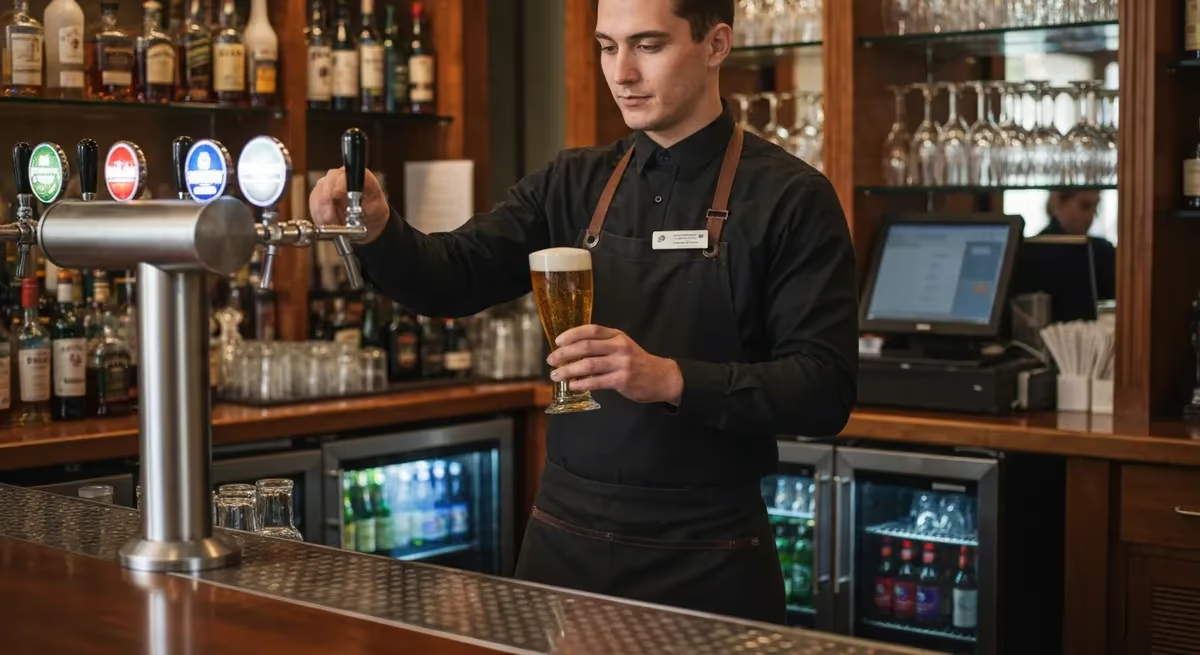
This a complete smart serve certificate guide covers Ontario's mandatory alcohol service certification, US state-level alcohol server permits, and age requirements for serving alcohol across North America. A quick note: the term smart proxy server refers to a networking tool used to route internet traffic — completely unrelated to the smart serve alcohol certification. If you're here for the Smart Serve Ontario program, you're in the right place; if you need a proxy server tool, a tech-focused resource will serve you better.
Smart Serve Ontario is the province's mandatory alcohol service training program, authorized by the Alcohol and Gaming Commission of Ontario (AGCO). Anyone who serves, sells, or handles alcohol in a licensed Ontario establishment must complete the course and pass the final exam before they can work in that role. The program is entirely online, costs $34.95, and issues a permanent digital certificate upon passing with a 70% score or higher.
Beyond Ontario, dozens of U.S. states require their own version of alcohol server training — called server permits, alcohol server certifications, or responsible beverage service (RBS) programs. This guide covers the most-searched state programs including Indiana, Georgia, Texas (TABC), and Utah, giving you a clear comparison of requirements and what servers need to do to work legally with alcohol across different jurisdictions.
Alcohol Server Training at a Glance
Key Facts at a Glance
| Item | Value | Details |
|---|---|---|
| Minimum Age to Serve (Ontario) | 19+ | |
| Smart Serve Course Cost | $34.95 | |
| Minimum Passing Score | 70% | |
| Smart Serve Certification Validity | Permanent |
The smart serve certification in Ontario is required for all staff involved in alcohol service — servers, bartenders, event staff, convenience store clerks who sell beer or wine, and licensed establishment managers. The program covers Ontario's Liquor Licence and Control Act (LLCA), responsible service practices, recognizing and managing intoxication, intervention strategies, and age verification. Most people complete the five-module course in five to eight hours.
How old do you have to be to serve alcohol in Ontario? The minimum age is 19 — the same as the legal drinking age. You cannot serve alcohol in a licensed Ontario establishment if you're under 19, regardless of whether you hold a Smart Serve certificate. Smart Serve certifies your knowledge of responsible service; the age requirement is a separate legal minimum set by Ontario's Liquor Licence and Control Act. Both must be met simultaneously.
The Smart Serve platform is accessible at smartserve.ca. Registration requires a valid email address and payment of the $34.95 course fee. Once registered, you can start, pause, and return to the course as many times as needed before the exam session begins. The exam itself is delivered in a single sitting — you can't pause mid-exam. After passing, your certificate is available as a PDF download immediately and is also emailed to your registered address.
A good way to serve alcohol responsibly starts with understanding who you can and can't serve. In Ontario, you must verify the ID of anyone who appears to be under 25, regardless of how old they actually are. Can you serve alcohol at 18 in Ontario? No — the minimum age to both serve and consume alcohol in Ontario is 19. Younger staff can work in licensed establishments in non-serving roles (kitchen, hosting, etc.) but cannot handle or serve alcohol.
How old do you have to be to serve alcohol varies significantly by jurisdiction. In Canada: Ontario, British Columbia, Alberta, and most other provinces set 18 or 19 as the minimum. In the United States, the minimum age to serve alcohol differs by state — some states allow 18-year-olds to serve beer and wine but require 21 to serve spirits.
Others allow 18-year-olds to serve in restaurants but not in bars. A few states require all alcohol service employees to be 21. Understanding how old do you have to be to serve alcohol in your specific jurisdiction is the first step before applying for any server position.
For managers hiring in Ontario: any new server who hasn't previously worked in a licensed establishment must complete Smart Serve before their first alcohol-serving shift. The certificate is the server's responsibility to obtain — most employers require proof of completion during the onboarding paperwork process. Employers who allow uncertified staff to serve alcohol are liable to AGCO enforcement action, including fines and potential licence suspension.
Smart Serve Practice Test Questions
Prepare for the Smart Serve - Smart Serve Test exam with our free practice test modules. Each quiz covers key topics to help you pass on your first try.
Smart Serve Alcohol Laws and Regulations
Smart Serve Exam Questions covering Alcohol Laws and Regulations. Master Smart Serve Test concepts for certification prep.
Smart Serve Alcohol Laws & Responsible Ser...
Free Smart Serve Practice Test featuring Alcohol Laws & Responsible Service. Improve your Smart Serve Exam score with mock test prep.
Smart Serve Checking Identification & Age ...
Smart Serve Mock Exam on Checking Identification & Age Verification. Smart Serve Study Guide questions to pass on your first try.
Smart Serve Customer Interaction and Safety
Smart Serve Test Prep for Customer Interaction and Safety. Practice Smart Serve Quiz questions and boost your score.
Smart Serve Drug Interactions and Alcohol
Smart Serve Questions and Answers on Drug Interactions and Alcohol. Free Smart Serve practice for exam readiness.
Smart Serve Duty of Care and Legal Liability
Smart Serve Mock Test covering Duty of Care and Legal Liability. Online Smart Serve Test practice with instant feedback.
Smart Serve Effects of Alcohol & Standard ...
Free Smart Serve Quiz on Effects of Alcohol & Standard Drinks. Smart Serve Exam prep questions with detailed explanations.
Smart Serve Identifying Intoxication & Imp...
Smart Serve Practice Questions for Identifying Intoxication & Impairment. Build confidence for your Smart Serve certification exam.
Smart Serve Liability Issues & Risk Manage...
Smart Serve Test Online for Liability Issues & Risk Management. Free practice with instant results and feedback.
Smart Serve Managing Difficult Situations ...
Smart Serve Study Material on Managing Difficult Situations & Refusals. Prepare effectively with real exam-style questions.
Smart Serve Ontario Liquor Licence Act
Free Smart Serve Test covering Ontario Liquor Licence Act. Practice and track your Smart Serve exam readiness.
Smart Serve Responsible Alcohol Service
Smart Serve Exam Questions covering Responsible Alcohol Service. Master Smart Serve Test concepts for certification prep.
Smart Serve Roles & Responsibilities of Se...
Free Smart Serve Practice Test featuring Roles & Responsibilities of Servers. Improve your Smart Serve Exam score with mock test prep.
Smart Serve Safe Alcohol Service & Monitoring
Smart Serve Mock Exam on Safe Alcohol Service & Monitoring. Smart Serve Study Guide questions to pass on your first try.
Smart Serve Safe and Legal Practices
Smart Serve Test Prep for Safe and Legal Practices. Practice Smart Serve Quiz questions and boost your score.
Smart Serve Serving Minors and Underage Pr...
Smart Serve Questions and Answers on Serving Minors and Underage Prevention. Free Smart Serve practice for exam readiness.
Alcohol Server Certifications by Region
Smart Serve is Ontario's only recognized alcohol service certification. The course costs $34.95, takes five to eight hours to complete, and requires a passing score of 70% on the final exam. The certification is permanent — no expiry date. Access through smartserve.ca. All servers, bartenders, and alcohol-handling staff in AGCO-licensed establishments must be certified before serving. The certification is non-transferable to other provinces.
The indiana server liquor license online program is the Indiana Alcohol and Tobacco Commission's (ATC) server certification requirement. Indiana requires that anyone who sells or serves alcohol at retail establishments hold an ATC-recognized certification. How old do you have to be to serve liquor in Indiana? Indiana allows servers who are 19 and older to serve alcohol — one of the states with a below-21 minimum. However, servers under 21 cannot consume alcohol and must follow specific handling restrictions in some establishment types.
The Indiana server permit can be completed through several ATC-approved online training providers. The most widely accepted programs are TIPS (Training for Intervention ProcedureS) and ServSafe Alcohol, both of which are recognized by Indiana's ATC. Most programs cost between $20 and $40 and take three to four hours to complete. The certificate typically needs renewal every three years, though the specific requirement can vary by program and ATC updates. Always verify the current requirement directly with the Indiana ATC before starting a server permit program.
How old do you have to be a server in Indiana? For non-alcohol service in restaurants, there's no state minimum age — minors commonly work as hosts, bussers, and dishwashers. For alcohol-serving positions, Indiana sets 19 as the minimum. For bars specifically, Indiana typically requires servers to be 21 or older to work the bar area, though restaurants with full liquor service may allow 19-year-olds to serve at tables. Verify the specific restriction with your employer and the ATC, as interpretations can vary by establishment licence type.
Alcohol Server Requirements by State
Indiana requires an ATC-recognized server certification for alcohol service. Minimum age to serve: 19 (21 in bars). Accepted programs include TIPS and ServSafe Alcohol. The indiana server liquor license can be completed online. Typical cost: $20–$40. Certificate valid for three years. Verify current requirements with the Indiana Alcohol and Tobacco Commission.
Georgia does not have a statewide mandatory server certification, but the Alcohol Server Permit Georgia is required in some counties and cities (including Atlanta). TIPS and ServSafe Alcohol are widely accepted. Minimum age to serve alcohol in Georgia is 18. Employers in licensed establishments often require certification even where it's not mandated by local ordinance.
Texas requires TABC (Texas Alcoholic Beverage Commission) seller/server certification for anyone who sells or serves alcoholic beverages. The TABC server permit is earned through an approved training program (TIPS, ServSafe, TAM, or others) and is valid for two years. Minimum serving age in Texas is 18. Cost varies by provider, typically $10–$40 for online courses.
Utah made Alcohol Server Education (ASE) mandatory for all alcohol servers starting July 2022. The program is administered through DABC-approved providers and requires three hours of training covering responsible service, Utah liquor law, and intoxication recognition. Minimum age to serve in Utah is 21 for full-service bars; 19 in some restaurant contexts. Certification valid for three years.
The alcohol server permit georgia is interesting because Georgia doesn't have a statewide mandatory certification — but many Georgia counties and cities do. Fulton County (Atlanta), Cobb County, and other metro areas have local ordinances requiring server training. Without a county-specific permit, servers in those areas may not legally serve alcohol regardless of their age or experience. The way to serve legally in Georgia means checking your specific county's requirements, not just the state minimum.
Georgia's state minimum age for alcohol service is 18. Servers who are 18–20 can serve alcohol in Georgia under state law, but local jurisdiction rules may add restrictions. Some Georgia municipalities require servers to be 21 for bar positions or to serve distilled spirits. If you're starting a server job in Georgia, ask your employer which alcohol server training program they accept — most Georgia employers recognize TIPS, ServSafe Alcohol, or the TEAM program (Techniques for Effective Alcohol Management).
For the indiana liquor license for servers specifically: the ATC doesn't issue a traditional "liquor license" to individual servers. What Indiana servers obtain is a server permit (through approved third-party training) that demonstrates they've met the ATC's training standard. The establishment holds the liquor license; the individual server holds the certification. This is the standard model across most U.S. states — the business is licensed, and employees are separately certified. How old do you have to be a server for alcohol service positions in Indiana? 19 for restaurant service, typically 21 for bar positions.
Getting Your Alcohol Server Certification: Pros and Cons
- +Legal requirement in Ontario and 30+ U.S. states — certification is mandatory, not optional
- +Protects you legally — certified servers have documented training, which matters in liability cases
- +Online completion — most programs including Smart Serve are fully self-paced and browser-based
- +Permanent or long-term validity — Smart Serve never expires; U.S. permits typically last 2–3 years
- +Affordable — most programs cost $20–$40; Smart Serve Ontario costs $34.95
- +Employer-valued — certification demonstrates professionalism and reduces employer onboarding burden
- −Jurisdiction-specific — certification in one province or state doesn't satisfy another's requirement
- −Renewal requirements vary — some U.S. permits require renewal every two to three years
- −Minimum age restrictions still apply independently of certification status
- −Course content varies by provider — some approved courses are more thorough than others
- −No physical card in Ontario — servers must manage their own digital certificate storage
- −Third-party training providers vary in quality — choosing an unapproved provider wastes time and money
Your server permit in the U.S. context is the individual certification that proves you've completed alcohol server training approved by your state's regulatory body. The indiana server liquor license — more accurately called an Indiana server permit — is earned through an ATC-approved program and must be renewed every three years.
Can you serve alcohol at 18 in Ontario? No — can you serve alcohol at 18 is the answer to a U.S. question; Ontario's minimum is 19. In most U.S. states, the minimum is 18 for beer and wine service, with state-specific rules for spirits and for bar (vs. restaurant) contexts.
Understanding server permits helps both job seekers and employers navigate the legal landscape efficiently. For job seekers: confirm which certification your prospective employer accepts before purchasing one — not all approved programs are accepted by all employers. For employers: post the required certification in your job listing so candidates can complete it before their first shift. Most programs take three to five hours, so there's no reason not to require certification before the first alcohol-serving day.
The server permit landscape in the U.S. is evolving. California's RBS Training Act (effective September 2022) created a statewide mandatory program where previously it was only voluntary. More states are considering similar legislation. The trend is toward universal server certification requirements — if your state doesn't currently require it, it may soon, and completing a recognized program now positions you ahead of any future mandate.
How TABC and Utah Alcohol Server Permits Work
The TABC server permit in Texas is earned through an approved seller/server training program recognized by the Texas Alcoholic Beverage Commission. Major providers include TIPS, TAM (Texas Alcohol Managers), ServSafe Alcohol, and several others. The TABC certification is valid for two years and must be renewed. The Utah alcohol server permit (now called Alcohol Server Education or ASE) became mandatory in 2022 for all alcohol servers in the state. Utah's three-hour program is completed through DABC-approved providers and is valid for three years. Both programs can be completed entirely online.
The tabc server permit requirement applies to any person who sells or delivers alcoholic beverages for consumption on or off a licensed premise in Texas. This includes servers, bartenders, cashiers who ring up alcohol sales, and delivery drivers who transport alcohol to customers. TABC penalties for uncertified servers include fines for both the individual and the employer — up to $4,000 per violation in some circumstances. The tabc server permit online courses are the most convenient option, with most taking four to five hours and costing $10 to $40 depending on the provider.
The utah alcohol server permit program (Alcohol Server Education) requires three hours of training covering responsible service, Utah's DABC regulations, intoxication recognition, and ID verification procedures. Utah has some of the strictest alcohol regulations in the country — the state controls all liquor sales through state-operated stores, and licensing requirements for servers are correspondingly strict. The minimum age for full-service bar work in Utah is 21; restaurant servers may be 19 in some contexts. Verify with your employer and the DABC for the specific requirement applicable to your establishment type.
If you're managing a restaurant or bar that operates across multiple states — common for chain restaurants and hospitality groups — the administrative challenge of tracking server certifications across jurisdictions is real. The best practice is to maintain a centralized certification tracker by state, set renewal reminders for certifications with expiry dates, and use a standardized onboarding process that requires certification proof before the first alcohol-serving shift regardless of state. This protects both the business and individual servers from regulatory gaps.
State and provincial alcohol server requirements change more often than most servers realize. California's RBS Training Act made server certification mandatory in 2022. Utah added its mandatory ASE program the same year. Other states are evaluating similar legislation. Before starting a new server job in any jurisdiction, verify the current certification requirement directly with the state or provincial regulatory body — don't rely solely on what your employer or a previous colleague told you. Requirements that were voluntary last year may be mandatory now.
The k cafe smart single serve coffee maker from Keurig is a single-cup brewing machine with a built-in milk frother — entirely unrelated to alcohol service certification. If you're searching for Keurig appliance reviews, a consumer tech site will serve you better. Separately, the alcohol servers license albuquerque nm refers to the City of Albuquerque's server certification requirement under New Mexico's Alcohol Server Training Program. New Mexico requires alcohol servers and managers to complete a training program approved by the Regulation and Licensing Department (RLD). Albuquerque's ordinances align with New Mexico's statewide standard, though some local regulations may add specificity.
New Mexico's alcohol server training is four hours minimum for servers and eight hours for managers. The program covers New Mexico liquor law, recognizing intoxication, checking ID, handling difficult situations, and legal liability. Certification is valid for five years in New Mexico — one of the longer validity periods among U.S. state programs. The minimum age to serve alcohol in New Mexico is 19. Programs approved by the New Mexico RLD include TIPS, ServSafe Alcohol, and several New Mexico-specific providers. Verify the current approved provider list directly with the RLD before registering.
For servers navigating the complexity of different state permit requirements, the National Restaurant Association Educational Foundation (NRAEF)'s ServSafe Alcohol program is the most broadly accepted option across multiple states. If you work in multiple states or plan to move, ServSafe Alcohol certification is recognized in more jurisdictions than most state-specific programs. It's not universally accepted — some states require their own specific program — but it covers the most ground for servers who need flexibility across different markets.
How old do u have to be to serve alcohol — colloquially phrased but a common search — varies by jurisdiction: 19 in Ontario and most Canadian provinces (18 in Quebec, Manitoba, and Alberta); 18 in most U.S. states for restaurant service; 21 in a few states for bar-specific service. The license to serve alcohol in georgia is based on the state's 18-year minimum, though local ordinances in some Georgia counties may set higher requirements or require specific training programs. Georgia doesn't issue a traditional individual server license — the business holds the license; individuals complete training through approved programs.
For anyone building a career in hospitality across North America, understanding these age and certification requirements by jurisdiction is foundational. Smart Serve in Ontario, TABC in Texas, TIPS across multiple states, ServSafe Alcohol nationally — each serves the same core purpose: ensuring that people serving alcohol understand their legal obligations, recognize impairment, and prioritize public safety over sales. The frameworks differ in detail but align in principle.
Starting with Smart Serve (if you're in Ontario) or your state's equivalent program is the practical first step for any new server. The investment is minimal — three to five hours of training and $20 to $40 in most jurisdictions. The return is substantial: legal authority to work in alcohol-serving roles, personal legal protection in liability situations, and a documented credential that employers across the industry recognize and value. In an industry where turnover is high and hiring is fast-moving, having your certification before you apply sets you apart from candidates who need to complete it after being hired.
Smart Serve Questions and Answers
About the Author

Certified Hospitality Educator & Tourism Certification Expert
Cornell University School of Hotel AdministrationIsabella Martinez is a Certified Hospitality Educator with an MBA in Hospitality Management from Cornell's School of Hotel Administration. She has 18 years of hotel operations and hospitality management experience and specializes in preparing candidates for Smart Serve, TIPS, food and beverage service certifications, and hospitality management licensing programs.