
Soft Skills for Resumes: The Complete Guide to Listing Communication Skills That Get You Hired
Master soft skills for resumes in 2026 August. Learn the difference between soft vs hard skills, top examples, and how to list them. 🏆 Get hired faster.

When hiring managers scan your resume, they spend an average of six seconds on initial review — and what often determines whether you advance is not just your technical credentials but your soft skills for resumes. Soft skills are the interpersonal and behavioral competencies that shape how you work, communicate, and collaborate. Understanding the difference between hard skills vs soft skills is the first step toward building a resume that stands out in any competitive job market.
The distinction matters more now than ever. A LinkedIn Workplace Learning Report found that 92% of talent professionals believe soft skills are equally or more important than technical abilities when making hiring decisions. Yet most job seekers spend the bulk of their resume space listing software tools and certifications while barely mentioning the communication and teamwork qualities that employers genuinely prioritize. Knowing how to present soft skills strategically can be the edge that separates your application from hundreds of similar candidates.
What exactly is a soft skill? Broadly speaking, soft skills are non-technical abilities rooted in personality, attitude, and emotional intelligence. They include how effectively you listen, how well you resolve conflict, whether you adapt when priorities shift, and how clearly you communicate under pressure. Unlike a programming language or accounting certification, soft skills are developed through lived experience and deliberate practice — which makes them harder to quantify but no less real in their impact on workplace performance.
The challenge for most job seekers is translating these qualities into concrete resume language. Phrases like "good communicator" or "team player" are so overused they have lost almost all meaning. Recruiters and applicant tracking systems (ATS) need specific, evidence-backed examples to recognize genuine competency. This guide walks you through exactly which soft skills to feature, where to place them on your resume, and how to describe them in ways that feel authentic and compelling to human readers and automated screening tools alike.
Soft skills are not limited to entry-level applicants trying to compensate for thin experience. Senior professionals, career changers, and executives all benefit from explicitly naming the interpersonal strengths that define their leadership style, problem-solving approach, and collaborative track record. In fact, research from Harvard University, the Carnegie Foundation, and Stanford Research Center concluded that 85% of job success comes from well-developed people skills, while only 15% is attributable to technical knowledge alone — a finding that should reshape how anyone thinks about resume construction.
Throughout this guide you will find a comprehensive list of soft skills, actionable examples tied to real industries, frameworks for weaving soft skills into your bullet points and summary section, and advice for preparing to discuss these qualities in interviews. Whether you are writing your first resume or refreshing a document you have used for years, the strategies here will help you present your full professional value — not just the technical surface layer that most resumes showcase.
Practice and self-assessment are crucial components of building genuine soft skills confidence. As you read through this material, consider testing your own understanding by working through targeted practice questions on communication, conflict resolution, and active listening. The quiz tiles below provide a fast, free way to benchmark where you stand and identify which competencies you should emphasize most strongly in your application materials.
Soft Skills in the Job Market by the Numbers

Soft Skills vs Hard Skills: Understanding the Core Difference
Soft skills are interpersonal and behavioral competencies: communication, empathy, adaptability, leadership, and problem-solving. They are developed through experience, are transferable across industries, and directly influence how effectively you work with other people.
Hard skills are specific, teachable technical abilities: Python programming, financial modeling, medical coding, or operating machinery. They are typically acquired through formal education, certification programs, or structured on-the-job training and are easily measurable.
Employers use hard skills to screen candidates for baseline competence, then use soft skills to decide who will thrive in the team culture. A strong resume demonstrates both layers — proving you can do the job and work well with others while doing it.
Despite their importance, a McKinsey Global Institute study found that 60% of employers say they struggle to find candidates with adequate soft skills. This gap creates a real opportunity: applicants who can demonstrate these qualities clearly have a measurable competitive advantage.
Unlike hard skills that may become outdated as technology evolves, soft skills like clear communication, active listening, and conflict resolution remain universally valuable. They make you resilient to automation and adaptable to career changes across sectors.
Building a compelling list of soft skills for your resume begins with understanding which competencies hiring managers in your target industry value most. While certain qualities — clear communication, dependability, and the ability to collaborate — appear on nearly every employer's wish list, the weight assigned to specific soft skills varies significantly by role. A customer service position demands empathy and patience above all else, while a project management role rewards decisiveness, organizational discipline, and the ability to communicate clearly under deadline pressure.
Communication is consistently ranked the single most desired soft skill across industries, and for good reason. Effective communicators reduce misunderstandings, accelerate decision-making, and build the kind of workplace trust that allows teams to take creative risks. On a resume, you can demonstrate communication strength by referencing presentations you delivered, reports you authored, or stakeholder relationships you managed. Specificity is everything: "Presented quarterly sales analysis to a cross-functional team of 30 stakeholders" is far more persuasive than "strong communication skills."
Active listening is a subset of communication that deserves its own emphasis, particularly for roles in healthcare, counseling, sales, and leadership. Listening is not a passive activity — it requires full attention, the ability to paraphrase and confirm understanding, and the discipline to withhold judgment while someone else is speaking. Candidates who can articulate their listening skills on a resume and back them up with behavioral interview examples consistently outperform peers who omit this quality. To explore examples of soft skills broken down by competency area, our complete study guide offers a detailed framework organized by industry and career level.
Adaptability has risen sharply in employer priority rankings since 2020, when the pandemic forced virtually every industry to reorganize around remote work, supply chain disruption, and rapidly shifting customer expectations. Employers now place extraordinary value on candidates who can describe specific instances of navigating change effectively — not just surviving it but driving creative solutions in the middle of it. On your resume, adaptability evidence might look like: "Led transition to remote onboarding process within three weeks, maintaining 95% new-hire retention rate through revised training protocols."
Critical thinking and problem-solving are often listed as separate soft skills but are deeply intertwined in practice. Employers want people who do not simply escalate problems upward but who gather relevant information, evaluate options systematically, and execute solutions with appropriate speed. The best resume evidence for these skills usually lives in quantified achievement bullets: cost savings you identified, processes you streamlined, customer escalations you resolved, or revenue opportunities you recognized that others had missed.
Emotional intelligence — the capacity to recognize, understand, and manage your own emotions while also perceiving and influencing the emotions of others — has become one of the most discussed competencies in leadership hiring. Research by the World Economic Forum identifies emotional intelligence as a top-ten skill for the future of work. Resume language that reflects emotional intelligence includes references to mentoring junior staff, navigating difficult client conversations, mediating team disagreements, or leading through organizational uncertainty with transparency and calm.
Teamwork and collaboration remain perennial favorites on job descriptions, but as with all soft skills, the key is to avoid the generic and reach for the specific. Instead of writing "team player," describe the team context, your specific role, and the outcome you jointly achieved. "Collaborated with designers, engineers, and marketing leads to launch a rebranded product line six weeks ahead of schedule" tells a story that generic language cannot. The soft skills meaning guide dives deeper into how each competency is defined across different professional contexts.
Soft Skills List by Career Level and Industry
Entry-level applicants should lead with communication clarity, eagerness to learn, and teamwork — qualities they can demonstrate through academic projects, internships, volunteer work, or part-time employment. Soft skills like active listening and adaptability carry particular weight when a candidate lacks years of industry experience, because they signal potential and coachability. Use your resume summary to frame these qualities in direct, confident language backed by one or two specific examples from your background.
Concrete entry-level soft skill bullets might include: managed customer inquiries under peak-hour pressure at a retail position, demonstrating patience and problem-solving; coordinated group research project involving five team members across different time zones; or received consistent feedback during internship reviews for written communication clarity and attention to meeting deadlines. Tie each quality to a real situation and measurable outcome whenever possible to avoid sounding generic to an experienced recruiter.

Pros and Cons of Leading Your Resume with Soft Skills
- +Differentiates you from candidates with identical technical credentials or educational backgrounds
- +Demonstrates cultural fit and interpersonal readiness that hard skills alone cannot convey
- +Signals coachability and long-term growth potential to future-focused hiring managers
- +Helps pass behavioral interview stages where soft skills are specifically assessed
- +Addresses skills gaps increasingly noted by employers in post-pandemic workforce surveys
- +Improves ATS scoring when soft skill keywords match job description language precisely
- −Vague or unsubstantiated soft skill claims are dismissed instantly by experienced recruiters
- −Overemphasis on soft skills at the expense of hard skills can suggest lack of technical depth
- −Generic phrases like team player or good communicator actively hurt credibility rather than help
- −Soft skills are harder to verify and quantify, requiring more creative resume construction
- −Some industries and roles still heavily weight certifications and technical expertise first
- −Poorly written soft skill examples can feel self-congratulatory or rehearsed rather than authentic
Soft Skills Resume Checklist: 10 Steps Before You Submit
- ✓Review the job description and highlight every soft skill keyword mentioned explicitly or implied
- ✓Match your resume's soft skill language directly to the terminology used in that job posting
- ✓Replace every generic phrase (team player, hard worker) with a specific, evidenced bullet point
- ✓Ensure at least three soft skills appear in your professional summary with concrete framing
- ✓Add at least one quantified achievement that demonstrates a soft skill outcome (e.g., reduced conflict rate by 25%)
- ✓Check that your soft skills are distributed across work experience, summary, and skills sections — not siloed in one place
- ✓Read each bullet aloud to verify it sounds natural and specific, not rehearsed or padded
- ✓Confirm your skills section lists a balanced mix of hard and soft skills relevant to the target role
- ✓Run the resume through an ATS-simulation tool to verify your soft skill keywords are being parsed correctly
- ✓Prepare a 60-second behavioral story (STAR format) for each soft skill listed, ready for interview follow-up
The STAR Method Turns Soft Skills Into Evidence
The most powerful way to communicate soft skills — both on your resume and in interviews — is the STAR method: Situation, Task, Action, Result. Instead of claiming you are an "excellent communicator," briefly describe a situation where communication was critical, the task you faced, the specific action you took, and the measurable result it produced. One well-constructed STAR story is worth a dozen adjectives on any resume or in any interview room.
Positioning soft skills effectively on your resume requires understanding where and how they carry the most weight. The professional summary at the top of your document is prime real estate — this is where you establish your overall professional identity, and leading with a soft-skill-anchored positioning statement can immediately differentiate you. Rather than opening with a job title alone, try: "Results-driven marketing manager recognized for translating complex data into clear strategic narratives that align cross-functional teams and drive measurable business outcomes." That sentence demonstrates communication, analytical thinking, and leadership in a single breath.
Within your work experience section, soft skills should emerge organically from achievement-oriented bullet points rather than being stated directly. This is the most important structural principle in modern resume writing. When you describe how you resolved a supplier dispute that was threatening a product launch, you are demonstrating conflict resolution, communication, and problem-solving without ever using those exact words — and that implicit demonstration is far more credible than explicit self-labeling. The more senior the role you are targeting, the more this approach matters to hiring committees.
A dedicated skills section can still include soft skill keywords for ATS purposes, but it should be formatted thoughtfully. Rather than a flat list of traits, consider grouping them under sub-headers: "Leadership & Communication" might include strategic messaging, stakeholder alignment, and team mentoring, while "Analytical & Problem-Solving" might include critical evaluation, data-driven decision-making, and process optimization. This organization signals professional maturity and makes the section scannable for both human readers and automated systems.
Soft skills also belong in your cover letter, where you have more narrative space to tell a story about who you are as a collaborator and communicator. A strong cover letter paragraph might begin: "Throughout my tenure at [Company], I prioritized transparent communication as a management philosophy — hosting weekly one-on-ones, maintaining an open-door policy, and creating a team environment where dissenting opinions were welcomed as assets rather than risks." This kind of specific, values-anchored language resonates powerfully with culture-conscious hiring managers.
LinkedIn profiles present another critical opportunity to demonstrate soft skills that your resume cannot fully capture. Recommendations from colleagues and managers are the single most credible soft skill endorsements available to any job seeker. When a former manager writes that you "navigated a politically charged departmental restructure with remarkable grace and transparency," that testimonial does more for your soft skills reputation than any resume bullet could. Actively cultivate recommendations that speak to specific interpersonal competencies, and reciprocate by writing thoughtful endorsements for others.
Portfolio materials and case studies, increasingly common in fields like marketing, UX design, consulting, and education, offer yet another channel for soft skill demonstration. A case study that walks through how you facilitated stakeholder consensus around a controversial product pivot communicates communication, leadership, and conflict resolution simultaneously. Linking to portfolio work from your resume or LinkedIn profile creates a multi-dimensional picture of your professional capabilities that far exceeds what a one-page document alone can convey.
Finally, consistency matters. The soft skills you highlight on your resume should align with your LinkedIn profile, your cover letter narrative, and the stories you tell in interviews. Inconsistency — claiming empathy on paper while seeming dismissive in person, for example — is one of the fastest ways to lose an offer after a strong initial screening. Think of your soft skills presentation as a coherent professional brand: every touchpoint should reinforce the same core qualities with authentic, specific evidence that makes the picture believable and compelling.
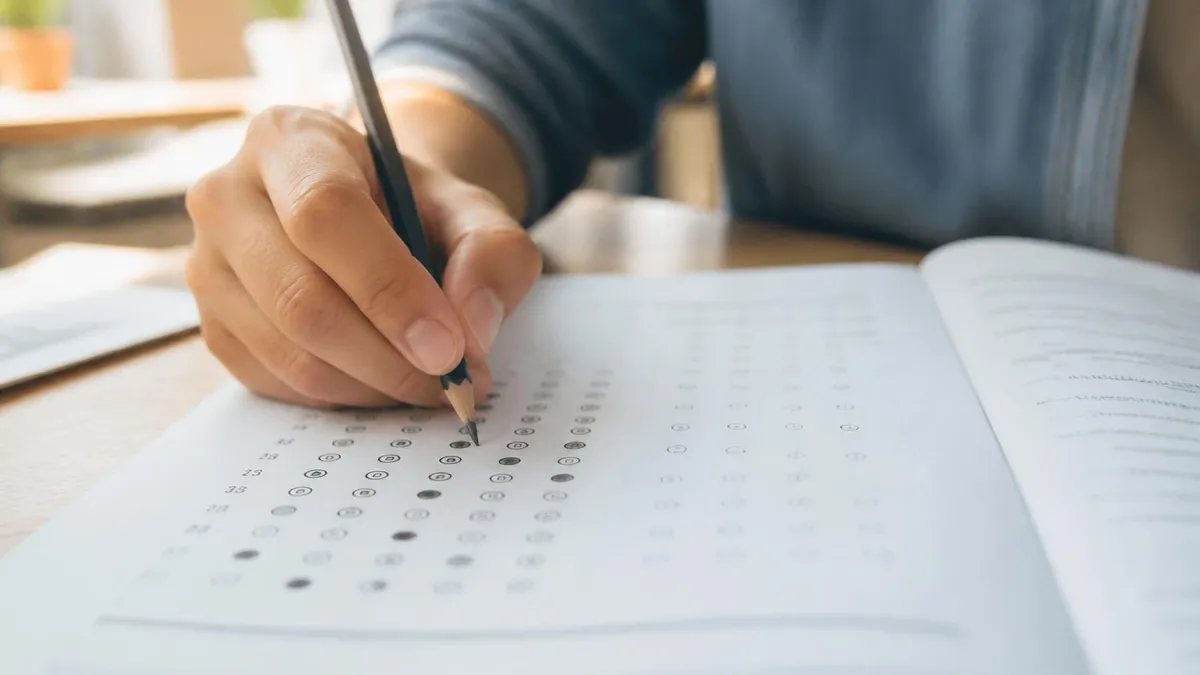
The three most common soft skills resume errors that immediately hurt your candidacy: using vague filler language without evidence ("strong communicator," "detail-oriented"), listing soft skills that contradict each other or your overall narrative, and placing all soft skills in a single "skills" section while leaving experience bullets purely technical. Recruiters who see these patterns interpret them as either inexperience or dishonesty — neither of which advances your application to the interview stage.
Preparing to discuss soft skills in interviews requires just as much deliberate preparation as studying for a technical assessment. Behavioral interview questions — the kind that begin with "Tell me about a time when..." or "Describe a situation where..." — are specifically designed to surface evidence of soft skills in real-world contexts. Hiring managers use these questions because research consistently shows that past behavior in ambiguous or challenging situations is the strongest predictor of future workplace performance. Having well-rehearsed, authentic stories ready transforms a potentially awkward interview into a confident conversation.
The STAR method (Situation, Task, Action, Result) is the gold standard framework for answering behavioral questions, and you should prepare at least one strong STAR story for each soft skill you feature prominently on your resume. If you list adaptability, have a story ready about a time a major project scope changed mid-execution and how you led your team through the pivot. If you list conflict resolution, prepare an example of a real interpersonal or inter-team disagreement you navigated to a productive outcome. Vague answers like "I'm generally pretty good at handling conflict" fail completely in behavioral interview contexts.
Communication-specific interview questions deserve special preparation because they often go several layers deep. An interviewer might ask how you communicate technical information to non-technical stakeholders, how you handle situations where you disagree with a manager's direction, or how you approach difficult feedback conversations. Each of these requires a distinct story, and the best candidates walk into the room having prepared four to six flexible scenarios that can be adapted to multiple question variations. To explore how soft skills for resume translate into interview performance, our employability skills guide connects each competency to the behavioral questions employers use to assess it.
One common interview challenge is being asked about weaknesses in the context of soft skills. The standard advice to disguise a strength as a weakness ("I work too hard") is well-known and immediately transparent to experienced interviewers. A more effective approach is to identify a genuine soft skill area you have actively been developing, describe the specific steps you have taken to improve it, and note the measurable progress you have made. This response demonstrates self-awareness, growth mindset, and the intellectual honesty that employers associate with high performers.
Panel interviews, where you face multiple interviewers simultaneously, are increasingly common for mid- and senior-level roles, and they are essentially a live test of your soft skills in action. How you make eye contact with different panel members, how you manage competing questions, how you signal respect while holding your ground on a point of disagreement — all of these behaviors are being observed and evaluated in real time. Preparation for panel formats should include mock interviews with multiple questioners, ideally people who can provide blunt, specific feedback on your interpersonal presence.
Virtual interviews introduce additional soft skill considerations. Your ability to communicate clearly through a screen, maintain engagement without in-person cues, manage technical difficulties with composure, and project warmth and confidence through a webcam all become part of your soft skills assessment in remote hiring processes. Technical preparation (camera angle, lighting, audio quality) signals professionalism and attention to detail, while your ability to pause thoughtfully before answering and to maintain natural conversational rhythm signals communication maturity that interviewers notice immediately.
After the interview, the follow-up communication you send is itself a demonstration of soft skills. A thank-you email that references a specific conversation moment from the interview, acknowledges what you learned about the team's challenges, and reaffirms your enthusiasm with concrete language rather than boilerplate courtesy signals that you are genuinely engaged and capable of the written communication the role demands. Small, authentic touches in post-interview communication have changed hiring decisions — this final soft skills moment is worth taking seriously.
Building genuine soft skills is a long-term investment, not a last-minute resume strategy. The most effective approach combines deliberate practice in real workplace contexts, structured self-reflection, targeted learning resources, and regular feedback from people whose judgment you trust. If communication is a skill you want to strengthen, joining a professional speaking organization, volunteering to lead meetings, or taking on a mentoring role all provide authentic practice environments where you receive immediate feedback and accumulate portfolio-worthy examples at the same time.
Reading extensively in your field also builds soft skills in indirect but measurable ways. Leaders who read broadly tend to communicate more clearly, think more creatively about problems, and demonstrate the kind of contextual awareness that makes them effective in cross-functional conversations. Even 20 minutes of daily reading in areas adjacent to your specialty — behavioral economics, organizational psychology, design thinking, or negotiation theory — compounds into a meaningful knowledge advantage that surfaces naturally in how you talk about your work and how you approach complex challenges.
Seeking and acting on feedback is perhaps the highest-leverage soft skill development activity available. Most professionals receive far less feedback than they need to grow, because giving candid performance feedback is itself a skill that many managers lack or avoid. Proactively asking for specific, actionable input — not "how am I doing?" but "what is one thing I could do differently in my stakeholder presentations to be more effective?" — positions you as a self-aware learner and gives you real data to work with. Document the feedback you receive and track your progress over time as evidence of growth mindset.
Formal soft skills training is more accessible than ever, with high-quality courses available through platforms like Coursera, LinkedIn Learning, and professional associations in virtually every field. Certifications in areas like negotiation, emotional intelligence, project communication, or facilitation techniques add credible third-party validation to self-reported soft skills claims and can be listed directly on your resume under education or professional development. When combined with real evidence from your work history, these credentials strengthen your overall soft skills case considerably.
Volunteering, whether in professional associations, nonprofit boards, community organizations, or industry conferences, provides accelerated soft skills development because it places you in leadership roles without the safety net of an established organizational structure. Organizing a conference session, managing a volunteer team for a fundraiser, or serving on a nonprofit board all build exactly the communication, leadership, and conflict resolution skills that employers value — and they generate resume-worthy stories at the same time.
Soft skills development is ultimately a feedback loop: the more intentionally you practice these competencies, the more specific evidence you accumulate, the more confidently you can discuss them in job applications and interviews, and the more effectively you deploy them in your actual work. This virtuous cycle is why the most successful professionals invest in soft skills continuously rather than treating them as a fixed personality trait. Growth mindset — the belief that abilities are developed through dedication and hard work — is itself one of the most valuable soft skills you can demonstrate to a prospective employer.
As you refine your resume and prepare for your next career opportunity, return to the fundamentals: know which soft skills your target employers value most, gather specific evidence that you possess them, present that evidence in clear and compelling language throughout your application materials, and practice discussing each competency with the kind of concrete, confident specificity that makes behavioral interviews feel like a conversation rather than an examination. The candidates who succeed at this process do not just get interviews — they get offers, they advance quickly, and they build careers defined by genuine impact rather than credential accumulation alone.
Soft Skills Communication Questions and Answers

Soft Skills - Communication: Career Paths, Salary, and Requirements 2026
Soft Skills - Communication: Complete Study Guide 2026

What Are Some Soft Skills? The Complete Guide to Examples, Meaning, and Career Impact

5 Soft Employability Skills That Will Transform Your Career in 2026

Why Employers Consider Soft Skills as Important as Hard Skills
About the Author
Educational Psychologist & Academic Test Preparation Expert
Columbia University Teachers CollegeDr. Lisa Patel holds a Doctorate in Education from Columbia University Teachers College and has spent 17 years researching standardized test design and academic assessment. She has developed preparation programs for SAT, ACT, GRE, LSAT, UCAT, and numerous professional licensing exams, helping students of all backgrounds achieve their target scores.
Join the Discussion
Connect with other students preparing for this exam. Share tips, ask questions, and get advice from people who have been there.
View discussion (6 replies)