
Did Pam Bondi Fail the Bar Exam? The Full Story and What It Means 2026 August
Did Pam Bondi fail the bar exam? 🎓 Get the full story, bar exam facts, pass rates, and prep tips for aspiring lawyers in 2026 August.

The question of whether Pam Bondi failed the bar exam has circulated widely online, fueling debates about legal competency, political careers, and the rigorous standards that every practicing attorney must meet. The bar exam is one of the most demanding professional licensing tests in the United States, and public figures who pursue legal careers are no exception to its demands. Understanding what actually happened with Bondi's exam history — and why people are searching for it — requires looking at how the bar exam works and what it truly tests.
Pam Bondi is a Florida attorney and politician who served as Florida's Attorney General from 2011 to 2019 before being nominated to serve as U.S. Attorney General. Public records indicate that Bondi did pass the Florida Bar Exam, though reports have surfaced suggesting she may not have passed on her first attempt. Like thousands of attorneys across the country, taking the bar exam more than once is not unusual — roughly 20 to 40 percent of first-time takers fail in most states, and retaking the exam is a normal part of many legal careers.
What makes this topic particularly timely is Bondi's nomination to a high-profile federal role, which has prompted journalists, legal observers, and curious members of the public to revisit her professional background. When a public figure's legal credentials come under scrutiny, it naturally invites questions about what the bar exam is, how hard it is, and what failing it actually means for a lawyer's career trajectory. These are questions every aspiring attorney should understand deeply.
The bar exam is a multiday assessment that tests knowledge across subjects ranging from constitutional law and contracts to criminal procedure and evidence. Most states use the Uniform Bar Examination, commonly called the UBE, which allows scores to be transferred across participating jurisdictions. Other states, like California, use their own unique exams with different formats and passing standards. If you want to dig into bar exam sample questions from UBE-style tests, there are excellent resources available to help you prepare strategically.
Failing the bar exam does not end a legal career. Many famous attorneys, judges, and even politicians have failed on their first attempt. Hillary Clinton failed the Washington D.C. bar exam. Michelle Obama passed the Illinois bar on her first try, but her husband Barack Obama passed the Illinois bar on his first attempt as well. John F. Kennedy Jr. famously failed the New York bar exam twice before passing. The point is that bar exam performance is one snapshot in time — not a comprehensive measure of legal talent or future success.
This article takes a comprehensive look at the Pam Bondi bar exam question, explores how the bar exam works across different states, examines pass rates and what they mean, and gives future attorneys the context they need to approach their own bar prep with confidence. Whether you are curious about a political figure's legal background or preparing to sit for the exam yourself, understanding the nuances of bar passage is essential knowledge.
The conversation around Bondi's bar exam history also highlights how public scrutiny of legal credentials has intensified in the social media age. Platforms like Reddit have entire communities dedicated to bar exam preparation, results, and stories of both failure and success. The bar exam reddit community has hundreds of thousands of members sharing strategies, horror stories, and encouragement. This kind of peer support is invaluable for candidates navigating one of the most stressful credentialing processes in American professional life.
Bar Exam by the Numbers
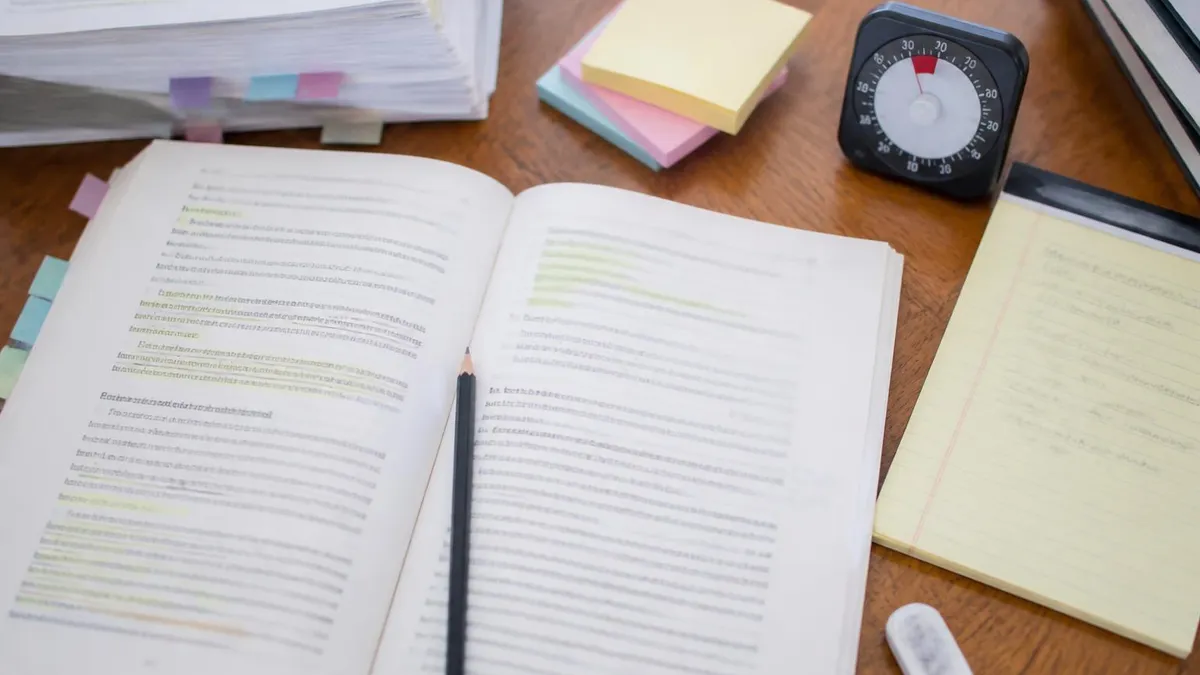
Bar Exam Format
| Section | Questions | Time | Weight | Notes |
|---|---|---|---|---|
| Multistate Bar Examination (MBE) | 200 | Day 2 — 6 hours | 50% | Multiple choice; covers 7 core subjects |
| Multistate Essay Examination (MEE) | 6 | Day 1 — 3 hours | 30% | Short-answer essays on UBE subjects |
| Multistate Performance Test (MPT) | 2 | Day 1 — 3 hours | 20% | Lawyering skills tasks using a closed file |
| Total | 200 | 2 days | 100% |
Pam Bondi graduated from the University of Florida Levin College of Law and was admitted to the Florida Bar, which confirms she ultimately passed the Florida Bar Exam. What public reporting has suggested is that she may not have cleared the exam on her very first sitting.
Florida uses its own state-specific bar exam rather than the Uniform Bar Examination, and it has historically been among the more challenging state exams in the country. Florida's overall pass rate for first-time takers typically hovers in the 60 to 70 percent range, meaning a significant minority of otherwise qualified law graduates do not pass on the first attempt.
The scrutiny around Bondi's bar history intensified during her nomination hearings. Critics pointed to questions about her legal experience and competence, while supporters noted that her record as a prosecutor and state attorney general speaks for itself regardless of how many attempts it took to pass a licensing exam. This debate gets to the heart of a broader question: does bar exam performance predict legal competence? The answer, according to most legal scholars, is nuanced at best.
The bar exam does test foundational legal knowledge, but it measures a specific kind of test-taking skill under extreme time pressure. Brilliant legal thinkers have failed it. Mediocre lawyers have aced it. The correlation between bar exam scores and long-term career success is relatively weak, which is why many legal educators and bar association reform advocates have pushed for alternative pathways to admission in some states. California, Oregon, and Vermont have begun experimenting with supervised practice pathways that allow some candidates to bypass the traditional exam.
For Bondi, the public record shows a completed law degree, a passing score on the bar exam, and a career that included serving as an assistant state attorney in Hillsborough County, Florida, before entering politics. That prosecutorial experience — trying real cases, arguing in front of judges, handling evidence — is arguably more indicative of legal competence than any single exam score. The california bar exam results and similar state data show that even among top scorers, practical courtroom skill is a separate competency entirely.
The political dimensions of the Bondi bar exam question are impossible to ignore. When a nominee for a high federal position comes under scrutiny, opponents will often seize on any available vulnerability, including academic or credentialing gaps. In Washington D.C., bar exam history has become a talking point in confirmation battles, though it has rarely been disqualifying on its own. Senators and commentators who raised Bondi's bar history were effectively making an argument about fitness for office, not just legal credentialing.
It is worth noting that the U.S. Attorney General does not technically need to be a licensed attorney under federal law, though every person who has held the office has been a lawyer. The role is a cabinet position that blends legal expertise with executive and political leadership. Bondi's bar passage — however many attempts it took — satisfies the practical and symbolic requirement that the nation's top law enforcement officer hold a law license.
Understanding this background helps put the Pam Bondi bar exam debate in proper perspective. The bar exam is genuinely hard. Failing it once is common. Passing it — even on a second or third attempt — demonstrates persistence, eventual mastery of core legal doctrine, and the ability to meet a state's minimum competency standards. For candidates currently preparing to sit for the exam themselves, Bondi's story is a reminder that the path to bar passage is rarely perfectly straight, and that a single setback does not define a legal career.
What Is the Bar Exam? Format, Subjects, and Scoring
The bar exam in most U.S. jurisdictions spans two full days. Day one typically covers the Multistate Essay Examination (MEE) and the Multistate Performance Test (MPT), which together test written legal analysis and practical lawyering skills. Day two is the Multistate Bar Examination (MBE), a 200-question multiple-choice test covering seven core subjects: Civil Procedure, Contracts, Constitutional Law, Criminal Law and Procedure, Evidence, Real Property, and Torts.
The UBE combines these three components into a single transferable score, which is a significant advantage for candidates who want flexibility in where they practice. UBE scores are accepted in 41 jurisdictions as of 2026, meaning a lawyer who passes in one state can transfer their score to another without retaking the full exam. California, Louisiana, and a few others still maintain their own independent exams with distinct formats and passing thresholds.

Taking the Bar Exam: Benefits and Challenges to Consider
- +Passing the bar opens the door to licensed legal practice in your jurisdiction
- +A UBE score is portable across 41 jurisdictions, offering career flexibility
- +Bar prep builds deep knowledge of foundational legal doctrine across all subjects
- +Passing on the first attempt strengthens your resume for competitive law firm hiring
- +The process develops time-management and high-stakes testing skills that carry forward
- +State bar membership provides professional community, ethics guidance, and CLE access
- −Pass rates range from 40 to 75 percent, meaning failure is common even among qualified graduates
- −Preparation typically requires 400 or more hours of intensive study over 10 to 12 weeks
- −Commercial prep courses cost between $1,500 and $4,000, a significant financial burden
- −Exam fees and application costs add up quickly, especially for multiple attempts
- −The two-day format creates extreme mental and physical fatigue for most candidates
- −Failing can delay employment, damage confidence, and create financial strain during re-prep
Bar Exam Preparation Checklist: 10 Steps to Pass
- ✓Register for your jurisdiction's bar exam at least 90 days before the sitting date to avoid late fees.
- ✓Choose a commercial prep course (Barbri, Themis, Kaplan, or Quimbee) that matches your learning style and state format.
- ✓Build a realistic 10 to 12 week study schedule with specific daily goals for each subject.
- ✓Complete at least 1,500 MBE practice questions under timed conditions to build pacing and pattern recognition.
- ✓Write a minimum of 25 full MEE essay responses and score them against official model answers.
- ✓Complete at least 4 to 6 full MPT tasks using real past exam prompts from the NCBE's published archive.
- ✓Take at least two full simulated two-day exams in the final two weeks of prep to build stamina.
- ✓Review your wrong answers systematically — identify subject-level and question-type patterns in your errors.
- ✓Join a study group or bar exam reddit community for accountability, shared resources, and emotional support.
- ✓Prioritize sleep, nutrition, and exercise during prep — cognitive performance degrades sharply under chronic stress.

More Than Half of All Repeat Takers Eventually Pass
NCBE data consistently shows that the majority of candidates who fail the bar exam on their first attempt eventually pass on a subsequent sitting. The key variables that predict success on a repeat attempt are not raw intelligence but structured re-prep strategy, targeted subject review, and improved MBE drilling. If you have failed once, you are not disqualified from a successful legal career — you are one strategic study cycle away from passing.
The list of prominent lawyers and public figures who failed the bar exam before eventually passing is long and illustrious. John F. Kennedy Jr. is perhaps the most famous example. After graduating from New York University School of Law, Kennedy Jr. failed the New York bar exam on his first attempt in 1990, then failed again in 1990 before finally passing in 1990 on his third try.
The tabloid coverage was brutal, with headlines like "The Hunk Flunks" appearing in major newspapers. Yet Kennedy went on to serve as an assistant district attorney in Manhattan and was widely regarded as a capable lawyer by his colleagues.
Hillary Rodham Clinton failed the Washington D.C. bar exam in 1973 after passing the Arkansas bar exam. She went on to become First Lady, U.S. Senator, Secretary of State, and a two-time presidential candidate. Her single D.C. bar failure has become a recurring footnote in discussions about bar exam difficulty and the imperfect predictive power of a single credentialing test. The California bar exam, in particular, has claimed notable victims — California has historically had one of the nation's lowest pass rates, routinely below 50 percent for all takers.
The kim kardashian bar exam connection has also captured public attention in recent years. Kardashian announced she was pursuing a law license through California's Law Reader program, an alternative pathway that allows candidates to study under a practicing attorney rather than attending law school. She has publicly disclosed failing the First-Year Law Students' Examination, known as the Baby Bar, on multiple occasions before passing. Her willingness to openly discuss her failures on social media has actually generated substantial public goodwill and shifted some of the stigma around bar exam failure.
These stories matter because they humanize a process that can feel impossibly daunting from the inside. Every year, approximately 60,000 people sit for bar exams across the United States, and tens of thousands of them will not pass on their first attempt. The experience of failure is so common that entire online communities — most notably the supreme court bar exam results threads and similar discussion forums — have sprung up to support candidates through multiple attempts.
What distinguishes candidates who eventually pass from those who give up? Research and anecdotal evidence point to several key factors. Candidates who analyze their failures systematically — identifying specific subject weaknesses and question-type errors rather than just retaking the same prep course — tend to improve more significantly on subsequent attempts. Candidates who seek out targeted coaching or tutoring for their weak subjects also outperform those who rely solely on self-study during their repeat attempt.
The emotional toll of failing deserves acknowledgment too. Many candidates report anxiety, depression, shame, and a crisis of professional identity following a bar failure. Law schools and bar associations have increasingly recognized this mental health dimension, with some schools offering dedicated counseling services and peer mentorship programs for repeat takers. Treating the emotional recovery as seriously as the academic re-prep is not a soft recommendation — it is practically essential for candidates who need to sustain the motivation required to study for another three months.
What Pam Bondi's story — and the stories of every other prominent person who struggled with the bar exam — ultimately teaches us is that legal competence is broader than any single test can capture. The bar exam tests one specific kind of knowledge under one specific set of conditions.
It is a meaningful threshold, but it is not the ceiling of legal achievement. The lawyers who matter most are those who serve their clients well, argue with integrity, and continue learning long after the bar results come in. Checking the practice bar exam resources available for your jurisdiction is a smart first step toward that goal.
Most state bar exams are offered only twice per year, in February and July. Application deadlines typically fall 90 to 120 days before the exam date, and late applications incur significant fees or may be rejected entirely. If you miss the deadline for the July sitting, you will not be able to sit until February — a six-month delay that can push back your job start date, affect conditional job offers, and create substantial financial pressure. Mark your jurisdiction's application deadline in your calendar the moment you decide to sit.
Preparing effectively for the bar exam requires understanding not just what to study but how to study. The two most common mistakes among first-time takers are passive reading and insufficient practice under timed conditions. Passive reading — working through outlines and commercial prep materials without actively testing yourself — creates a false sense of familiarity that evaporates under exam pressure. Active recall, spaced repetition, and timed practice are far more effective for building the retrieval speed and accuracy that the MBE demands.
The MBE is the component where most candidates lose the most points relative to their potential. With 200 questions across a six-hour testing period, candidates have approximately 1.8 minutes per question. That pace feels manageable in isolation but becomes exhausting over a full exam day. The questions are designed to be answered quickly by someone who genuinely understands the legal rule — not by someone who half-remembers it and needs to reason through every answer choice from first principles. Building speed through volume drilling is essential.
Essay practice is equally critical and often underemphasized. The MEE rewards candidates who can quickly identify the legal issue in a fact pattern, state the applicable rule clearly, apply the rule to the specific facts with precision, and reach a conclusion — the classic IRAC structure. Candidates who write well-organized IRAC responses consistently outperform those who write long, discursive essays that bury the rule statement and analysis. Time yourself on every essay you write during prep and practice cutting to the point faster with each repetition.
The MPT is the component that most candidates underestimate in terms of its opportunity for easy points. The MPT provides a closed file of source materials — cases, statutes, regulations — and asks candidates to perform a lawyering task such as drafting a memo, a brief, or a letter to a client. Because all the law you need is provided in the file, the MPT rewards close reading and clear organization rather than memorized doctrine. Most candidates can significantly improve their MPT scores with targeted practice on past exams.
Subject prioritization matters enormously. Not all bar exam subjects appear with equal frequency on the MBE. Contracts, Torts, Evidence, and Constitutional Law together account for the majority of MBE questions. A candidate who achieves mastery in these four subjects will have a substantial advantage even if their knowledge in other areas is merely competent. Many experienced bar prep tutors recommend achieving near-perfect accuracy in your strongest subjects first, then building floor scores in your weakest areas, rather than trying to achieve uniform competency across all subjects simultaneously.
Practice tests are the single most valuable preparation tool available. Working through realistic, full-length practice exams under actual testing conditions — sitting at a desk, using only permitted materials, timing yourself strictly — builds both competency and confidence. The ny bole bar exam results data and similar state-level performance analytics confirm that candidates who complete the most practice exams before the real test consistently outperform those who rely heavily on passive review.
Finally, do not neglect professional responsibility, which appears on virtually every bar exam in some form. The Multistate Professional Responsibility Examination, known as the MPRE, is a separate 60-question exam that most states require candidates to pass before or alongside the bar exam. The MPRE tests knowledge of the Model Rules of Professional Conduct and judicial ethics standards. It is not particularly difficult compared to the main bar exam, but failing to register for it on time or underestimating the preparation it requires can become a costly mistake that delays bar admission by months.
The final weeks before the bar exam are both the most important and the most psychologically challenging phase of preparation. After months of intensive studying, many candidates experience burnout, anxiety spikes, and a sudden erosion of confidence as the exam date approaches. Understanding that this experience is nearly universal is the first step toward managing it productively. The anxiety you feel in the final stretch is not a signal that you are underprepared — it is a normal response to high-stakes evaluation that most candidates share regardless of their actual readiness level.
In the final two weeks, shift your preparation from learning new material to consolidating and reviewing what you already know. Attempting to cram new subjects in the final days before the exam tends to displace well-learned material and increases anxiety without proportionate benefit to your score. Instead, use this time to review your most commonly missed MBE topics, re-read your best essay outlines, and complete one more full simulated exam to confirm your pacing and stamina are where they need to be.
Sleep is not optional during bar prep, and it is especially critical in the final week. Cognitive performance on complex analytical tasks degrades measurably after even one night of insufficient sleep. Candidates who sacrifice sleep to study more in the final nights before the exam consistently perform worse than those who prioritize rest. Aim for seven to nine hours per night during the entire prep period, and absolutely do not pull all-nighters in the days immediately preceding the exam.
On exam day itself, logistical preparation matters more than most candidates anticipate. Know exactly where your testing center is and how long it takes to get there in morning traffic. Bring only permitted items. Eat a real breakfast. Dress in layers because testing center temperatures are unpredictable. Have a consistent plan for the breaks between exam sections — whether that means a brief walk, a specific snack, or a few minutes of deep breathing — and stick to it. Routine reduces cognitive load and keeps anxiety manageable during a high-pressure two-day marathon.
After the exam, resist the temptation to immediately dissect your performance with other candidates. Post-exam discussions in testing center parking lots and on bar exam reddit threads are almost universally anxiety-inducing and rarely productive. You cannot change your answers once you have submitted. Give yourself permission to decompress, reconnect with people and activities you neglected during prep, and wait for results without obsessive self-evaluation. Results typically arrive 8 to 10 weeks after the exam date, and filling that waiting period with productive activity rather than rumination is genuinely good advice.
If your results come back as a failure, give yourself a short but defined period to process the disappointment — a few days, perhaps a week — before shifting into analytical mode. Pull your diagnostic data if your jurisdiction provides it. Identify which subjects and question types cost you the most points.
Design a re-prep strategy that directly addresses those specific weaknesses rather than repeating the same generic prep course from scratch. Talk to a bar prep tutor or consultant if you can access one. Failure on the bar exam is a setback, not a verdict on your capacity to become a good lawyer.
The story of Pam Bondi and the broader conversation about bar exam performance remind us that the legal profession is full of people who struggled with this particular gate before going on to meaningful careers. The exam is hard by design — it is supposed to be a real threshold.
But it is a threshold that the vast majority of persistent candidates eventually cross, and the qualities that make someone a good lawyer — judgment, integrity, empathy, and the willingness to keep working on hard problems — are not the same qualities that make someone a fast multiple-choice test taker. Keep that perspective as you prepare, and let it fuel your effort rather than diminish it.
Bar Questions and Answers

TN Bar Exam Results: Everything You Need to Know About Tennessee's Bar Exam

Ohio Bar Exam: Complete Guide to Requirements, Format, and How to Pass
Bar Exam Practice Test PDF (Free Printable 2026)

UBE Bar Exam: Structure, Scores, States, and How to Pass

NCBE Bar Exam Results: What They Mean and How to Use Them to Pass
About the Author
Attorney & Bar Exam Preparation Specialist
Yale Law SchoolJames R. Hargrove is a practicing attorney and legal educator with a Juris Doctor from Yale Law School and an LLM in Constitutional Law. With over a decade of experience coaching bar exam candidates across multiple jurisdictions, he specializes in MBE strategy, state-specific essay preparation, and multistate performance test techniques.