
AHA ACLS CEU: Complete Guide to Continuing Education Credits for ACLS Recertification
AHA ACLS CEU requirements explained — renewal cycles, credit types, approved providers & prep tips. ✅ Everything healthcare pros need to stay certified.

Earning your aha acls ceu credits is one of the most important steps a healthcare professional can take to maintain Advanced Cardiovascular Life Support certification and stay current with the American Heart Association's evolving resuscitation science. ACLS certification is not a one-time achievement — it requires renewal every two years, and continuing education units (CEUs) play a central role in demonstrating that clinicians have kept pace with guideline updates, pharmacology changes, and algorithm refinements that directly affect patient survival outcomes in cardiac emergencies.
The American Heart Association updates its ACLS guidelines periodically based on the latest evidence reviewed by the International Liaison Committee on Resuscitation (ILCOR). These updates can introduce meaningful changes to drug dosing protocols, CPR compression ratios, post-cardiac arrest care procedures, and team dynamics expectations. CEU requirements exist precisely because a provider who certified four or five years ago may be working from outdated protocols that no longer reflect best practice. Staying current through approved CEU activities ensures that every intervention a provider performs is grounded in the most recent science.
Understanding what counts toward AHA ACLS CEU requirements can feel confusing, especially because the landscape of approved providers, course formats, and credit tracking systems has expanded significantly over the past decade. Online modules, simulation labs, skills stations, hospital-based in-service training, and formal classroom renewal courses all have distinct rules governing how many credits they award and whether those credits satisfy AHA renewal prerequisites. This guide will walk you through every aspect of the process so you can plan your renewal pathway with confidence.
Healthcare professionals across a wide range of specialties are required to maintain active ACLS certification. Emergency medicine physicians, critical care nurses, respiratory therapists, paramedics, anesthesiology providers, and hospitalists are among the most common groups subject to institutional or credentialing body mandates. Depending on your employer, state licensing board, or specialty certification organization, the specific number of CEUs required each renewal cycle may vary. Knowing exactly what your particular credential demands is the essential starting point before choosing any CEU activity.
One of the most practical reasons to prioritize AHA ACLS CEU planning is to avoid last-minute scrambling near your certification expiration date. Many providers make the mistake of waiting until the final weeks of their two-year renewal window to arrange continuing education, only to discover that preferred course dates are full, that online modules require more time than anticipated, or that their employer requires documentation to be submitted well in advance of the actual expiration. Building a proactive CEU calendar starting from the day you receive your current certification saves enormous stress and prevents potential lapses in credentials.
This comprehensive guide covers the AHA ACLS CEU framework from the ground up — including the formal renewal requirements set by the AHA, the types of activities that qualify for credit, how to find and vet approved providers, strategies for maximizing your study efficiency ahead of any renewal assessment, and how practice testing fits into a well-rounded CEU preparation plan. Whether you are renewing ACLS for the first time or have been through the cycle multiple times, you will find actionable guidance tailored to your professional situation throughout this article.
By the end of this guide, you will have a clear roadmap for meeting your AHA ACLS CEU obligations on schedule, understanding which credit activities offer the best return on your preparation time, and approaching the skills and written assessments that accompany renewal with the confidence that comes from thorough, structured review.
AHA ACLS CEU by the Numbers
Understanding the AHA ACLS CEU Renewal Framework
The AHA mandates ACLS renewal every two years. Providers must complete an AHA-accredited renewal course that includes a written examination with an 84% minimum passing score and hands-on skills verification at a Training Center.
Only courses delivered through AHA-authorized Training Centers (ATCs) count toward official ACLS renewal. These centers are vetted by the AHA for instructor quality, equipment standards, and curriculum adherence — check aha.org to verify provider status.
After completing qualifying activities, providers receive a certificate of completion or transcript entry. Keep digital and paper copies for at least five years, as employers, licensing boards, and credentialing organizations may audit CEU records at any time.
State nursing boards, medical boards, and individual hospitals may impose CEU requirements beyond the AHA minimum. Always verify the specific number of credits your licensing authority requires before selecting continuing education activities.
The AHA's Heartcode ACLS program allows providers to complete cognitive (didactic) portions online, then fulfill hands-on skills testing at a local ATC. This blended format is increasingly popular among shift workers and professionals with unpredictable schedules.
Approved AHA ACLS CEU activities span a wide spectrum of formats, and understanding the distinctions between them helps providers select the option that best fits their schedule, learning style, and institutional requirements. At the most formal end of the spectrum, the AHA's own renewal courses — delivered through authorized Training Centers — provide the core credential renewal and carry the highest level of documentation. These courses include both a cognitive assessment and a hands-on skills evaluation, ensuring providers can demonstrate competency not just on paper but in simulated clinical scenarios.
Beyond the formal renewal course itself, many providers accumulate CEU credits through hospital-based in-service education programs. These sessions, typically conducted by experienced staff educators or clinical nurse specialists, cover topics such as updated resuscitation protocols, medication administration changes, debriefing techniques for code teams, and post-cardiac arrest care bundles. When properly documented and delivered by credentialed instructors, in-service sessions count toward many institutional and state board CEU requirements, though they generally do not substitute for the official AHA renewal examination and skills check.
Online continuing education modules from AHA-recognized providers represent another major category of qualifying activity. Platforms accredited by the American Nurses Credentialing Center (ANCC), the Accreditation Council for Continuing Medical Education (ACCME), or the American Academy of Family Physicians (AAFP) routinely offer ACLS-related modules covering topics such as ECG rhythm interpretation, resuscitation pharmacology, stroke assessment, acute coronary syndrome management, and respiratory emergencies. Completing these modules earns contact hours or Category 1 CME credits, both of which typically satisfy CEU requirements imposed by state boards and specialty certifying organizations.
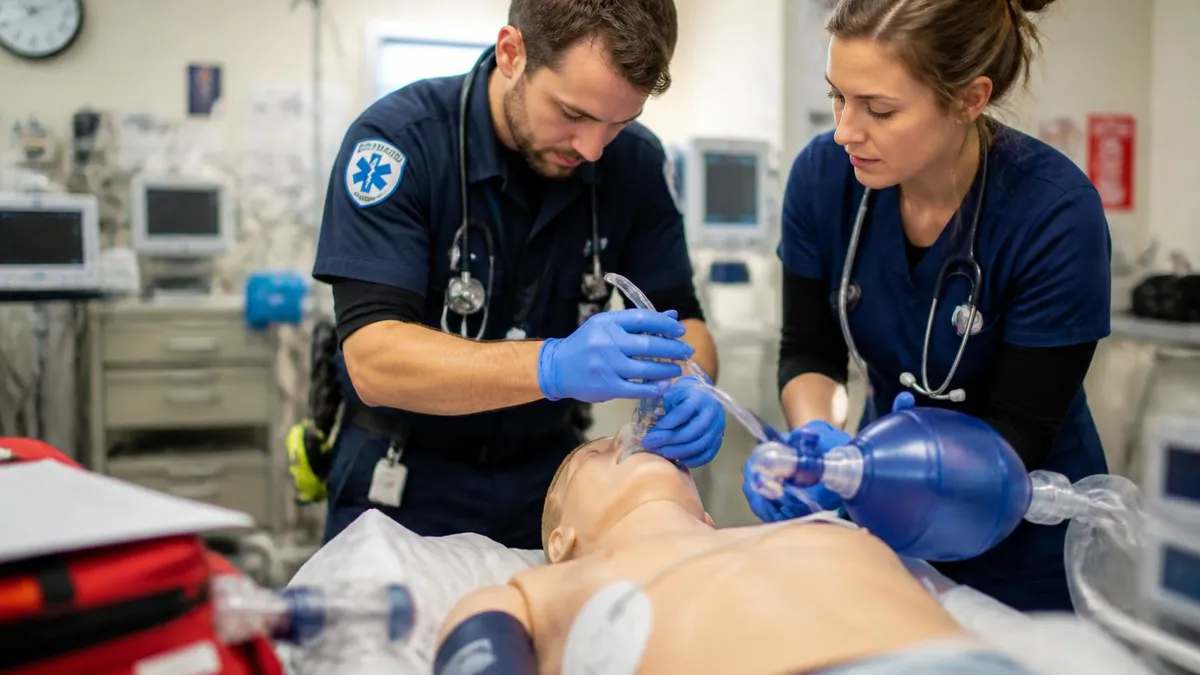
Simulation-based training has become an increasingly valued component of ACLS continuing education, particularly for institutions that prioritize high-fidelity team training. Simulation centers use advanced manikins and scenario software to recreate realistic cardiac arrest situations, allowing multidisciplinary teams to practice communication, role clarity, and algorithm execution under pressure. Many simulation programs are AHA-aligned and award CEUs upon completion, and research consistently shows that simulation training improves retention of ACLS skills more effectively than didactic review alone.
Journal-based continuing education is another category worth considering for physicians and advanced practice providers seeking CME credits. Peer-reviewed journals such as Resuscitation, Circulation, and Critical Care Medicine routinely publish CME-eligible articles focused on resuscitation science updates. Reading these articles and completing the associated post-tests earns credits that count toward medical license renewal requirements in most states, and they simultaneously keep providers informed of the emerging evidence that will likely influence future AHA guideline revisions.
Conference attendance is a CEU strategy particularly well-suited for providers who prefer immersive learning environments. Major conferences such as the American Heart Association Scientific Sessions, the Society of Critical Care Medicine annual congress, and the American College of Emergency Physicians Scientific Assembly all offer substantial ACLS-relevant programming. Conference credits are typically awarded in CME hours or nursing contact hours and can represent a significant portion of a provider's biennial CEU total while simultaneously offering networking, recruitment, and professional development opportunities beyond the classroom.
Peer teaching and instructor roles within ACLS programs are worth noting as a CEU pathway that many providers overlook. Serving as an AHA ACLS Instructor not only earns credits for teaching activities in many jurisdictions but also deepens the instructor's own mastery of resuscitation science through repeated exposure to curriculum content, skills evaluation standards, and the critical questions that course participants ask. For experienced providers ready to give back to their professional community, instructor certification is one of the most comprehensive CEU strategies available.
Online vs. In-Person vs. Blended ACLS CEU Options
Online ACLS CEU modules offer unmatched scheduling flexibility, allowing providers to complete cognitive coursework at any time from any device. Accredited platforms typically offer modules on ECG interpretation, resuscitation pharmacology, algorithm application, and post-arrest care, each awarding a set number of contact hours or CME credits upon successful completion of a post-test. Many providers complete their full non-hands-on CEU requirement through online modules spread across their two-year renewal window.
The key consideration when selecting online modules is accreditation status. Only modules approved by ANCC, ACCME, AAFP, or a recognized state board qualify for credit toward most licensing and credentialing requirements. Always verify accreditation before purchasing a course, and save your completion certificates immediately — many platforms archive records for only 12 to 24 months, creating documentation gaps if you wait too long to retrieve them.

AHA ACLS CEU Renewal: Pros and Considerations
- +Keeps providers current with the latest AHA resuscitation guidelines and evidence-based algorithm updates
- +Maintains institutional credentialing and employment eligibility across hospitals, EMS agencies, and clinical settings
- +Reinforces pharmacology knowledge including epinephrine dosing, amiodarone protocols, and adenosine administration
- +Offers flexible renewal formats — online, in-person, and blended — to fit diverse provider schedules
- +Improves confidence and performance during real cardiac arrest events through structured skills review
- +Satisfies state nursing board, medical board, and specialty certification body CEU requirements simultaneously
- −Two-year renewal cycle requires consistent planning and scheduling to avoid credential lapses
- −Cost of renewal courses and CEU modules can add up, particularly for providers paying out of pocket
- −Hands-on skills sessions require travel to an AHA-authorized Training Center regardless of online prep completed
- −CEU documentation burden is significant — lost certificates can be difficult to replace after several years
- −Not all online CEU providers are AHA-accredited, leading to wasted time and money on non-qualifying content
- −Renewal requirements imposed by individual employers may exceed AHA minimums, requiring additional credit hours
AHA ACLS CEU Renewal Preparation Checklist
- ✓Confirm your current ACLS certification expiration date and set a renewal reminder 90 days in advance.
- ✓Verify your employer's specific CEU requirements beyond the AHA two-year minimum before selecting courses.
- ✓Check your state nursing or medical board's required number of contact hours or CME credits for your license renewal.
- ✓Locate your nearest AHA-authorized Training Center at heart.org and review their ACLS renewal course schedule.
- ✓Decide between in-person renewal, online Heartcode completion, or a blended format based on your schedule.
- ✓Review the current AHA ACLS algorithms — cardiac arrest, bradycardia, tachycardia, ACS, and stroke — before your renewal assessment.
- ✓Complete at least two full-length ACLS practice tests covering ECG interpretation and pharmacology to identify knowledge gaps.
- ✓Study key ACLS medications: epinephrine, amiodarone, lidocaine, adenosine, atropine, and magnesium sulfate dosing.
- ✓Gather and organize all CEU certificates from the past two years into a single digital folder for easy access during audits.
- ✓Register for your renewal course or skills session at least three to four weeks before your certification expires to ensure availability.
Start CEU Planning at Least 90 Days Before Expiration
The most common reason ACLS providers experience a certification lapse is waiting too long to schedule their renewal course. AHA Training Centers in metro areas often book out four to six weeks during peak renewal seasons. Beginning your CEU planning a full 90 days before expiration gives you ample time to complete online modules, schedule hands-on skills testing, and submit documentation to your employer or licensing board without risking even a single day of credential lapse.
Developing an effective study strategy for AHA ACLS CEU renewal begins with an honest assessment of your current knowledge gaps. Most experienced providers have strong foundational knowledge from previous ACLS cycles but may have allowed fluency in specific areas — such as tachycardia algorithm decision points, post-cardiac arrest targeted temperature management protocols, or the precise indications for synchronized cardioversion versus defibrillation — to soften over the two years since their last renewal. A targeted self-assessment using practice questions is far more efficient than re-reading entire ACLS textbooks from cover to cover.
ECG rhythm interpretation is one of the areas where providers most commonly report feeling underprepared for ACLS renewal assessments. The ability to quickly and accurately distinguish sinus tachycardia from atrial fibrillation with rapid ventricular response, identify wide-complex tachycardias that may represent ventricular tachycardia, or recognize the subtle differences between second-degree type I and type II atrioventricular blocks is essential for selecting the correct ACLS algorithm and intervention. Regular rhythm strip practice — ideally using timed question sets that simulate the pressure of real assessment conditions — is one of the highest-yield study activities available.
Pharmacology mastery is the second major pillar of ACLS CEU preparation. The renewal written examination consistently tests providers on medication doses, administration routes, timing within resuscitation sequences, and contraindications. For the cardiac arrest algorithm alone, providers must be confident in the timing of epinephrine (every three to five minutes), the dose of amiodarone for shockable rhythms (300 mg IV/IO for the first dose, 150 mg for the second), and the role of lidocaine as an alternative antiarrhythmic. Understanding not just the numbers but the pharmacological rationale behind each intervention dramatically improves both exam performance and real-world clinical judgment.
Algorithm fluency is the third core competency assessed during ACLS renewal. The AHA tests providers not just on isolated drug doses but on the integrated decision trees that govern resuscitation management — knowing when to shock versus when to give medications, how to manage a return of spontaneous circulation, when to consider reversible causes using the Hs and Ts framework, and how to transition from ACLS algorithms to post-arrest care bundles. Creating simple written flowcharts of each major ACLS algorithm from memory is a highly effective study technique that reinforces both the sequence and the rationale behind each decision branch.
Team dynamics and communication are assessed during the hands-on skills evaluation component of ACLS renewal and represent an area that purely cognitive study cannot fully address. The AHA emphasizes closed-loop communication, clear role assignment, mutual respect among team members, and the importance of the team leader's ability to summarize, prioritize, and redirect team efforts during complex resuscitation scenarios. Providers who have not recently led or participated in a code team exercise benefit greatly from reviewing ACLS communication standards in the weeks before their skills session, even if only through case scenario review rather than live simulation.
Post-cardiac arrest care has received increasing attention in AHA guideline updates and now represents a meaningful component of ACLS renewal assessments. This includes knowledge of targeted temperature management (or therapeutic hypothermia protocols at institutions that use them), hemodynamic optimization targets after return of spontaneous circulation, the role of coronary angiography in post-arrest patients without an obvious non-cardiac cause, and neurological prognostication standards. Providers working in ICUs or emergency departments are often more current on these topics, but those in other clinical environments may need dedicated review time to get up to speed.
Practice testing should be woven throughout the entire study period rather than reserved for the final days before renewal. Research in cognitive science consistently demonstrates that retrieval practice — actively recalling information through testing rather than passively re-reading — produces significantly better long-term retention than any other study method. Spacing your practice sessions across three to four weeks rather than cramming the night before produces better performance on both the written exam and the hands-on skills evaluation, as procedural memory for clinical skills develops through repeated rehearsal rather than single intensive sessions.
If your AHA ACLS certification expires before you complete renewal, you will be required to take the full initial ACLS provider course rather than the shorter renewal course — a significantly longer and more expensive process. Many hospitals and EMS agencies suspend clinical privileges for providers with lapsed ACLS credentials, which can affect your ability to work shifts until renewal is complete. Always renew before expiration, not after.
Common mistakes in AHA ACLS CEU planning frequently stem from misunderstanding which activities count toward which requirements. One of the most prevalent errors is completing non-accredited online courses that are marketed with ACLS-related language but are not recognized by the AHA, ANCC, ACCME, or the relevant state licensing board. These courses may be informative but will not appear on any official CEU transcript, leaving providers to scramble for qualifying credits at the last minute when their employer or licensing board requests documentation at renewal time.
Another frequent mistake is conflating Basic Life Support (BLS) CEU requirements with ACLS renewal requirements. BLS and ACLS are separate credentials with separate renewal cycles and separate CEU structures, even though many providers hold both simultaneously. Completing a BLS renewal course does not substitute for ACLS renewal, and the contact hours earned during BLS renewal generally do not transfer to ACLS CEU requirements. Providers must track each credential independently and ensure that their calendar accounts for both renewal timelines without allowing either to lapse.
Failing to verify the AHA authorization status of a Training Center before paying for a renewal course is a costly mistake that affects a surprising number of providers each year. While the majority of hospitals and community education centers that offer ACLS courses are properly authorized, some organizations operate outdated or lapsed ATC agreements.
A renewal course delivered by an unauthorized provider will not result in an official AHA Provider card, meaning the provider's credential will not be recognized by employers or credentialing bodies regardless of the clinical quality of the training received. Always confirm ATC status at the AHA's official website before enrolling.
Neglecting the hands-on skills component until the final weeks of the renewal window is another pattern that causes unnecessary stress. For the Heartcode blended format in particular, providers sometimes complete the online cognitive portion months before their expiration but delay booking the skills session, only to discover that local ATCs have limited availability during their preferred time window. Schedule the skills session at the same time you begin the online component — or even before — to guarantee that both portions will be completed before your certification expires.
Inadequate documentation management is a silent risk that can surface months or years after CEU activities are completed. Employers conducting credentialing audits, state boards reviewing license renewal applications, and specialty organizations verifying maintenance of certification requirements may all request proof of CEU completion from prior renewal cycles.
Providers who relied on digital certificates stored in email inboxes or on provider platforms that have since changed their record retention policies may find themselves unable to produce required documentation. A dedicated, organized digital folder — backed up to cloud storage — containing every CEU certificate from every renewal cycle is a simple but essential professional practice.
One more commonly overlooked mistake is not accounting for the time required to process and submit CEU documentation to multiple entities simultaneously. Your employer's education department, your state licensing board, and any specialty certification organization may each require separate documentation submissions through separate portals with separate deadlines. Beginning this administrative process well before your certification expiration date — rather than the day after you complete your renewal course — prevents the bureaucratic delays that can create technical lapses in credential status even when the clinical education has been completed on time.
Finally, providers who skip practice testing in the weeks before their renewal assessment consistently underperform compared to those who engage in structured review. The AHA written examination is not designed to trick candidates, but it does require clear command of algorithm sequencing, medication timing, and clinical decision-making under the pressure of timed testing. Using structured ACLS practice tests as a diagnostic tool — identifying weak areas and then focusing targeted review on those specific topics — is far more efficient than general re-reading and produces measurably better outcomes on both the written exam and the skills evaluation.
Practical tips for approaching the final two to three weeks of ACLS CEU renewal preparation can make the difference between a confident renewal and a stressful last-minute scramble. Begin by creating a simple study schedule that allocates specific time blocks each day to distinct content areas — dedicating Monday sessions to rhythm interpretation, Wednesday sessions to pharmacology review, and Friday sessions to algorithm walkthrough, for example, ensures comprehensive coverage without overwhelming any single study session. Even 30-minute focused sessions produce significant cumulative benefit when maintained consistently over several weeks.
When reviewing ACLS algorithms, focus equal attention on the decision points within each pathway, not just the endpoints. Many providers memorize what to do at the start and end of each algorithm but are less confident about the conditional branches in the middle — such as what to do when a patient in cardiac arrest converts to a non-shockable rhythm after three shocks, or how to manage a tachycardia patient who is stable but has a heart rate above 150 with an unclear rhythm.
These mid-algorithm decision points are exactly where exam questions cluster, because they require integrated thinking rather than simple recall.
Pharmacology review is most effective when organized around clinical scenarios rather than drug lists. Instead of memorizing epinephrine as simply a drug used in cardiac arrest, practice thinking through the full scenario: patient is in PEA, compressions are ongoing, IV access is obtained — what do you give, how much, via what route, and how soon after the last dose can you repeat it? This scenario-based mental model maps directly onto both the written exam question format and the megacode skills scenario you will face at your hands-on session, making your preparation simultaneously efficient for both assessments.
For the megacode skills evaluation specifically, providers benefit from mentally rehearsing the team leader role even if they will not be assessed in that position during their renewal session. Understanding what an effective team leader looks and sounds like — clear verbal assignments, closed-loop communication confirmation, frequent summarization of the patient's status, and calm decisive transitions between algorithm phases — gives every team member a framework for contributing more effectively to the simulated resuscitation. Instructors consistently note that candidates who understand team dynamics holistically perform better during skills evaluations even in non-leadership roles.
Nutrition, sleep, and physical state on the day of your written exam and skills session matter more than most providers acknowledge. The cognitive demands of resuscitation assessment — rapid rhythm interpretation, medication calculation, algorithm navigation, and communication under simulated pressure — all depend on executive function that degrades meaningfully with sleep deprivation or hunger. Treating your renewal day like any other important professional performance (adequate sleep the night before, a solid meal beforehand, arrival with time to spare) is not excessive caution but straightforward performance optimization.
After completing renewal, take 15 minutes to immediately file your new AHA Provider card, employer documentation, and CEU certificate in your organized folder. Update any professional profiles or licensure databases that track your certification status, and set a calendar reminder for 21 months from your renewal date — giving yourself a 90-day head start on the next cycle. Building this administrative habit directly into your post-renewal routine ensures that you begin the next cycle organized rather than scrambling to reconstruct records under time pressure.
For providers interested in deepening their ACLS expertise beyond the minimum renewal requirements, consider pursuing AHA ACLS Instructor certification, enrolling in advanced simulation programs, or joining a hospital resuscitation committee. These pathways not only generate additional CEUs but also create structured opportunities to engage with the latest resuscitation science, mentor newer providers, and contribute to the systemic improvement of cardiac arrest outcomes at your institution. The providers who consistently achieve the best patient outcomes in resuscitation situations are those who treat ACLS not as a box to check every two years but as an ongoing professional commitment to excellence.
ACLS Questions and Answers

ACLS Bradycardia Algorithm: Complete 2026 Guide to Recognition, Treatment Steps & Drug Doses

ACLS CPR Certification: Complete Training Guide for Healthcare Professionals

ACLS Study Guide: Complete 2026 Certification Prep with Algorithms, Drugs & Practice Tests

ACLS BLS Course: Complete Training Guide for Healthcare Providers

ACLS Guidelines 2026: Complete AHA Update on Algorithms, Drugs, CPR Quality & Post-Arrest Care
About the Author

Registered Nurse & Healthcare Educator
Johns Hopkins University School of NursingDr. Sarah Mitchell is a board-certified registered nurse with over 15 years of clinical and academic experience. She completed her PhD in Nursing Science at Johns Hopkins University and has taught NCLEX preparation and clinical skills courses for nursing students across the United States. Her research focuses on evidence-based exam preparation strategies for healthcare certification candidates.